David C. Brown had been at Victory Capital for nine years when the company changed hands in 2013. The buyers included the people who already worked there. Alongside private equity firm Crestview Partners, management and employees acquired the business from KeyCorp, giving a bank-owned asset manager its independence. Brown became chief executive that August. The transaction made a question usually reserved for shareholders relevant to the people arriving at work each morning: how much of this place is ours?
For Brown, that question has remained useful as the numbers have grown. Victory went public in 2018, bought USAA’s asset management business in 2019 and completed its Amundi US acquisition in 2025. In August 2026 it announced an agreement to buy First Eagle Investments. The destinations have changed; employee ownership and room for investment teams to make their own decisions have remained central to the route.
An acquisition announcement can make the story look effortless. A buyer, a seller, a number with enough zeroes to require careful proofreading. Brown’s career offers something more interesting: an accountant learning how investment businesses work, then spending years assembling one whose employees have reasons to think like owners. The corporate structure is part of the personal story.
An accountant finds his industry
Brown’s education brought together subjects that do not usually share a business-card line. At Ursinus College, he studied political science with an emphasis on accounting. He later earned an MBA at Case Western Reserve University. He became a certified public accountant, a credential now listed as inactive. Before the public-company chairmanship came the work of understanding other people’s businesses.
At Ernst & Young, Brown worked with investment management companies in its assurance and advisory practice. He then spent five years at Gartmore Global Investments, with senior responsibilities that included chief financial officer and chief operating officer of Gartmore Emerging Managers. By the time he joined Victory in 2004, he had experience on the financial and operational sides of the industry.
He subsequently served as Victory’s president and chief operating officer. Those jobs put the machinery of an asset manager within his remit: the organization that allows investment professionals to do their work. His current responsibilities include firm strategy and chairing the investment committee. The path to chief executive ran through the operating business, with its practical demands and its dependence on people working together.
Independence, with company
The August 2013 closing announcement put employee equity alongside independence as a defining feature of the transaction. Victory would preserve its multi-boutique operating model. Employees would own a significant share of the business. Brown and president Christopher Ohmacht joined a board that also included Crestview representatives and independent directors with asset management experience. Independence arrived with partners.
The announcement reported $20.4 billion in assets under management and advisement as of June 30, 2013, and 144 employees. Those figures describe the business around the time of the buyout; they are distinct from the value paid for the company. For an investment manager, client assets are the money entrusted to it, rather than money sitting in its own corporate wallet.
Brown’s stated case for the change was alignment. Giving employees real equity could connect their own outcomes to the firm’s future and its clients. That is a demanding promise to carry through subsequent acquisitions. Each new business brings people who already have working habits, professional loyalties and their own ideas about how money should be managed.
- 2013Management and employees join Crestview in the KeyCorp buyout.
- 2018Victory becomes a public company.
- 2019USAA asset management acquisition closes.
- 2025Amundi US transaction and global distribution agreements begin.
- 2026First Eagle acquisition announced; closing remains pending.
A place for independent minds
Victory’s operating design gives specialized investment teams autonomy while bringing operating and distribution functions together. Brown set out those principles in his 2018 shareholder letter: independent investment decisions, a centralized platform and an ownership culture. The arrangement is an attempt to give portfolio managers the resources of a larger organization while retaining the focus of a smaller investment business.
There is a practical attraction to that division of labor. Investment research and portfolio construction demand attention; administration and selling investment products demand attention too. A central platform can handle functions that would otherwise occupy the same professionals expected to concentrate on client portfolios. The promise depends on the central organization doing its job well enough for the investment teams to do theirs.
Brown has described a patient approach to dealmaking. His 2020 explanation emphasized trust between the people involved, learning from each transaction and breaking large projects into smaller tasks. He also described a Cleveland trading desk that interacted electronically with investment teams in other locations. The model already depended on colleagues cooperating across distances, rather than everyone occupying the same office.
The acquisition that moved the map
Victory’s February 2018 initial public offering put another form of ownership on the table. The company issued 11.7 million shares at $13 each at the IPO closing, with additional shares issued after the underwriters exercised part of their option. A business that had left a bank parent five years earlier now had public shareholders to answer to.
The following year’s USAA transaction changed both the scale and the audience. Completed on July 1, 2019, the acquisition included the mutual fund and ETF businesses and the 529 College Savings Plan. It added a direct channel to USAA members, alongside the institutional and intermediary relationships already served by Victory.
The size of the addition was visible in the pre-closing figures. As of April 30, 2019, Victory had $61 billion in assets under management; USAA Asset Management Company had $81.3 billion. The announced combined figure was $142.3 billion on a pro forma basis. Brown was taking responsibility for a business whose clients included military members and their families, with all the expectations that relationship carried.
The company relocated its headquarters to San Antonio in 2019. Brown moved there in June 2020. Corporate geography became family geography, and the city would soon give a lifelong basketball enthusiast a particularly congenial introduction to local life.
Basketball returns to the story
Brown grew up outside Philadelphia in a family with limited material resources. He has spoken of basketball as an outlet that gave him discipline and helped direct his life. Asked about those early years in a January 2026 interview, he placed them inside his account of how he became the person he is today.
“I’m where I am because of my childhood, not in spite of my childhood,”
David C. Brown, January 2026
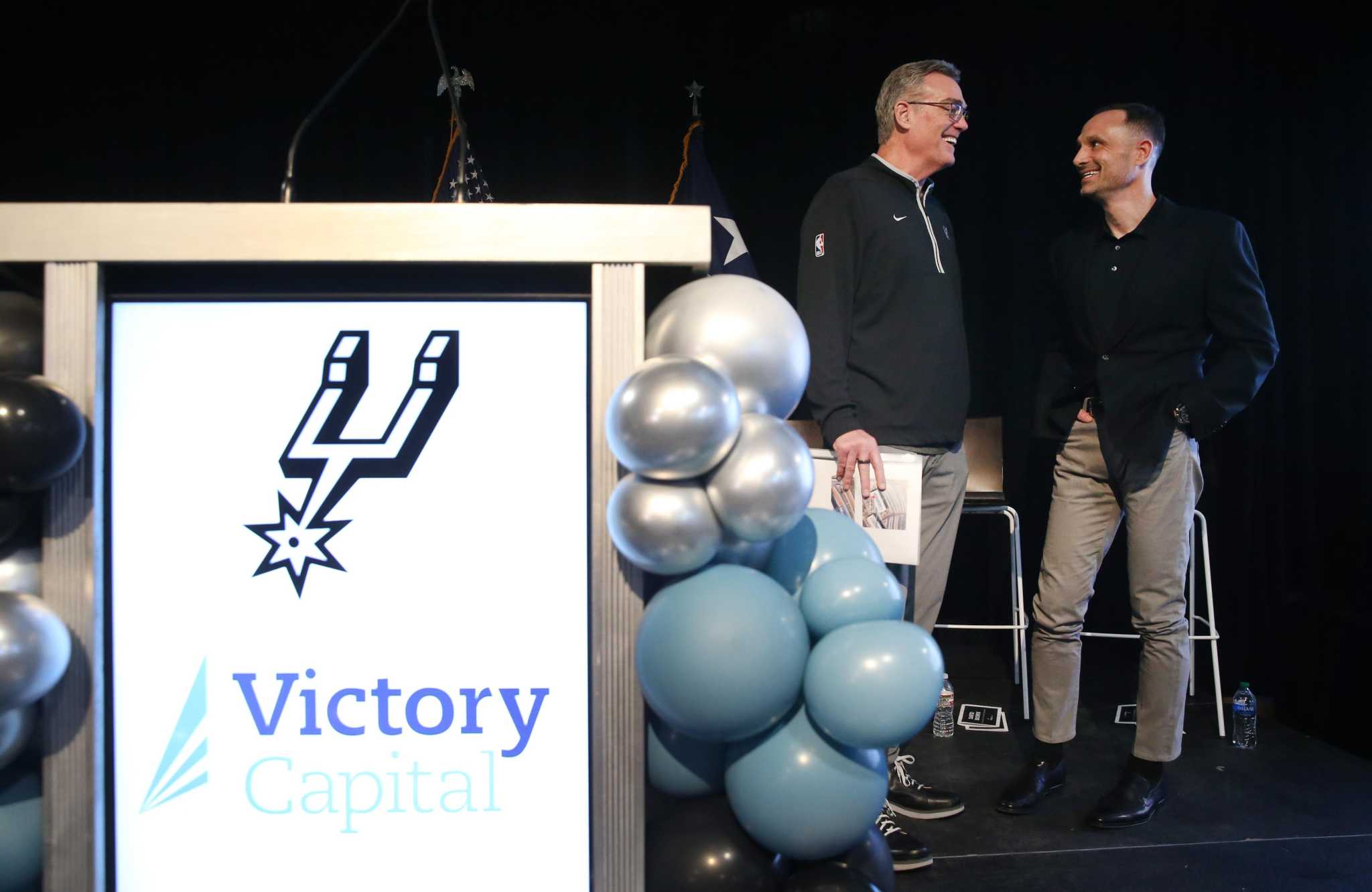
The sport reappeared in his professional life in San Antonio. In January 2023, Victory and Spurs Sports & Entertainment announced a multi-year naming rights partnership for the team’s new performance center at The Rock at La Cantera. Victory also became the Spurs’ official investment partner. Brown pointed to the organizations’ shared emphasis on teams, performance and community.
The partnership has a public life beyond the sign on the building. On the Locked On Spurs podcast in January 2026, Brown discussed the Half Court Heroes Challenge, which gives a participant a chance to win $10,000 at a Spurs home game. One winner, Evan Garr, donated part of his winnings to local charities. For once, a financial-services promotion came with a shot clock’s worth of suspense.
The connection gives Brown’s San Antonio chapter a recognizably personal shape. A sport he credits with helping him as a young person became a way for his company to participate in the city where his family settled.
The ownership idea, measured
Ownership is easier to discuss than to count. Brown’s message reviewing 2025 included two useful measures. Employees and board members held 15% of the company’s fully diluted equity at December 31, 2025. A majority of employees held equity. Separately, employees had invested more than $350 million of their own money in the firm’s investment products.
Those are different commitments. Shares give an employee an interest in the company’s value; investing in its products puts personal money alongside clients’ money. Neither guarantees a particular outcome. Together, they give substance to Brown’s recurring argument that the people running the business should have a financial stake in what it delivers.
His stated priorities for 2026 included deeper relationships with financial advisors, intermediary platforms, institutional investors, consultants and direct investors. That is the less theatrical part of growth: maintaining and extending relationships after the transaction announcement has disappeared from the news. An ownership culture has to survive the ordinary working week, when clients still expect answers and portfolios still need attention.
A larger world, and another pending deal
The Amundi transaction closed on April 1, 2025, and introduced a different kind of expansion. Alongside acquiring Amundi US, Victory entered 15-year reciprocal global distribution agreements with Amundi. Victory reintroduced the Pioneer Investments brand for the acquired business. Amundi became a strategic shareholder, connecting the companies through ownership as well as distribution.
The agreements opened routes for Victory’s US-manufactured active investment products outside the United States and for Amundi’s non-US products within it. By the end of 2025, Victory reported serving investors in more than 60 countries, with 17% of its assets under management belonging to clients outside the United States. Brown’s operating model now had a wider audience.
On August 26, 2026, Victory announced its agreement to acquire First Eagle Investments for approximately $7 billion in total consideration, including assumed debt. The announcement projected roughly $571 billion in combined total client assets upon closing. First Eagle would retain its brand, investment autonomy and existing investment processes, extending the same operating proposition to another group of investment professionals.
As of this profile’s October 14, 2026 publication, the announced transaction remains pending, with completion expected by the end of the first quarter of 2027 and subject to approvals, client consents and other closing conditions. Brown is expected to continue as chairman and CEO. The projected combined assets belong to that proposed future business.
The next test of his approach is therefore quite concrete: bringing another firm onto the platform while preserving what clients value in its investment teams. Thirteen years after employees helped buy Victory’s independence, Brown is still working through the consequences of that original arrangement. More people, more clients and more countries will have a stake in whether it works.