An investor has several respectable ways to respond when a company reaches a difficult stage. Offer advice. Recruit an executive. Request a better spreadsheet. In June 2020, Dave Furneaux took a more involving option: he became the chief executive himself. He had been on Virsec’s board since 2014. Now the founding investor would have to help turn its application-security technology into a business that more customers could actually buy.
There is a useful distinction between believing a company deserves to exist and accepting responsibility for its next sales meeting. Furneaux’s career repeatedly crosses that distance. He has founded investment businesses, backed technology companies that were later acquired, and helped grow a rooftop farming enterprise in Montreal. The common thread is his willingness to stay close to the machinery of a company. Sometimes that machinery includes software. Sometimes it includes a greenhouse.
His name for this approach is builder capitalism. The phrase can sound like an investment thesis looking for a conference badge. His move into Virsec’s executive chair gives it a less abstract meaning: when the work changes, the investor’s job can change with it.
The moment the cheque stopped being enough
Virsec’s June 2020 leadership announcement described a relationship already six years old. Furneaux knew the company from the boardroom before taking charge of daily operations. Atiq Raza, the outgoing CEO, remained executive chairman. That continuity mattered. Furneaux was joining a technical team with a developed point of view about how applications should be protected, rather than arriving to invent a new one.
The division of labour was practical. Raza would continue concentrating on product delivery and technical development. Furneaux would attend to commercial execution. A promising security product still needs a route through procurement, partners who can explain it, and customers prepared to put it to work. Even an elegant technical argument must eventually survive a purchasing department.
Furneaux explained that he liked entering the CEO role at a product inflection point, when a company needed operational help. At Virsec, the immediate work included bringing sales and marketing into closer alignment. His plans also relied on relationships with alliance and integration partners, including Raytheon and Tech Mahindra. He wanted the technology to reach buyers as part of broader solutions.
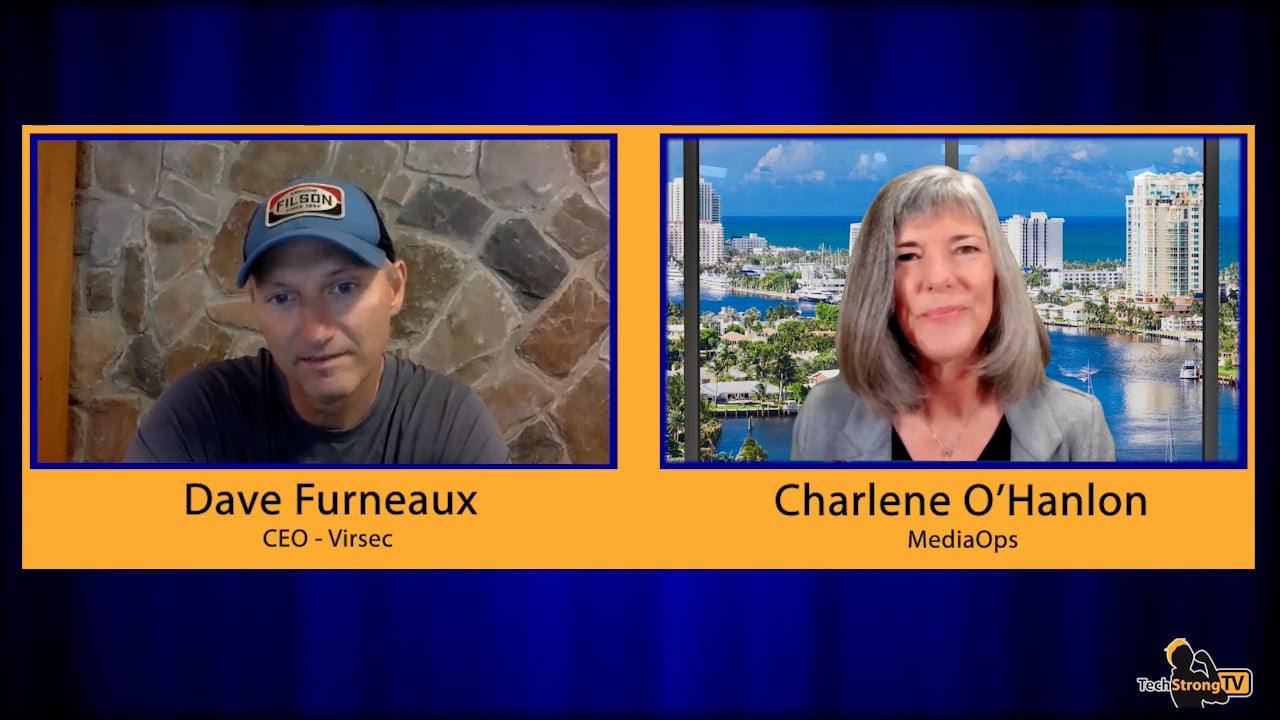
A career measured in other companies’ names
Before Virsec, there was a succession of businesses whose names now sit beside larger acquirers. Furneaux was an early team member at Chrysalis Symbolic Design, later acquired by Synopsys. His subsequent company-building and investing work included Watchfire, acquired by IBM; Skystone, acquired by Cisco; and Aironet, which also became part of Cisco. These were businesses concerned with the underlying workings of computing and communications.
He founded and led Kodiak Venture Partners. Its investments included AppNexus, later acquired by AT&T, and SpaceClaim, acquired by Ansys. Those outcomes help explain why his public biography reads partly like a directory of corporate marriages. Yet the acquisitions are the endpoints. They tell us less about the years when a product still needed customers, a management team, or another round of patient attention.
His older Furneaux Capital site places the start of that investment platform in 1995. It describes him beginning to form, finance, and grow businesses in his early twenties. The vocabulary is revealing: forming and growing appear alongside investing. The site’s range of interests also extends beyond the internet into food production and energy. He was making room for several kinds of enterprise well before the Virsec CEO appointment.
Furneaux’s academic credential is a BA from Colorado College, with Phi Beta Kappa honours. His working identity has proved broader than a single discipline or executive title. Entrepreneur, investor, board member, company builder: each captures a different part of a career in which the role seems to follow the needs of the business.
- 1995Furneaux Capital begins.
- 2014Joins Virsec’s board.
- 2020Becomes Virsec CEO.
- 2025Discusses builder capitalism on FOXcast.
The greenhouse is part of the argument
For a less predictable view of Furneaux, look above Montreal’s streets. Lufa Farms develops rooftop agriculture, growing food in the city where people will eat it. Furneaux became a founding investor and chairman. In an investment announcement, he described spending two years examining urban agriculture and food-production trends before concluding that Lufa had a business model and technology worth backing.
That is a different sort of due diligence from downloading an app. The proposition combines buildings, cultivation, distribution, and customers’ weekly routines. The investment asks a fairly plain question with a complicated answer: can a city produce more of its own food using space it already has?
By 2013, Lufa was using its own technology to monitor crops at its Laval greenhouse remotely. Its cultivation team could oversee sites through a network operations centre and cloud-based reporting. Furneaux saw an opportunity in combining food production and distribution for cities. The connection to his earlier technology work becomes easier to see here. A greenhouse can also be a systems business.
In 2019, he said he had continued helping build Lufa after it became profitable in 2016. Profitability, in that telling, was another stage of the work. There was no automatic instruction to put a ribbon on the enterprise and sell it. A functioning business could justify staying involved.
His public reaction to a later Montreal greenhouse opening was warmer than the usual language of investment returns. In a LinkedIn post, he praised Lufa’s team and its continuing progress. The enthusiasm was directed at people building something. Among the acquisition histories and executive titles, that small gesture makes the investor easier to recognise as a person.
Putting a different clock on capital
In December 2019, Furneaux was a founding member of an organisation promoting builder capitalism. Its premise was that founders and investors could use structures other than a conventional venture fund to grow businesses. Private holding companies and other arrangements could accommodate a longer view. He defended the economic contribution of venture capital while arguing that another model could coexist with it.
His concern was alignment. A founder’s timetable and an investor’s fund timetable can pull in different directions. BlueIO, the investment holding company he founded, focused on a small group of companies and close operational involvement. Concentration gave the investor a reason to understand the business beyond its next financing event.
“We maintain a long-term perspective with no artificial timeline.”
BlueIO’s builder capital methodology
BlueIO’s own description makes room for forming teams, installing business practices, and supplying operational support. It also includes exits. The distinction lies in the timetable and the relationship, rather than in a refusal ever to sell. A company can have a future beyond the date on which someone’s fund would prefer to return cash.
In January 2025, Furneaux returned to the subject on FOXcast, discussing builder capitalism and the role of entrepreneurial families. The conversation addressed what investors and founders need to participate, including contributions beyond money. It placed his day-to-day company work inside a larger aspiration: direct capital, experience, and sustained attention toward problems that require businesses to be built around them.
A hundred million dollars still needs a plan
At Virsec, patience was accompanied by a substantial financing event. In July 2021, the company announced a $100 million Series C led by BlueIO, bringing its announced total funding to $137 million. More than 70 investors and advisers were assembled around the company. Participants included former Cisco CEO John Chambers and former EMC CEO Mike Ruettgers.
Series C led by BlueIO
The company was asking customers to consider a different basis for software protection. Virsec’s approach maps what software is permitted to do and seeks to stop unauthorised activity while it runs. That is the commercial proposition Furneaux helped carry into the market. Its promises should be understood as the company’s argument for its product, rather than a guarantee that security has become a solved problem.
He was frank about the market’s early state. In July 2021, he said, “I think our market is just developing.” The statement makes an interesting companion to the funding number. A large round can finance an uncertain market without making that market mature. Customers still have to understand the category and decide what belongs in their infrastructure.
By January 2022, Virsec was reporting a 700 percent increase in its worldwide customer base during 2021 and expansion into 14 countries. It hired Brian Marlier as chief revenue officer, putting another executive around the commercial work. These were company-reported growth figures, attached to a defined year. They describe the scale-up during Furneaux’s tenure, rather than serving as a proxy for today’s performance.
At Dubai’s GISEC event in March 2022, Furneaux took the same argument to a regional audience. He encouraged entrepreneurs to examine problems at their most basic level and build upward from there. His ambition extended to other security businesses adopting a similar protective mindset. He wanted company-building to help change the industry’s assumptions.
The investor who remains within reach
Furneaux’s public work now spans more than his years as Virsec CEO. BlueIO identifies him as CEO and chairman, and the Technology Advancement Center lists him on its advisory board. Virsec executive listings identify Simone Sassoli as CEO and Furneaux as a board member. The change of title leaves the earlier decision intact: he spent part of his investing career taking direct responsibility for execution.
The greenhouse and the security company make an unusual pair. One brings food production nearer to city residents. The other seeks to put protection closer to running software. Their technical demands differ considerably. Both require more than finding a promising idea and supplying a cheque. People have to organise the work, make the product useful, and keep improving the business around it.
That is where Furneaux’s story becomes most concrete. He has enjoyed exits and argued for longer ownership. He has backed founders and taken an operating job himself. His preferred investment posture leaves room for both ambition and unglamorous follow-through. A cheque clears once. Building a company has a habit of turning up again on Monday.