Consider the payment button. To the customer, it is a small rectangle at the end of a purchase. To the company behind it, it can mean gateways, security checks, refunds, accounting systems, and somebody answering a difficult question when a transaction goes wrong. The button is simple because the machinery underneath it is complicated. Datum Technologies Group makes a business of working on that machinery.
- Hire the expertise: temporary, permanent, and contract IT talent.
- Hand over the work: software delivery, managed services, and federal support.
- Connect the payments: VELA brings multiple gateways into one system.
There is something pleasantly unfashionable about this proposition. Datum sells the work surrounding technology: recruiting the person who can maintain it, connecting it to the next system, and keeping it useful after the project announcement. Its three businesses can initially seem like an odd collection. Look at the handoffs, though, and the collection begins to make sense.
Three businesses. A familiar headache.
The group’s structure supplies the first clue. Datum Innovations handles commercial technology and talent work. Datum Government serves federal customers. VELA Works supplies payments, billing, and customer engagement capabilities. One organization can help fill a skills gap, take on a delivery assignment, or supply a product that becomes part of the customer’s operations.
Those choices carry different responsibilities. A contractor added to an internal team still needs direction. A managed engagement needs an agreed outcome and someone accountable for meeting it. A payment platform needs integration, configuration, and support. The useful buying decision starts with deciding which responsibility the customer wants Datum to assume.
Different engagements. Different ownership.
Datum’s service menu includes cloud engineering, cybersecurity, full-stack development, and AI analytics. Its DevOps practice names AWS and Azure, continuous deployment, infrastructure as code, and containers. These capabilities put it in the enterprise services market, where knowing a customer’s existing systems can matter as much as knowing the newest tool.
The $9.7 million example
Federal work makes that abstract proposition concrete. In 2021, the Defense Department announced a $9,675,186 modification to a Datum Software contract for Operational Support Center services. It exercised a fourth option period, continuing specialist operators and technicians supporting Air and Space Operations Centers. Work was scheduled at Joint Base Langley-Eustis through August 2022.
Operational and technical support.
A contract modification, rounded.
The announcement put the contract’s cumulative face value at $44,375,945. That distinction matters: the extension and the accumulated contract value describe different things. Neither is company revenue. What the award reveals is the kind of problem Datum was being paid to handle: sustained operations requiring specialist people, continuity, and a defined period of service.
Its government division’s case studies offer another view. In an Air Force Reserve project, Datum describes replacing laborious paper processes with connected applications and identity services. In a Veterans Affairs assignment, it describes moving and cleaning data across warehouse systems. These are company accounts, but their recurring subject is revealing: making information travel where people need it.
A checkout with fewer loose ends
VELA takes that concern into commerce. The platform centralizes gateways and exposes payment functions through APIs. Its advertised capabilities include recurring and scheduled payments, refunds, tokenization, auditing, and integrations with business systems. For a merchant managing several payment routes, centralization offers a way to reduce the number of separate operational surfaces.
ONEui, a VELA component, makes the arrangement easier to picture. It is a hosted payment page that can adopt the merchant’s branding. Customers enter payment details on the provider’s servers. VELA says this can reduce the merchant’s PCI compliance scope and cost. It is a practical architectural choice with consequences beyond the appearance of checkout.
“bring our three brands together under one unified vision.”
Latha Ganeshan · 2023 rebranding announcement
The commercial model has several doors: technology assignments, staffing engagements, government contracts, and payment products. VELA presents Basic, Plus, and Premium plans and a reseller program. Buyers need to match the package to their actual transaction flows, support needs, and integration work. A plan name alone cannot tell them the cost of operating the whole arrangement.
For a prospective customer, the sensible comparison is the whole operating arrangement. Who handles a failed payment? Which team maintains an integration when the surrounding software changes? Does the business need a branded checkout, a developer interface, or both? Those questions turn a broad product catalogue into a narrower, testable purchase. They also prevent a familiar mistake: choosing the visible feature while leaving the maintenance work unassigned.
The name caught up with the work
Datum’s official history dates its formation by Latha and Ram Ganeshan to 1992. In March 2023, Datum Software announced the group name, explicitly bringing three previously siloed brands together. The change gave customers a clearer view of the breadth already inside the business.
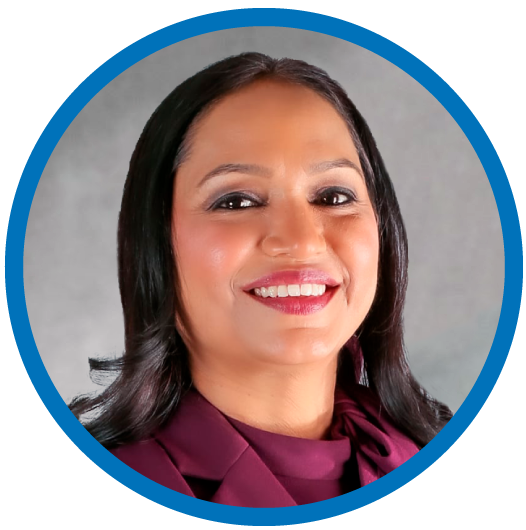
Latha’s background includes IBM, Equifax, and Scientific Atlanta. Ram oversees finance, operations, and infrastructure. The combination is consistent with a business that must manage delivery as well as technical design. Datum competes across several buying categories, so its distinctive proposition is the combination of services and product capability available through those three divisions.
The company also operates delivery centers in Chennai and Lucknow. Its offshore offering distinguishes dedicated teams from staff augmentation and project support. Its inclusion program, Embrace & Thrive, addresses awareness, cross-cultural relationships, and opportunities for growth. These are stated practices; a buyer can ask how they appear in the team assigned to the work.

Start with the handoff
The copyable lesson is a purchasing habit: identify the handoff before choosing the service. Specify who owns requirements, access, testing, deployment, and support. Ask for a scope and acceptance criteria that make those responsibilities visible. A staffing request and a managed delivery request may describe the same technical problem while buying very different help.
This approach fits organizations with connected systems and ongoing obligations. Its value is harder to justify for a small, isolated task that an existing team can complete easily. Offshore arrangements also need compatible access rules, working hours, and client oversight. Datum’s range becomes useful when the customer can name the dependency that needs attention. That is where the conversation should begin.