At Vulcan Materials, a billing mistake could travel all the way to a customer before anyone noticed it. The invoice then had to be corrected and sent again. Revenue recognition slowed; reporting and cash flow got messier. This was especially awkward while the construction materials company was moving its business systems. The question was no longer whether to migrate the software. It was whether old mistakes would get a new home.
Datricks, a New York based enterprise software company, arrived with a particular answer: follow the transaction as it happens. Connect the systems, map the route from order to invoice, and flag a discrepancy before the customer becomes the quality control department. Vulcan says it now uses the platform to find billing anomalies and produce more accurate invoices on the first attempt. It has said it is extending Datricks into other parts of its business.
- Datricks maps financial workflows across ERP and business systems, then alerts teams to anomalies and control gaps.
- Its buyers and users are finance leaders, internal auditors, controls teams and SOX teams at large enterprises.
- Named customers include Vulcan Materials, ICL Group, Element Solutions and FORVIA HELLA.
- The company raised a $15 million Series A in 2024, led by Team8 with SAP and JVP participating.
The consultants who kept having the same conversation
The origin is unusually revealing. Co-founders Haim Halpern and Roy Rozenblum met in an Israeli military technology unit, then built an SAP consulting firm called Xact. Halpern told CTech it grew to 400 consultants before they sold it to ONE Group. At client after client, they saw the same ritual: consultants asked how a business worked, inspected its data, and returned months later with recommendations. What if the first part of that job could be packaged as software?
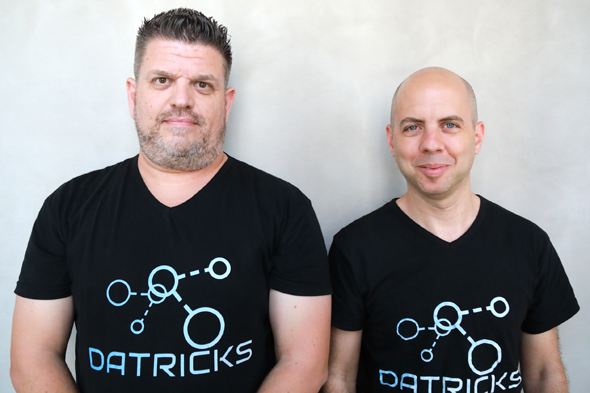
They founded Datricks in 2019. Halpern's early description was an “X-ray view” of a company: software that connects to SAP, Oracle, NetSuite or Salesforce and reconstructs the decisions behind financial actions. An X-ray, of course, only helps if somebody knows which shadow matters. Datricks tries to do that second job too, using machine learning to flag unusual patterns and show investigators the surrounding process.
“What we realized from the consulting work was that we were doing the same thing over and over again, for different clients.”Haim Halpern, co-founder and CEO, in a 2021 CTech interview
An audit sample is a very elegant blindfold
Traditional audit sampling is sensible when examining every transaction is too costly. The trouble is that an enterprise may now produce far more records than a team can inspect by hand, across a collection of systems built in different decades. A valid sample can still miss the particular duplicate payment or altered vendor record that matters. Datricks' proposition is to examine the whole flow automatically, then spend human attention on the exceptions.
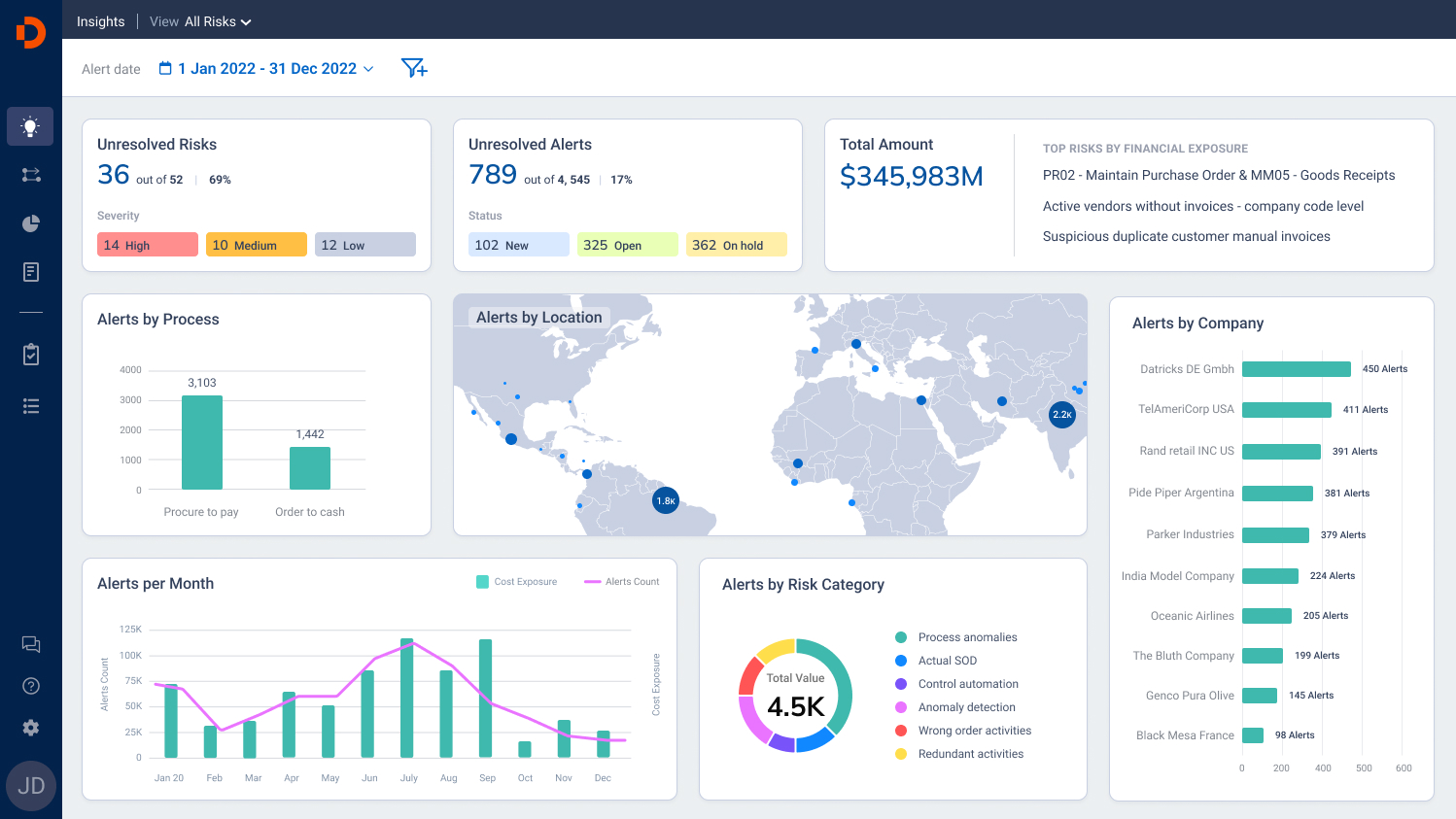
Its platform has three broad motions. First it discovers how processes actually run, including procure to pay and order to cash. Next it checks transactions for anomalies, fraud indicators and breaches of controls. Finally it gives a finance or audit team a view of the alert's context, so someone can investigate rather than merely stare at a red number. The company says results can appear within seven days of connecting the relevant systems. That is a vendor claim, not a universal implementation timetable.
The exceptions are unromantic, which is precisely why they matter: duplicate payments, invoices split to avoid approval thresholds, late reversals, unauthorized discounts, after-the-fact purchase orders, and segregation-of-duties violations. None requires a mastermind. Some are mistakes; some are policy shortcuts; some are fraud. The same transaction trail helps distinguish them.
What persuaded the people paying for it?
At Element Solutions, the choice was unusually explicit. The specialty chemicals company had periodic manual reviews and limited sampling. It considered building its own answer, but judged that a homegrown system would require specialist expertise, time and scale it did not want to assemble. After evaluating vendors, it chose Datricks for the continuous detection capability and the team's responsiveness. Its case study says multiple ERP instances across global sites were mapped and analyzed in under a week.
ICL Group had a different first failure: acquisitions left it with many finance systems, each with its own configuration and controls. The company says that patchwork made a full-scope, reliable audit difficult. Datricks' role was to make the processes visible across those systems and surface unusual activity as it emerged. FORVIA HELLA, an automotive supplier, represents a related use: Datricks and SAP Signavio are being used to link risk detection and automated controls to process transformation. The point is not merely to find a bad transaction. It is to locate the step that keeps producing one.
The customers also show where Datricks fits in the market. This is enterprise software for complex finance operations, bought through a demo-led sales process, rather than a bookkeeping app for a small business. Its alternatives include a firm's own BI dashboards, custom analytics, manual audit procedures and other process-mining or controls tools. Datricks' distinction, as it describes it, is autonomous mapping joined to financial risk detection. The SAP relationship gives that position a distribution route: Datricks for Risk Mining became an SAP Endorsed App, with an integration to Signavio.
What a finance team can borrow today
The most useful lesson does not require purchasing a platform. Start with the errors your customers or vendors discover before your own staff do. Trace one all the way back: which source system created the record, who changed it, which approval was skipped, and what later transaction made it expensive? Choose a small set of repeatable checks, such as duplicate payments, altered payment terms or invoices reissued after complaint. Then measure the time between the first bad action and discovery.
That timing is the real product category. Datricks can only be as useful as the systems and records it can read, and an alert still needs a person who can decide what to do. But the question it asks is hard to unhear: why wait for the quarterly sample, or the customer's email, when the transaction already left a trail?