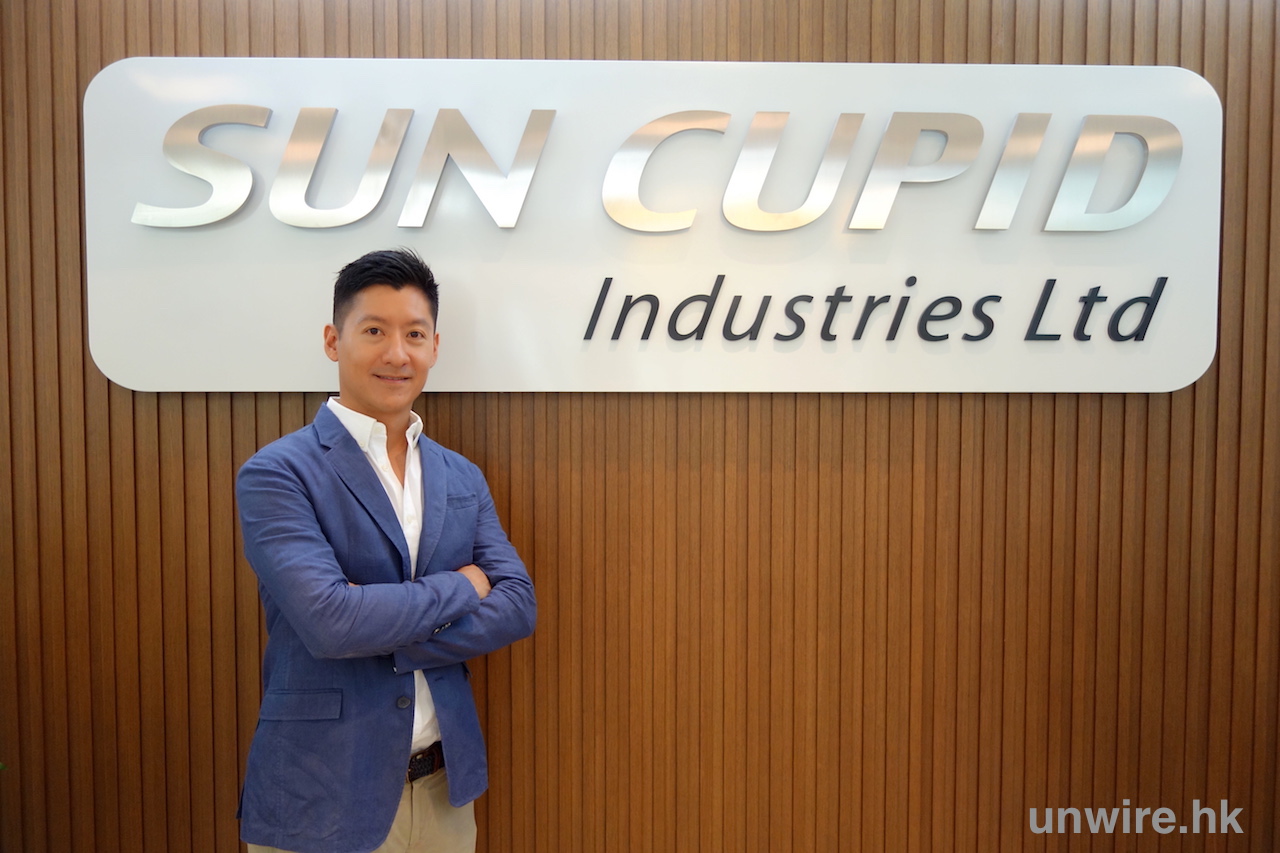
Danny Sit’s smartphone story begins with bread makers and coffee pots. The family business, Sun Cupid, made small household appliances for other companies. The arrangement involved a particular kind of commerce: somebody else’s name went on the finished object. The maker had to understand the product well enough to manufacture it, while the customer’s customer might never learn who had done the work.
By November 2014, Sit had recently taken over the family business and was explaining a different ambition. The company had manufacturing skills. It had experience developing electronics. With NUU Mobile, established as its own smartphone brand in 2012, it could put those capabilities behind a name it owned. There is a fairly large difference between making a thing and persuading someone to ask for it by name.
That distinction runs through his career. Sit is NUU’s founder and CEO, based in Irving, Texas. His route to the job included engineering study at Northwestern and Stanford and work at Morgan Stanley. Manufacturing, engineering and finance offer three rather different answers to the question of what makes a good product. His business has required him to keep all three in the room.
Even a touchscreen could use a keyboard
One early NUU product now looks like a small protest against the future. In March 2013, the company introduced a slide-out Bluetooth keyboard case for the iPhone 5. The MiniKey had 42 keys, backlighting and a $59 price. A touchscreen was a marvel; typing on one could still be a nuisance. The accessory gave customers physical buttons and returned some of their screen to them.
Sit’s explanation was cheerfully practical. Autocorrect mistakes, he said, could be amusing, embarrassing or costly. Few product pitches need much help after that. Anyone who has sent an unfortunate message can supply the demonstration without visiting a showroom.
The MiniKey also offers a useful way into his later work. A device can be technically impressive and still leave a specific task awkward. There is room for a company that attends to the awkward part. In this case, the answer was an extra keyboard. In later projects, it would involve changing what a phone was allowed to do.
Hong Kong in the name; a border in the brief
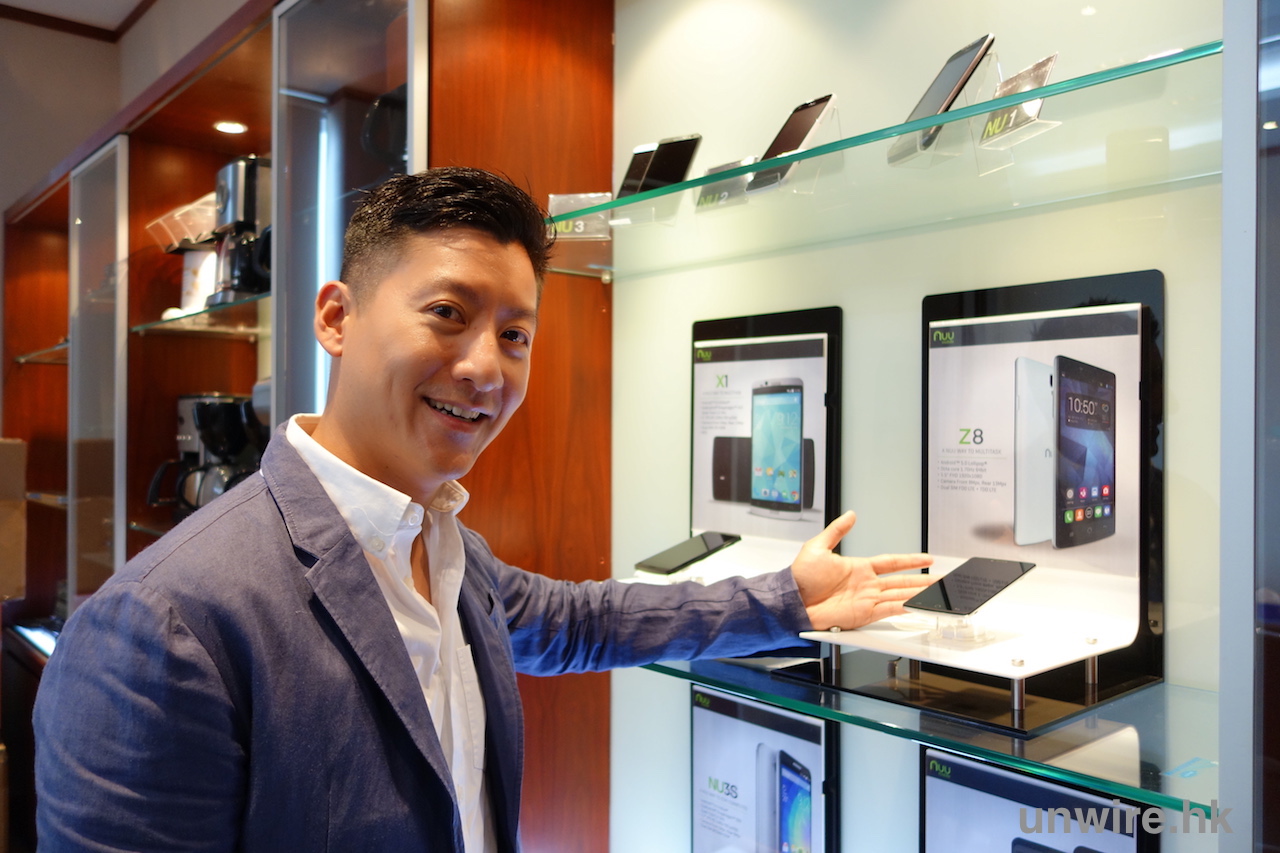
In 2015, Sit spoke about having studied and worked in the United States for years while retaining his attachment to Hong Kong. NUU’s return to that market carried a personal element: a locally led team offering buyers another choice. He also described a young, close team whose relationships continued outside work, and an ambition for a company culture with little hierarchy.
His product examples were wonderfully unglamorous. A handset should feel comfortable in the hand. A new smartphone owner might need help choosing a keyboard or getting started. Someone regularly crossing between Hong Kong and mainland China could benefit from dual-SIM support. The frontier in this conversation was a border crossing and a customer trying to avoid fiddling with cards.
By June 2016, NUU was offering the i1 roaming device, designed to connect up to five devices over Wi-Fi and switch between local networks across more than 100 destinations. Its business tools included usage reporting and billing controls. The pitch was convenience for travelers, with a layer of administration for their employers. A border could be complicated enough without a telecommunications hobby.
International expansion brought more decisions about local circumstances. In January 2018, Sit announced plans for a Nairobi outlet and a Kenyan retail network. He pointed to the country’s stability and currency as reasons for choosing it as an entry into Africa. That was a plan stated at the time, and it reveals the commercial arithmetic behind a supposedly borderless object. A global phone still needs a local route to its buyer.
The word that disappeared
In October 2021, NUU Mobile became simply NUU. Dropping a word is an economical way to announce that the business has become harder to fit on a label. The company described its expansion beyond consumer value smartphones into enterprise solutions, alongside direct sales and mass retail. Sit linked the revised identity to the business’s growth and its consumer and enterprise customers.
A name change can be a ceremonial exercise. Here, the accompanying business choices give it substance. NUU was widening the brief from selling a handset to supplying devices that companies could adapt and manage. The relevant buyer might care less about the phone’s appearance in a shop window than about how it behaved after hundreds of units had been deployed.
By July 2022, NUU’s enterprise offering included customer branding, device preparation, hardware modifications and changes to the Android system or interface. It addressed a familiar organizational problem: the software team understood its application, but needed help turning that application into a working physical product.
For Sit, the stated ambition was to develop more focused products, one vertical at a time. That last phrase matters. A retailer and a transport operator can both buy Android hardware, yet need different things from it. An inventory tool, a dispatch device and a general-purpose personal phone share a technological ancestry. Their working days have very little in common.
A useful phone can have fewer invitations
The Gabb Phone 4 makes the idea tangible. NUU worked with the Utah company Gabb on a device for children and teenagers, using its experience with customized Android hardware and software. The project restricted internet browsing and social media access while providing selected communication and other functions. It asked a different design question from the familiar race to put more possibilities behind every tap.
A parent choosing that device is buying a boundary as well as a connection. For the manufacturer, the work reaches into the operating system and the applications that run on it. A specification sheet alone cannot describe the result. The settings and restrictions are part of the product.
Sit put it simply: “We believe technology should serve a purpose”. A phone with fewer invitations can be a deliberate answer to a customer’s brief. It also demonstrates why his earlier interest in affordability could develop into an interest in customization: both begin by asking which features are worth paying for.
“We believe technology should serve a purpose”Danny Sit, on NUU’s partnership with Gabb
The consumer side continued to give him opportunities to ask that question. Introducing the A Series in September 2023, he identified two complaints: rising prices and the difficulty of basic repairs. The A23 Plus emphasized repairability, durability and longevity, while other models emphasized specifications at a lower price. Repairability rarely enjoys the theatre afforded to a new camera. It becomes considerably more interesting when something breaks.
The factory has a second life
The enterprise business gives Sit’s manufacturing background another use. In his September 2026 interview, he described becoming more directly involved in design, development and production as retail was disrupted in 2020. The old family capability had become a means of changing the business rather than simply supplying its existing range.
His account of vertical integration covered component sourcing, software installation, quality checks and final production. The commercial proposition was greater control over customization and the development process. A customer commissioning a dedicated device needs those stages to agree with one another. A carefully specified application is little comfort if the hardware arrives with the wrong configuration.
A 2025 MediaTek case study supplied examples in transport and retail: fleet tracking, dispatch coordination, inventory and mobile checkout. NUU’s relationship with the chipmaker tied its software and hardware work to a supplier of the underlying connectivity. The partnerships here are less visible than a consumer brand on a phone’s back, but they help determine what that phone can deliver.
There is measurable evidence of the company’s expansion. Inc. listed NUU at No. 3,559 in 2022, No. 3,802 in 2023 and No. 1,376 in 2024. Its 2026 profile records another appearance at No. 4,906. Those are positions on annual lists, rather than a continuous measure of size. They establish repeated inclusion without turning a ranking into a substitute for the business itself.
Twenty tablets, and somewhere to use them
Irving is more than a location on NUU’s paperwork. Sit has publicly emphasized local hiring and partnerships in Dallas-Fort Worth. The company’s relationship with FC Dallas has given that commitment some concrete destinations beyond advertising.
In September 2024, NUU and FC Dallas helped launch the Imagination Station at the Boys & Girls Clubs of Greater Dallas location in Mesquite. The space provided access to devices and activities involving coding, robotics and digital media. Club staff would lead the workshops. Hardware had been attached to a place, a program and people who could help children use it.
The Community Action Grant partnership supplied another form of support. In July 2024, the FC Dallas Foundation and NUU announced recipients, each receiving a $5,000 donation from the foundation. The mechanism matters: a partnership can direct resources to existing local organizations, which already know the families and neighborhoods they serve.
In October 2025, another project with FC Dallas brought 20 tablets, along with keyboards, headphones and other technology, to Vogel North’s school-age classroom. Vogel works with families experiencing homelessness. The donation connected NUU’s devices to educational and life-skill learning opportunities in a particular room.
Twenty tablets is a modest number beside an international distribution network. It is also a number with an intelligible destination. A child can sit down at one. A teacher can build an activity around it. For a company whose founder talks about giving technology a purpose, a classroom is a fairly exacting place to make the claim.
Sit’s next ambitions include enterprise mobility, connected devices and AI-enabled products, while retaining consumer phones. The interesting continuity is his attention to the job at hand. Across a keyboard case, a roaming connection, a restricted handset and a classroom tablet, the customer keeps changing. The question survives: once the box is opened, what becomes easier?