On a trip to Saint Lucia, Daniel Nadler sat down to write about fish, stars, palm leaves and the sea. He ran into an ancient literary traffic jam. Homer had already called the sea “wine-dark.” Any modern writer reaching for that color risked sounding as if he were quoting a poet who had been dead for nearly three thousand years. Nadler wanted to look at the water itself. His solution was wonderfully elaborate: write poems as though they were translations of ancient works that did not exist.
The imagined manuscripts became Lacunae, a collection of 100 love poems published in 2016. He studied the plants, animals and emotional vocabulary of the cultures he was borrowing from so that his invented fragments would obey the limits of their imagined time. The exercise demanded both nerve and restraint. There could be no modern flower smuggled into an old landscape, no contemporary turn of phrase peeking through the costume. He was making things up, carefully.
At the same time, Nadler was building a company that helped people make sense of another forbidding pile of text and data. Kensho let finance professionals ask complex questions in ordinary English. A few years later, he cofounded OpenEvidence, a search tool that lets physicians navigate a growing body of research. The poet and the founder look, from a distance, like separate careers. Come closer and the common subject appears: a person facing an archive, certain that something useful is in there, short of a practical way to find it.
The invented manuscript
Nadler grew up in Toronto, the son of parents who had come from Eastern Europe. His father was an engineer from Romania; his mother came from Poland. He later studied at the University of Toronto before going to Harvard for a PhD. His doctoral work explored how to model rare events with large consequences. At Harvard, he also studied poetry with Jorie Graham. That pairing of statistics and verse invites an easy joke about right brain and left brain. It misses the interesting part. Both disciplines ask how much can be responsibly inferred from incomplete evidence.
In a 2014 interview about Lacunae, Nadler described the poems as “imagined translations.” They were neither discoveries nor hoaxes. Their fictional originals were openly fictional, inserted into the gaps of real traditions in Sanskrit, Old Tamil and Maharashtri Prakrit. A gap in a manuscript is a lacuna; the book’s title puts the absence on the cover. His premise was that a writer might recover a fresher encounter with the world by borrowing the constraints of another era. Even the old sea could be seen without asking Homer for permission.
“I don’t think poetry should devolve into intellectual property law.”Daniel Nadler, discussing Lacunae
The book appeared while Kensho was already attracting attention. NPR included it among its favorite books of 2016. Two years later, Nadler joined the board of the Academy of American Poets as its youngest elected member. It is rare for a technology founder to treat an art practice as more than a line in a biography. Nadler continued making visual work too, including digitally altered photography and sculpture that combines digital design with bronze casting and marble carving. He joined the Whitney Museum’s digital art committee in 2020 and the board of MoMA PS1 in 2021.
Before the second search box
Long before the poetry book appeared, Nadler and Peter Kruskall had started Kensho in Cambridge, Massachusetts. Nadler was still a doctoral student. A stint at the Federal Reserve had exposed him to an unglamorous reality: vital economic analysis could still depend on spreadsheets and manual work. Kensho’s answer was a plain language interface over complex data. A user could ask a question and receive an analysis that once required a specialist and a long afternoon.
The company’s early product was called Warren, a name with a certain Wall Street confidence. Kensho did not ask its users to learn the language of a database. It moved the difficult translation work inside the software. That design choice sounds ordinary now, in an age of conversational interfaces, but it arrived well before the current wave. Banks and other financial firms backed the company. In 2018, S&P Global acquired it. Contemporary accounts put the announced transaction at $550 million in cash, with a total value of about $700 million when shares and other terms were included. The distinction matters because both numbers have followed Nadler around.
He had also tried a more mischievous kind of interface. While at Harvard, he conceived and codesigned Sigmund, an iPhone app intended to let users program their dreams. It is easy to imagine the product pitched with too much seriousness, or none at all. In Nadler’s record it sits between poetry and quantitative finance as another experiment in turning a private, elusive experience into something a person could ask a machine to help shape.
The second archive
After Kensho, Nadler moved into a field with a different sort of information overload. Research arrives faster than any single professional can read it. A relevant paper may be published by a distant institution, buried behind unfamiliar terminology or simply lost under the weight of newer material. Nadler and cofounder Zachary Ziegler built OpenEvidence to make that research searchable through a conversational interface, with citations pointing back to the original work. The company was founded in 2022 and its product launched the following year.
The decision to make the tool free for verified U.S. physicians was central to its spread. In a 2025 podcast conversation, Nadler framed the insight plainly: “We realized that doctors are people, too. Doctors are consumers.” It is a line with a little provocation in it. Expert software has often been designed around procurement processes and institutional committees; Nadler argued that an expert at work still wants the directness of an everyday app. The company later signed content agreements with major medical publishers, expanding the material its interface could help users find.
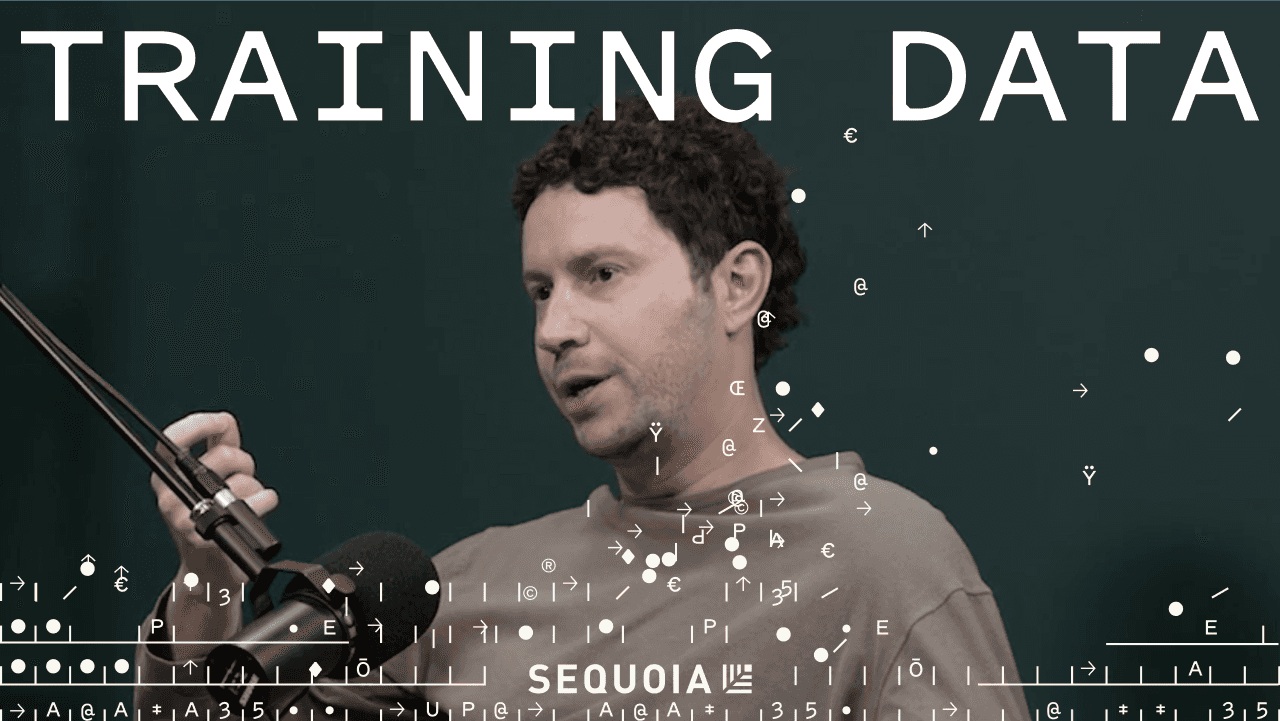
There is a familiar literary puzzle beneath the technical one. The user types a short question. Somewhere in a vast set of documents are sentences that bear on it. The system must choose what matters, preserve context and show where its answer came from. Nadler has said his team favored smaller, specialized models trained deeply on their subject area over one large general model. In a Sequoia interview, he described the early systems as rigid outside their domain, but strong within it. The self-imposed boundary sounds faintly like the rules he made for those invented ancient poems: precision grows when a project accepts constraints.
A favorite story about intelligence
Asked on the podcast what AI builders should read, Nadler did not name a technical paper. He recommended Ted Chiang’s novella Understand, a work of fiction about intelligence accelerating beyond familiar expectations. “It’s my touchstone for everything that I do,” he said. The answer reveals a habit visible across his work: he reaches for a story when the graph gets too steep to explain itself. Chiang’s narrative, for him, makes the change in scale feel imaginable.
The business numbers have become steep themselves. Forbes reported that Nadler put $10 million of his own money into OpenEvidence after the Kensho sale. The company’s first major institutional round, announced in February 2025, valued it at $1 billion. A July round brought a $3.5 billion figure. January 2026 brought a $12 billion valuation; a further $250 million financing, confirmed by Nadler to Becker’s in September, put the reported valuation at $15 billion. Each is a price investors paid at a particular moment, rather than a final verdict on the company or its founder.
The climb has made Nadler’s wealth a recurring headline. Forbes estimated it at $7.6 billion in January 2026, before the latest financing. It also reported a smaller, more human exchange about an earlier investment: after buying Nvidia shares in 2019 and selling them in 2024, Nadler called it a “Good trade” and added, “Sold too early to be honest.” The second sentence is more memorable than the first. Even a founder trained to think about consequential rare events has to live with hindsight.
What remains in the margin
A profile built from valuations could lose the person in the very flood of information he has spent his career trying to tame. The more revealing details are smaller. A young man in Saint Lucia objects to Homer’s monopoly on the color of a sea. A doctoral student builds an app about dreams and a system for asking financial questions. A founder recommends a novella when invited to explain the future of technology. He keeps his place on museum and poetry boards while leading a fast growing company.
The projects differ in audience and consequence. They also share a suspicion that information becomes valuable only when a reader can get close enough to examine it. Lacunae took missing lines as an invitation to imagine with discipline. Kensho made hidden financial patterns easier to query. OpenEvidence puts a search box in front of a library too large for any one person. Nadler’s career has moved from invented sources to real ones. Through both runs the same modest, difficult demand: let the question lead back to the text.