Daniel Chalef had already found an audience before he had quite worked out the business. At a South African systems integrator, where he was chief technology officer, a customer project became document-management software. The team put the code on SourceForge. Thousands of downloads followed each month. Here was a rather useful discovery: people far away had the same administrative headaches as people nearby.
The software became KnowledgeTree. Years later, Chalef would help build another open-source project, Graphiti, and another company, Zep AI. The documents had given way to AI conversations and business records. The underlying difficulty remained familiar. Information accumulates cheerfully. Getting the right piece to the right place, with its meaning intact, requires considerably more supervision.
That continuity makes his career interesting. He has been a developer, a chief executive, a marketing leader and a data-science executive. Read those titles as separate compartments and the route looks restless. Follow the work itself and a recurring question emerges: how do you make technical information useful to someone who has a job to finish?
A download could cross an ocean
Chalef comes from Cape Town and studied at the University of Cape Town. By his own account, his involvement with open source began in the early 1990s, first as a user, then as a developer and project manager, eventually as the leader of a commercial software business. The attraction was practical as well as philosophical. Developers in one part of the world could reach customers in another without asking a gatekeeper for an introduction.
By July 2009, he reported that KnowledgeTree's community edition had passed 650,000 downloads. More than 70 external community projects surrounded it. Commercial users included Sony Entertainment, Société Générale Group and Mazda Motor Europe. These were substantial destinations for software that had started with a South African customer's needs.
A historical milestone, not a current usage figure.
KnowledgeTree also required the less romantic work of making software accessible to ordinary businesses. In explaining its move into cloud delivery, Chalef stressed ease of use, affordability and how quickly customers could begin seeing value. He described business managers arranging document workflows without first buying equipment or commissioning an elaborate installation. The ambition was to get useful work out from underneath the software required to manage it.
Learning the language of the cheque
Going international brought a different curriculum. Chalef launched KnowledgeTree in South Africa without knowing the venture-capital business. When the time came to expand, he travelled to Silicon Valley to meet investors and learn how those conversations worked. Technical fluency did not automatically translate into fluency about financing.
He later described the experience as a “baptism by fire.” Being outside the local entrepreneurial network made the process harder. The company eventually secured a Series A led by Hasso Plattner Ventures Africa, followed by a $4.75 million Series B led by River Cities Capital Funds. KnowledgeTree relocated its headquarters to Raleigh, North Carolina, while maintaining a South African presence.
When discussing fundraising with other entrepreneurs in 2013, he emphasized introductions through established relationships and understanding why an investor might decline. There is an instructive difference between putting code online and getting a meeting about a company. Software can travel unattended. Its founder generally needs to make the introductions himself.
It is also an early example of the two kinds of work Chalef kept combining. A product had to function. Someone had to understand its value well enough to buy it, finance it or recommend it. Neither activity could be postponed indefinitely while the other received all the attention.
The engineer goes to marketing
At KnowledgeTree, Chalef wrote about how sales teams should use content: select material that helps a buyer, watch whether it works, retire what fails and keep the collection current. A prospect receiving another empty follow-up email was unlikely to thank the sender for their persistence. Relevance had to be earned each time.
He subsequently led marketing at Domino Data Lab, whose software organized the work of data scientists. Explaining that product meant talking about a missing system of record for technical teams. He was still close to engineering, but his daily problem included communicating benefits to the different people involved in a large organization's buying decision.
In a podcast conversation about analytics, he pushed back on the tendency to collect data and then wonder what to do with it. Start with the business question, he argued. Work out whom you are trying to reach, how to reach them and what the effort costs. Having the ability to manipulate a dataset offers little protection against asking it an irrelevant question.
His later work at SparkPost included senior data-science and corporate-development roles. The range matters because Zep sits at the junction of technical infrastructure and customer context. Chalef had spent time both building data products and explaining why someone should care about them. A database could store the evidence. A business still needed to decide what it meant.
Then the conversation lost its place
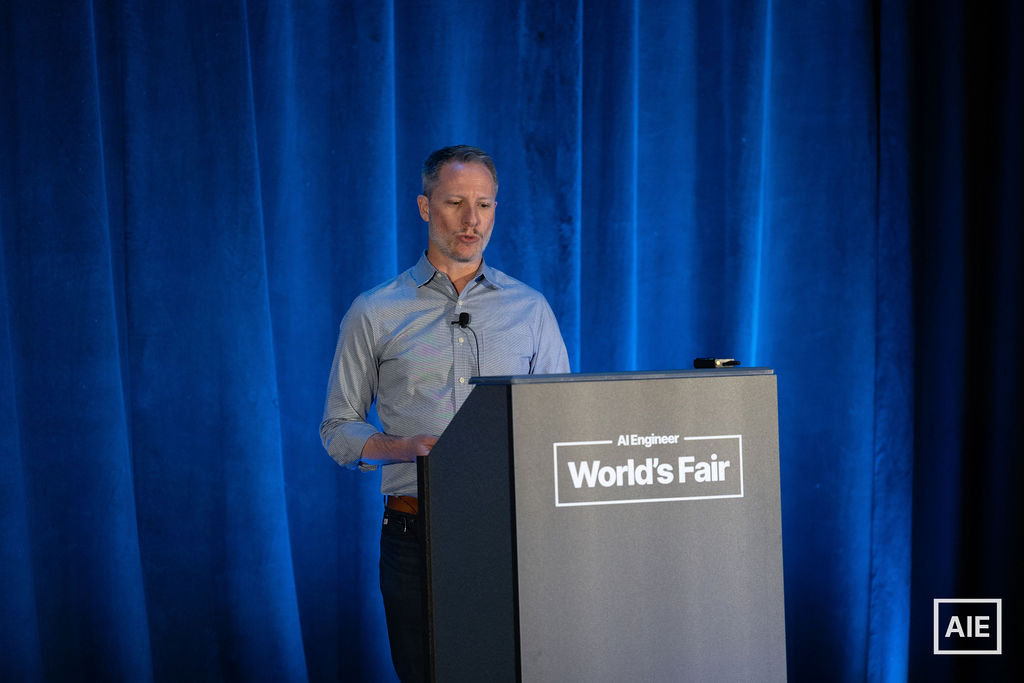
Zep was founded in 2023 and joined Y Combinator's Winter 2024 batch. Chalef's starting point had been an application intended to turn policy and process documents into something an agent could act on. Early language-model applications forced developers to decide what history would fit inside a small prompt. He built conversation summarization infrastructure and released it as open source.
His May 2023 writing shows that work at a concrete level. Zep's entity extractor used spaCy to identify such things as names, dates, currencies and places in messages. It operated locally and asynchronously, keeping that processing out of the immediate conversation loop. Even in this early form, the job was to extract useful structure without making the person at the keyboard wait for housekeeping.
The harder question was what happened when those extracted facts disagreed. Zep's team found that a pipeline based on extracting facts and retrieving them by semantic relevance could return incomplete or contradictory information. More prompt adjustment brought diminishing returns. The relationships among facts, and the sequence in which they became true, needed a more explicit home.
The little word that changes a fact
Consider the difference between a person's employer and their former employer. Both records can be accurate. Only one describes the present. An assistant preparing for a meeting needs to distinguish them, rather than pick whichever sentence happens to sound closest to the question.
Graphiti represents information as entities and relationships that can change over time. It combines semantic search, keyword search and graph traversal. Earlier facts can be marked invalid while their history remains available. Zep supplies the managed infrastructure around that approach; Graphiti is the open-source framework developers can build with themselves.
Chalef co-authored the January 2025 paper introducing Zep's temporal knowledge-graph architecture with Preston Rasmussen, Pavlo Paliychuk, Travis Beauvais and Jack Ryan. The paper evaluated retrieval and memory performance, including temporal reasoning. Its reported gains belong to those benchmark settings; they are evidence about particular tests, rather than a universal promise about every application.
Open source again provided a route to an audience. By October 2026, Zep's Y Combinator profile described Graphiti as having more than 30,000 GitHub stars. The number indicates attention from developers. Turning that attention into dependable software, support and a sustainable company remains its own occupation.
“Just because graphs are cool, doesn't mean you need to use a graph for everything.”
Daniel Chalef, June 2025
The founder still has a compiler
Chalef's technical preferences remain visible. His public founder biography mentions a fondness for Go. In June 2026, he wrote about building agents in the language without a framework, explaining how long-running operations, concurrent work and cancellation fit its runtime. He also described Zep's mixture of Go, Rust and Python, with different components using different languages.
Then came a larger piece of engineering. In August 2026, he explained that Zep had replaced its production graph database with a purpose-built service called Konig. He had prototyped the engine over December and January after outages and performance problems with the previous database. The team developed it into production infrastructure during the first half of the year.
The distinction was the workload: many small graphs, often idle, each belonging to a user, team or project. A general-purpose database organized around a different pattern had become an awkward fit. His account gives the team credit for turning an initial holiday project into the service. A holiday, apparently, can contain a surprising amount of database architecture.
Memory needs a return address
His recent work also asks a less comfortable question: what if the information an agent remembers was wrong, misleading or malicious? In July 2026, he wrote about preserving the links between derived facts and the conversations, documents or records that produced them. Those links make it possible to inspect where a statement came from as the graph changes.
In September, he addressed memory poisoning: an injected claim can survive into later sessions, acquiring influence through repeated retrieval. His proposed controls include checking what enters memory, restricting retrieval and enforcing decisions in application code. An old instruction should never acquire authority merely because the system has remembered it.
There is a long line from a document-management project in South Africa to these questions about provenance and permission. Chalef keeps returning to information that exists in abundance but needs context before it can be trusted with work. The next challenge for Zep is to make that context available across agents and enterprise systems. Remembering more is easy to admire. Remembering what still matters is the part that earns its keep.
Keep following the thread
Writing, code and conversations from across the career.
- Zep AI website ↗
- Chalef’s technical writing ↗
- Daniel Chalef on LinkedIn ↗
- Daniel Chalef on X ↗
- Chalef’s GitHub projects ↗
- Explore Graphiti ↗
- Watch: Citation Needed · 2026 ↗
- Watch: Stop Using RAG as Memory · 2025 ↗
- The conversation with Kenn So ↗
- The KnowledgeTree interview · 2009 ↗
- Read the Zep architecture paper ↗
- Models and datasets on Hugging Face ↗