YesPress Profile — Founders & Media
Two newsletter writers walked into the AI era. They didn't just report on it - they built the thing everyone reads about it.
Co-founders of Every - the only AI media company where the engineering team writes almost no code, the CEO predicts the future every Thursday, and Reid Hoffman showed up with a check.
Who They Are
Every is the publication that didn't just write about AI - it became a live experiment in what an AI-native company looks like when you actually mean it.
Dan Shipper flies from his college graduation to Boston to close an acquisition deal. Nathan Baschez writes the software that makes Product Hunt tick before Product Hunt is famous. These are not people who watch things happen from a distance.
The company they built together started as two separate newsletters merged on a hunch in April 2020: Dan's Superorganizers (interviews about how brilliant people stay organized) and Nathan's Divinations (business strategy through the lens of Christensen and Porter). Six hundred paying subscribers became a thousand in a month. Then GPT-3 arrived and Dan had what he later called a revelation - not a pivot, a transformation.
Every isn't a newsletter that covers AI. It's a newsletter written by people who use AI to build products, run operations on AI agents, and spend their days at the literal frontier. The daily dispatch lands in 70,000+ inboxes belonging to the exact people building tomorrow's tools.
The line between writer and builder is blurring.
- Dan Shipper, CEO of EveryDan writes the "Chain of Thought" column every Thursday - predictions, frameworks, arguments about what agent-native software architecture means in practice. Nathan, having spun out his AI writing tool Lex (300,000+ users, $2.75M raised from True Ventures), now runs a separate bet on what AI does to the word processor. Two different companies, one shared origin story.
In May 2025, Reid Hoffman co-led a $2M seed round into Every on the same day The New York Times ran a feature on them. A $2M round sounds modest until you learn Every already has seven-figure annual revenue, five software products, and 25 employees - the round was structured as a "sip seed," drawn down as needed. Hoffman had already appeared on the AI & I podcast multiple times. This was a bet he'd been watching for a while.
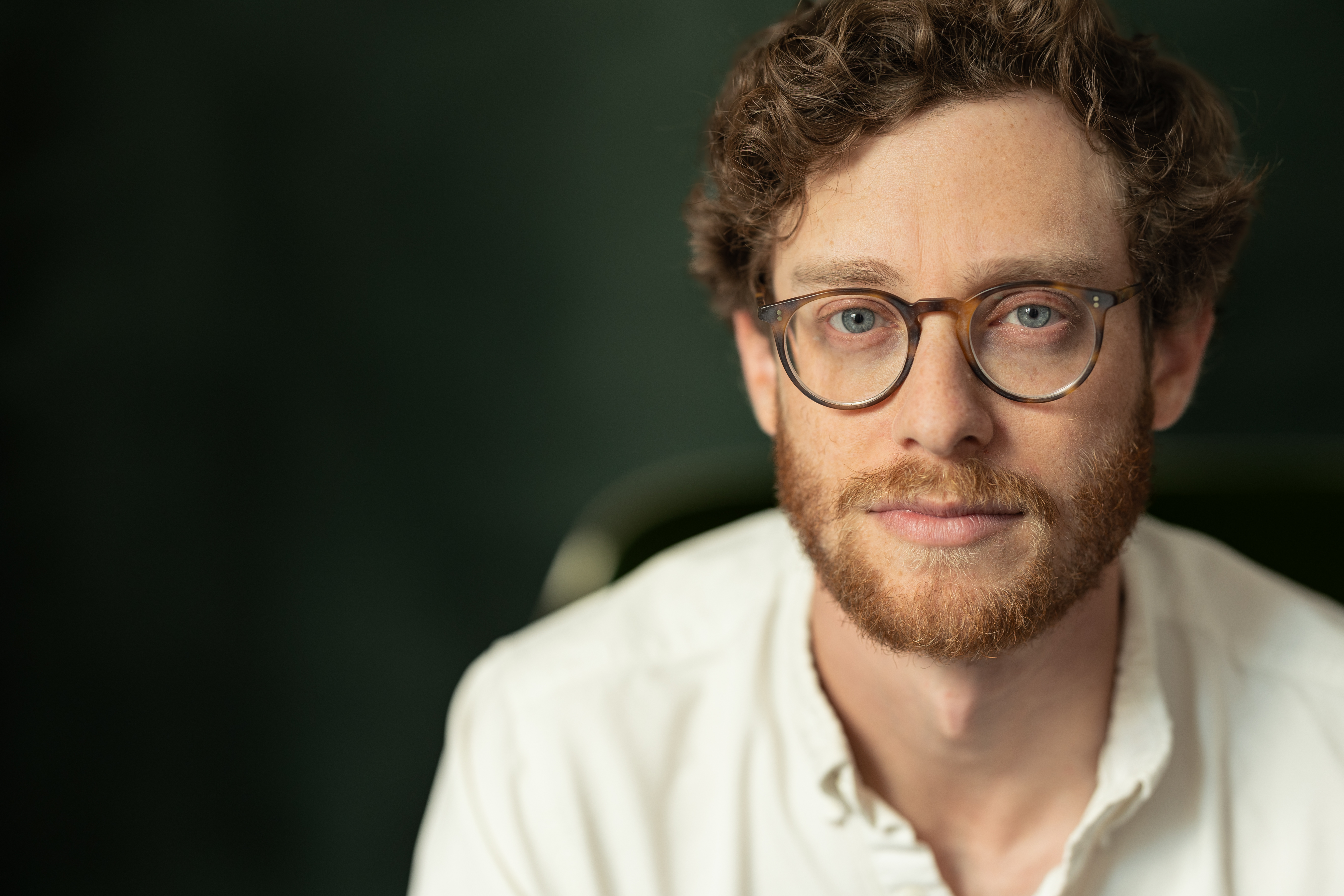
The Origin
The story most people tell about Every starts in 2020. The actual story starts earlier - with a kid in New Jersey who built BlackBerry apps to pay for college, and another who quietly coded the first version of Product Hunt before anyone knew it would matter.
Dan Shipper studied philosophy at Penn because, as he put it, it was "the only major that would tell me how to do it" - how to live well. He also sold his co-browsing startup Firefly to Pegasystems for several million dollars the same day he graduated. He flew directly from the graduation ceremony to Boston to close the deal. He was 22.
Nathan Baschez took a different route: building tools that other builders use. He went from designing Product Hunt to running product at Gimlet Media (winning the first Cannes Lion for an Alexa Skill) to becoming Substack's first employee. He built the "Baschez Score" - an internal system for identifying emerging writers - before anyone else at Substack had thought to look for them systematically.
When they merged Superorganizers and Divinations in April 2020, it wasn't a business plan. It was a bet that two writers covering adjacent terrain would be stronger bundled. They were right.
The People
Dan has been blogging since 2010 - before newsletters were cool, before "creator" was a job title, before anyone thought writers could also be software founders. His blog has 700,000 total readers. He's a TED speaker. He openly wrote about the undiagnosed OCD that upended his late twenties, and how medication finally worked when meditation and retreats didn't.
His column, "Chain of Thought," is the thing people forward when they want to understand what AI actually means for the way knowledge work functions. Not futurism. Not hype. Specific predictions, argued carefully, updated when wrong.
His 2026 thesis: "Agent-native software architecture" - meaning most new software will just be an interface on top of a general-purpose AI agent. "Most new software will just be Claude Code in a trench coat," he wrote on X. A lot of people screenshot it.
He also hosts the "AI & I" podcast, where he interviews founders, investors, and filmmakers about how AI has actually changed how they work. Reid Hoffman has appeared more than once.
Nathan builds things that other builders use. He built the first version of Product Hunt - then moved on before Product Hunt was famous. He was Substack's first employee - then moved on before Substack was a cultural force. He co-founded Every - then spun out Lex and moved on to his next bet.
The pattern isn't restlessness. It's precision about where leverage lives. Nathan joins at the moment of maximum leverage and builds the thing that makes the platform work - then ships the next thing.
Lex is an AI word processor. It launched to 25,000 signups in a single day. It now has 300,000+ users and $2.75M from True Ventures. Nathan lives in Los Angeles with his wife, two kids, and a dog named Porter - and describes his philosophy of product building as indulgence (build what you genuinely want to exist) tempered by pragmatism (ship before you're ready).
His Divinations essays - on how memes spread, how physics explains business, how to write things that travel - remain among the most linked strategy writing on the internet.
The Company
Daily AI newsletter to 70,000+ founders, operators, and investors. Columns include Chain of Thought, Superorganizers, and Divinations. Day-one "vibe checks" of every new major AI model.
Five distinct products: Spiral (AI writing), Cora (AI email), Monologue (voice dictation), Sparkle (file organization), and Proof (collaborative editing). Plus One handles Slack-based AI agents.
Dan's "AI & I" podcast interviews the people actually building AI - founders, investors, filmmakers. Reid Hoffman is a recurring guest. Distributed on Apple Podcasts and Spotify.
Every runs on four internal AI agents: Anton (prioritization), plus meeting notes, OKR planning, and growth tracking agents. Nearly 100% of code is AI-written.
A dedicated consulting arm advises companies on AI adoption and operations. Every practices what it publishes - the consulting work is informed by the company's own AI-native experiments.
Subscriber-only Discord community for the people who read every.to. Also cited by The New York Times and The New Yorker as a source on AI trends.
Moments That Define Them
Dan flew from his college graduation ceremony directly to Boston to close the Firefly acquisition deal with Pegasystems. He had built co-browsing software as a senior in college, sold it to a 300-person enterprise company, and was on a plane before the diploma was dry.
Nathan built the first version of Product Hunt. Not a prototype - the actual working first version of the platform that would go on to launch hundreds of thousands of products. He left before it was famous, because the next build was already calling.
Dan built BlackBerry apps as a teenager - one tracked where his friends were, another changed LED colors based on the weather - to cover his own college expenses. He had decided early that making things was more interesting than waiting for permission to make things.
Nathan's internal system at Substack for identifying emerging writers was known around the office as the "Baschez Score." He was the first employee and was already building infrastructure before the company had enough users to need it.
Dan has written openly and in public detail about the undiagnosed OCD that consumed his late twenties. Therapy, meditation, retreats - all tried, none sufficient. Medication finally helped. He published the essay. His readers replied by the hundreds with their own versions of the same story.
Every's engineers write virtually zero traditional code. The company runs ~25 people and five software products on nearly 100% AI-generated code - and runs its operations on four internal AI agents named Anton (prioritization), plus meeting notes, OKR planning, and growth tracking. This isn't a marketing claim. It's the actual architecture.
In Their Own Words
Most new software will just be Claude Code in a trench coat.
Dan Shipper, on agent-native softwareThe line between writer and builder is blurring.
Dan Shipper, EveryWatch yourself and your desires, and you'll eventually build something that other people might want too.
Dan Shipper, on building productsWhat comes next?
Dan Shipper's guiding question for Every's strategyAI-Native Operations
Most companies say they use AI. Every means something different by it. The engineering team writes almost no code manually - the company estimates ~99% of its code is AI-generated. The operations team runs on four internal AI agents built in Notion AI. These aren't chatbots bolted onto existing workflows. They're the workflow.
Anton handles prioritization. A second agent processes meeting notes. A third runs OKR planning. A fourth tracks growth metrics. Every also treats major AI systems like specialized team members - Claude, Codex, and others named "Friday" and "Charlie" are assigned tasks with the same expectation you'd give a contractor.
Agentic engineering will be the most productive new engineering discipline.
- Dan Shipper, 2026 AI predictionsThis isn't a thought experiment. Every's five software products are built on this foundation: Spiral (AI writing assistance), Cora (AI email management), Monologue (AI voice dictation), Sparkle (AI file organization), and Proof (collaborative document editing). They also run Plus One, a Slack-based AI agents product for teams.
Dan's 2026 prediction: "Agent-native software architecture" means the new features of most software products are just buttons that activate prompts to an underlying general-purpose AI agent. The app isn't the product. The prompt is the product.
Things Worth Knowing
Nathan was Substack's very first employee - he joined as they were finishing Y Combinator, before Substack was a household name in media circles.
Dan chose philosophy as his college major at Penn because he believed it was "the only major that would tell me how to do it" - meaning how to actually live well.
The name "Every" came from their original bundle called "Everything" on Substack. The name compressed; the ambition expanded.
Dan has been blogging since 2010. By 2025, the blog had accumulated 700,000 total readers - before newsletters were a business model and before AI was a beat.
Lex - Nathan's AI word processor - got 25,000 signups on its first day of public launch. It now has 300,000+ users and $2.75M from True Ventures.
Dan co-organized a Facebook Live telethon on Inauguration Day 2017 that raised $200,000 for three nonprofits, with 60+ celebrities and 1.5 million viewers. He called it the Love-a-thon.
Nathan's internal Substack writer-discovery system was dubbed the "Baschez Score" by the team. It was an early version of the kind of algorithmic talent identification that recommendation systems now run at scale.
Nathan's dog is named Porter. He lives in Los Angeles. Dan is in New York. Every runs across both coasts - the newsletter that covers remote-first AI work is itself remote-first.
Explore Further