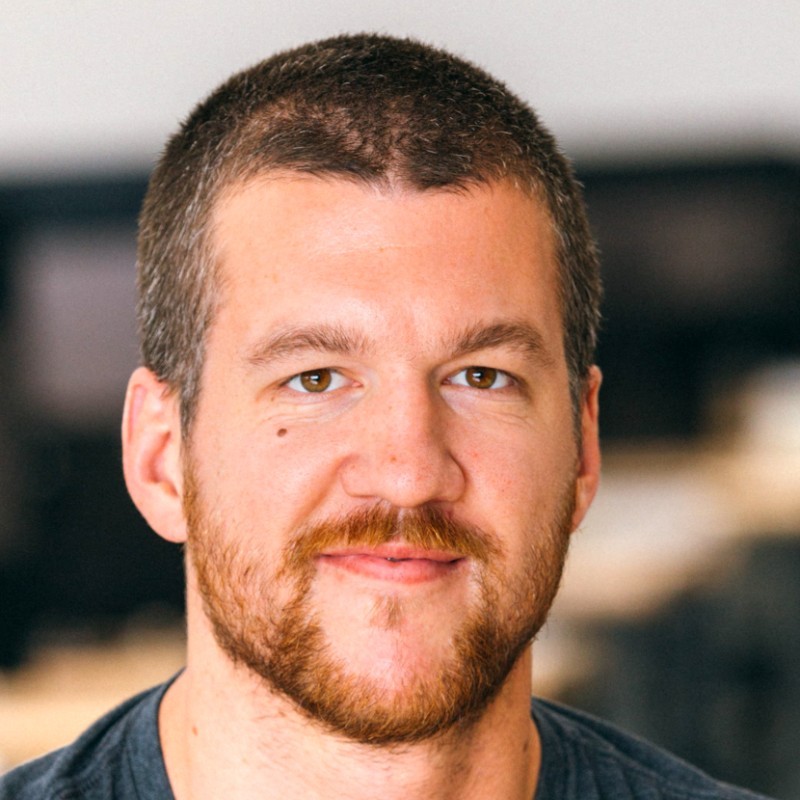
The trader who learned to launch.
Founder · Defense & Space
DanPiemont
He raised half a billion dollars to put rockets in shipping containers. Then he changed the war he was fighting.
CO-FOUNDER & CEO — LONG WALL · Long Beach, California
He raised half a billion dollars to put rockets in shipping containers. Then he changed the war he was fighting.
CO-FOUNDER & CEO — LONG WALL · Long Beach, California
In a 65,000-square-foot building on the Port of Long Beach, on ground once leased to a defunct rocket venture called Sea Launch, Dan Piemont is building interceptors meant to kill incoming missiles in the cold black above the atmosphere. The company is called Long Wall. Eighteen months ago it was called ABL Space Systems, and it was trying to reach orbit on the cheap.
The new name is the tell. Piemont reached back to the fifth century BC, to the Long Walls that ran from Athens down to its harbor at Piraeus and kept the city fed and defended through siege. The analogy is the strategy: layered, physical, unglamorous protection that holds when the pressure comes. He is not pitching a gadget. As he puts it, the company is not selling a product or a service - it is building a program.
Long Wall's flagship is Cyclops, described as a mass-producible exoatmospheric interceptor designed to defeat advanced threats. Around it sit RSX, a line of low-cost liquid boosters built for flight testing and threat replication, and Ironwood, the modern ground support equipment that lets crews launch and test from anywhere with their own power, command, and communications. The thread running through all three is manufacturing - making hard things repeatedly, fast, and at a cost the Pentagon can actually scale.
"When you can only run a handful of tests per year, you're going to get bad cost, schedule, and performance outcomes."
That sentence is the whole thesis. Piemont's argument is that American missile defense is throttled not by physics but by tempo - too few tests, too slow, too expensive. His proposed fix is almost cheeky: take a basically un-modified orbital rocket, the very vehicle ABL spent seven years perfecting, and fly it as a target. Use it to simulate the threats interceptors are supposed to stop. The rocket that never quite reached orbit becomes the thing that makes everyone else's defenses sharper.
It is a strange second act, and Piemont arrived at it by a strange first route.
We're not selling a product or a service. We're building a program.DAN PIEMONT
Piemont studied physics and economics at MIT. That is where he met Harry O'Hanley, who was studying mechanical and nuclear engineering and would go on to spend nearly seven years at SpaceX building propulsion and managing Falcon 9 integration. Piemont went the other direction first. He spent about four years in sales and trading at Morgan Stanley, with stints in venture capital at First Round and Redpoint.
So when the two reunited to start a rocket company in 2017, the division of labor was clear. O'Hanley brought the propulsion pedigree. Piemont brought the capital, the structure, and the appetite for an absurd problem. He became President and CFO - the founder who learned rockets by building the company around them rather than by bolting together engines.
The bet ABL made was contrarian: not bigger rockets, but more portable ones. The RS1 was designed to ship inside standard containers and launch off a self-contained mobile ground system, so the United States could put a pad almost anywhere. They leased the old Sea Launch berth at Long Beach. They won a $60 million Space Force and Air Force Strategic Funding Increase contract in 2023. Money came - more than $500 million across the life of the company.
Then the hard part. RS1's first orbital attempt failed in January 2023. A second attempt failed in 2024. For a launch startup, two losses in a row is the kind of thing that ends companies. Instead, it ended a strategy.
"I'm excited to lead ABL as CEO as we take on the challenge of missile defense. We will do whatever it takes."
In late 2024 Piemont took over as CEO from O'Hanley, who had held the role for seven years and stepped into an executive-without-portfolio seat. The company stopped chasing the commercial-launch market and turned its hardware toward the customer that was already paying attention: the U.S. military. In February 2025 the rebrand to Long Wall made the turn official.
A mass-producible exoatmospheric interceptor built to defeat advanced threats in the midcourse phase - the segment Piemont calls the greatest unmet need in the missile-defense architecture.
Low-cost liquid boosters engineered for flight testing and threat replication. Years of ABL design iteration repurposed as target vehicles that let interceptor programs test far more often.
Modern, transportable ground support equipment - command, control, power and comms - already proven across four seasons in demanding field environments. Launch from almost anywhere.
In the fifth century BC, Athens built two parallel walls - the Long Walls - connecting the city to its port at Piraeus. Inside that corridor, the city could be supplied by sea and survive a siege on land. The walls weren't a weapon. They were the thing that let Athens keep functioning while under attack.
That is the whole pitch in one metaphor. Layered, physical, patient defense. Piemont chose a 2,400-year-old piece of infrastructure as the brand for a company building interceptors. The strategy, he's saying, is older than the rockets.
“Midcourse surface-launched interceptors are the greatest unmet need.”
“When you can only run a handful of tests per year, you're going to get bad cost, schedule, and performance outcomes.”
“Year-to-year: I want there to be space launches multiple times every day from many sites all around the world.”
“Day-to-day: I want everyone at ABL to flourish as individuals.”
On his first visit to the company's machine shop at 224 Oregon in El Segundo, Piemont says the landlord told him: “last time a young guy came in here saying he wants to make rockets, it worked out pretty well.” That building is now the Long Wall machine shop.
That shop runs two SLM 280s, two EOS M400 metal printers, eleven Haas CNC machines, and an inspection lab - the unglamorous spine of “mass-producible.”
He keeps a personal Substack and posts machine-shop tours on X, and once publicly pushed back on a New York Times take on launch - admiring SpaceX while insisting better, more widely spread launch systems were still worth building.
Long Wall operates across four sites - Long Beach, El Segundo, Mojave, and Kodiak, Alaska - the geography of a company that builds things, tests them, and flies them.
We will do whatever it takes to help the U.S. field more advanced missile defense at higher quantities and lower costs.DAN PIEMONT · ON TAKING THE CEO CHAIR
Where to read more from Dan Piemont and Long Wall - and the reporting behind this profile.
Reporting drawn from public sources including Wikipedia, SpaceNews, Payload, Aviation Week, addtheegg, the Long Wall website, and Dan Piemont's own posts on X and Substack. Facts stated as of mid-2026; details about funding and operations reflect the most recent public reporting available.