In January 2023, Dan Park had a used-car company to run and a financing that had stopped being a financing. A planned $95 million round had fallen through. Clutch had expanded across Canada; now it was cutting staff and withdrawing from Western Canada. The business that promised customers a simpler transaction had acquired a brutally complicated problem of its own.
There is an awkward symmetry here. Park had spent years working around capital, first in banking and then in venture investment. He knew what a deal looked like from several seats at the table. At Clutch, the table came with inventory, employees and obligations that continued after an investor changed course. Cars do not become cheaper to keep because a term sheet disappoints you.
His account of that period is striking for its scale of measurement. At one point, he said, the company had roughly six weeks before running out of cash. Long-range ambition had to share a room with the next payroll. For a chief executive, six weeks is barely enough time to finish worrying about six weeks.
A delivery with a different weight
Park had been happy at Uber. He was running Uber Eats in Canada when a board contact suggested a change of cargo: perhaps someone who delivered food could deliver cars. It was an appealingly economical recruitment pitch, compressing several tonnes of operational difference into a change of noun.
He joined Clutch in 2019. Stephen Seibel had founded the business in 2016, following his own frustrating experience buying a car. Park brought experience managing a large operating unit and an acquaintance with fundraising. Seibel brought the company he had already started. In Park’s later telling, the invitation was to build together.
“He was looking for a partner.”Dan Park, on Stephen Seibel
The distinction matters to his story. A biography can make every previous job look like preparation for the present one. Park’s description is less tidy and more believable. He had run a business unit, knew investors and had some experience Seibel could use. Joining meant taking those pieces into a venture whose outcome was still very much undecided.
Before the cars, the capital
His earlier career moved through BMO Capital Markets in Toronto and Deutsche Bank Securities in New York. He became a vice president and founding member of Foros Group, a technology-focused investment banking advisory firm. That work involved helping launch a firm as well as developing business and executing transactions.
At Azure Capital Partners, he evaluated Canadian opportunities and selected American investments. His portfolio work ranged across businesses including The Bouqs, FanXchange, Ranovus and Showbie. Today, Azure lists him as a venture partner. It is a career with a view of companies from the outside as well as the inside.
His education supplied its own evidence of participation. At McGill, where he studied honours economics and finance, he served as president of the Management Undergraduate Society and received the Scarlet Key for his contribution to the university. He later earned an MBA at Wharton. The institutions are familiar; the student leadership detail gives the list a little more life.
Uber Eats added a different sort of experience. His CIX speaker biography credits him with helping scale the Canadian operation across more than 80 markets, with partnerships including McDonald’s and Starbucks. A delivery service has to persuade several parties to cooperate and then repeat the arrangement, reliably, at speed. The customer sees dinner. The operator sees a system.
The round that did not arrive
Clutch’s early expansion put that operating experience to work. Customers could browse vehicles online, see fixed prices and arrange a purchase without the customary negotiation. The proposition suited an era in which more transactions were moving onto screens. It also demanded money: a retailer owning cars has to finance what it intends to sell.
When the planned financing collapsed in early 2023, Clutch pulled back to its eastern markets. Later that year, a $20 million round valued the company at $15 million before the new money. The figures described a severe reset for a business that had previously attracted a much higher valuation. They also bought the company an opportunity to continue.
A valuation can sound like an assessment of the person in charge. In practice, it is attached to a transaction, at a particular moment, under particular conditions. Park’s experience makes the difference painfully concrete. An uncomfortable price for capital can still be the price that allows a business to have a future.
The recovery required changes to the transaction itself. Clutch moved away from buying cars at auctions and concentrated on buying directly from individuals. It reduced marketing spending, charged for deliveries and secured a less expensive inventory lending arrangement. Those changes reached into what it paid, what it spent and how it financed the gap.
These are plain verbs for a reason. A business owning physical inventory cannot solve everything with a more persuasive description of its ambitions. It has to make the next purchase and sale work. The new arithmetic had consequences for people, too: the retreat included layoffs, and the later recovery does not make those losses incidental.
The arithmetic of another year
By 2024, Clutch had reported $320 million in revenue, an increase of 81 percent, and demonstrated profitability. In February 2025, Park announced more than CAD 50 million in Series D funding, led by Altos Ventures. Industry Ventures and BMO Capital Partners joined the investor group alongside returning backers.
The announcement put annualized revenue above $400 million. That measure describes the pace of the business at a point in time; the $320 million figure describes revenue booked over 2024. Neither is Park’s personal wealth. Keeping the numbers in their proper lanes makes the recovery easier to understand.
The round restored room to invest. The question became how to grow an operation that had already discovered what an abrupt shortage of capital felt like. Having survived one version of the business, Park and his colleagues were building another with the experience still close enough to be useful.
The work behind the click
In 2025, Clutch opened a flagship reconditioning facility in Mississauga. It also resumed its Western Canadian expansion, opening a 30,500-square-foot hub in Richmond, British Columbia, in June. The company had operated from that same Richmond facility before its retreat. Returning to an old address made the recovery unusually tangible.
Park described the move as part of making vehicle transactions accessible across the country. The hub housed inspection, reconditioning, logistics and drop-off services. It was a substantial reminder that an online retailer still needs places where people can put a car on a lift and find out what is actually underneath it.
The website can display confidence. The workshop has to earn it. Owning the inventory gives Clutch control over preparation and sale, while putting responsibility for the vehicle on the company. That responsibility is central to the model Park has chosen to run.
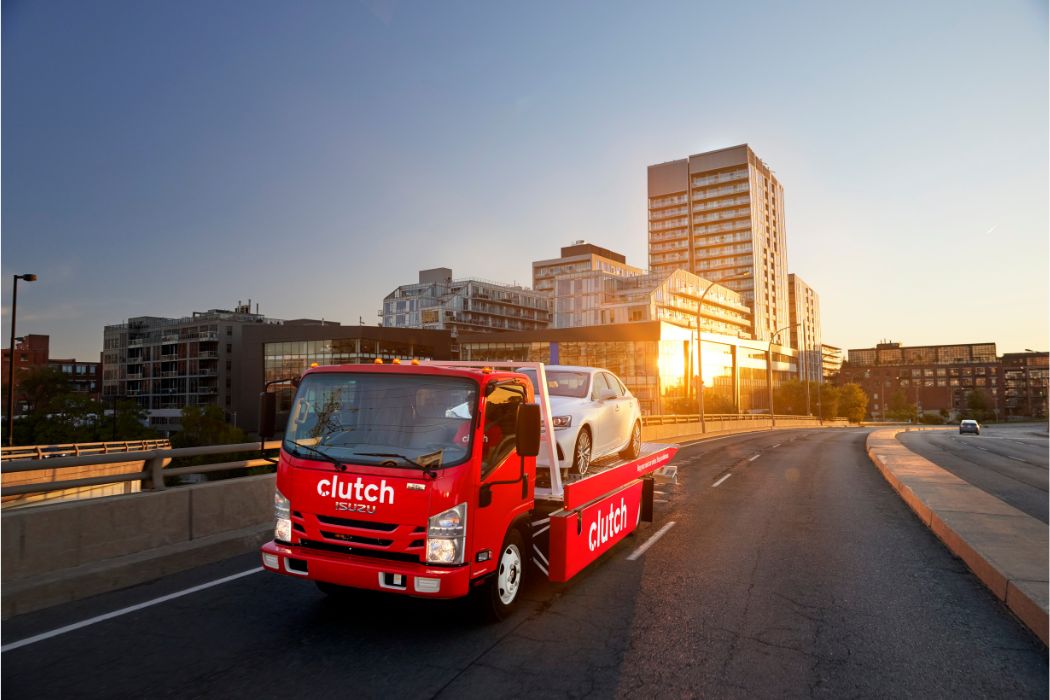
The current company description lists an internally built pricing engine, inspection application and inventory systems. It also describes frequent software releases and communication between engineers and operations staff. For Park, whose experience spans finance and delivery, those connections put different parts of his career within talking distance of one another.
Trust, with the paperwork attached
Park’s public conversations have increasingly concerned what buyers need to know. In March 2026, he joined a Canadian Lenders Association discussion about digital automotive finance. The session examined transparent pricing, financing disclosure and the practical steps required to carry a transaction through online.
The subject fits his business. An attractive listing starts a conversation; customers still have to understand the purchase they are making. Faster tools are useful when they help that understanding survive the paperwork. A confusing transaction completed quickly remains a confusing transaction.
Clutch’s 2026 reliability research supplied another way to discuss confidence. Drawing on more than 100,000 inspections, it examined what used vehicles revealed in practice. Park’s response emphasized that prestige and price do not automatically produce a better ownership experience. For a retailer, that is a useful argument to make with records rather than adjectives.
He has also brought people closer to the physical operation. In a public post, he described hosting more than 70 technology leaders for dinner on a Mississauga facility floor. The setting gave the conversation about building Canadian companies a conspicuous backdrop: the place where vehicles are prepared for customers. Some businesses have a showroom. This one also had a dinner room with an inspection habit.
A garage with school runs to do
For all the scale of the business, Park’s own garage has ordinary assignments. In December 2025, he described a Volvo XC60 for daily family duties, a Mini Cooper S for Toronto driving and tight parking, and a Chevy Traverse for the equipment and general commotion of family outings.
His wish list is more romantic: a 1968 Ford Mustang Shelby and a 1958 Porsche 356 Speedster, subject to more parking and a later phase of life. There is something pleasantly exact about that condition. Even a chief executive selling cars for a living cannot negotiate extra square footage out of a Toronto parking space.
In 2026, EY named Park and Seibel Ontario finalists in its Entrepreneur Of The Year programme. In September, the Korean Canadian Scholarship Foundation selected Park for its Dream Tree Award, with the presentation scheduled for October 17. These are recognitions of a career whose public story now includes recovery as well as growth.
Park’s advice after the difficult years has emphasized learning quickly. “Time is your worst enemy,” he said of a startup burning cash. The line has more weight coming from someone who has measured the remaining time in weeks. At Clutch, another chance meant returning to the work: the next vehicle, the next customer, and a company that could keep its promises long enough to make new ones.
Keep the conversation going
- Clutch · Dan Park on LinkedIn · Azure biography
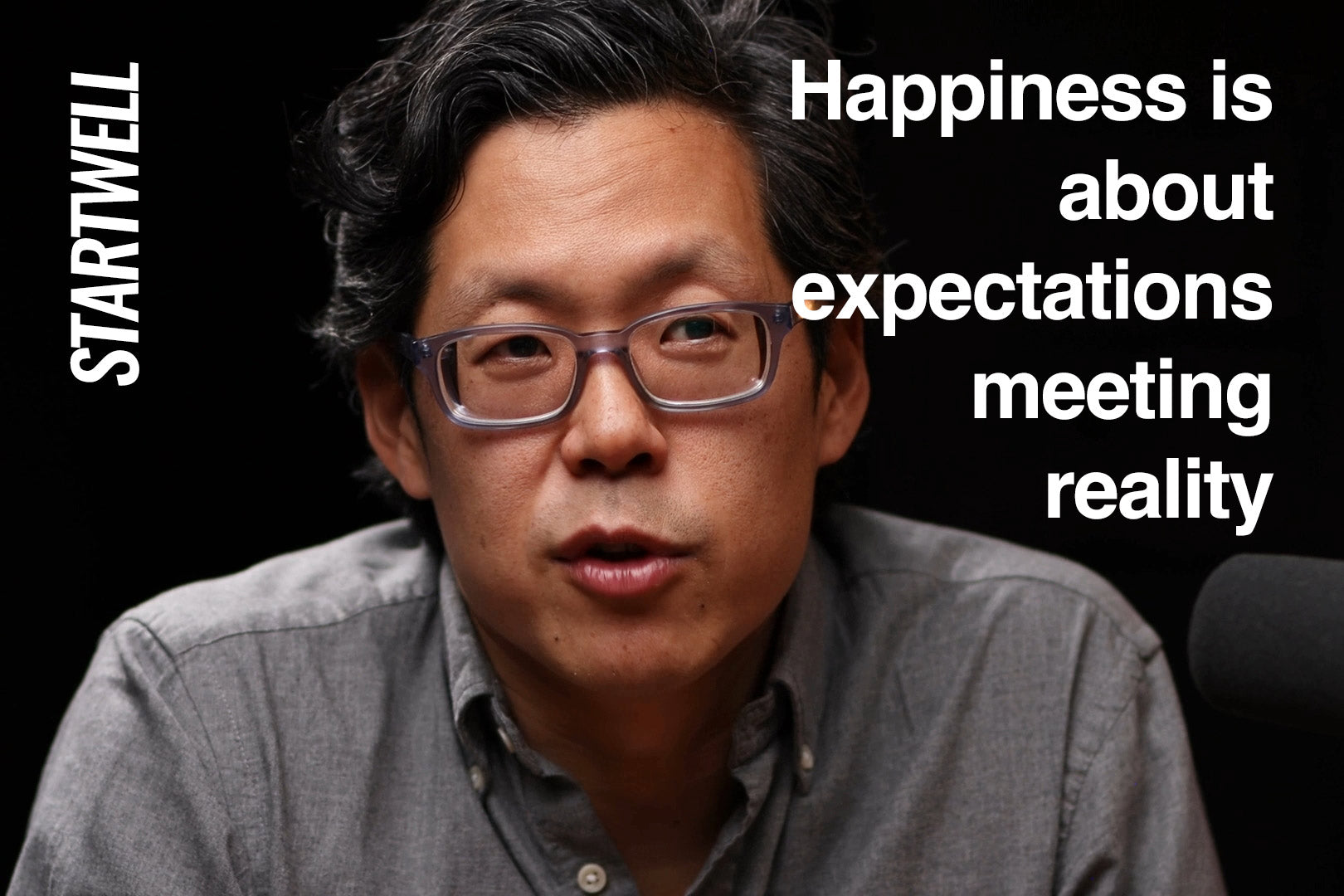
- Watch: Park’s StartWell conversation
- Watch: Everything Marketplaces interview
- Read Park’s Series D announcement
- The Peak: cars, family logistics and the dream garage
- BetaKit: returning to Western Canada
- Listen: Park on the funding crisis and recovery
- Autosphere: Clutch’s 2026 reliability research
- Canadian Lenders Association: digital automotive finance
- EY’s 2026 Ontario finalists
- 2026 Dream Tree Award announcement