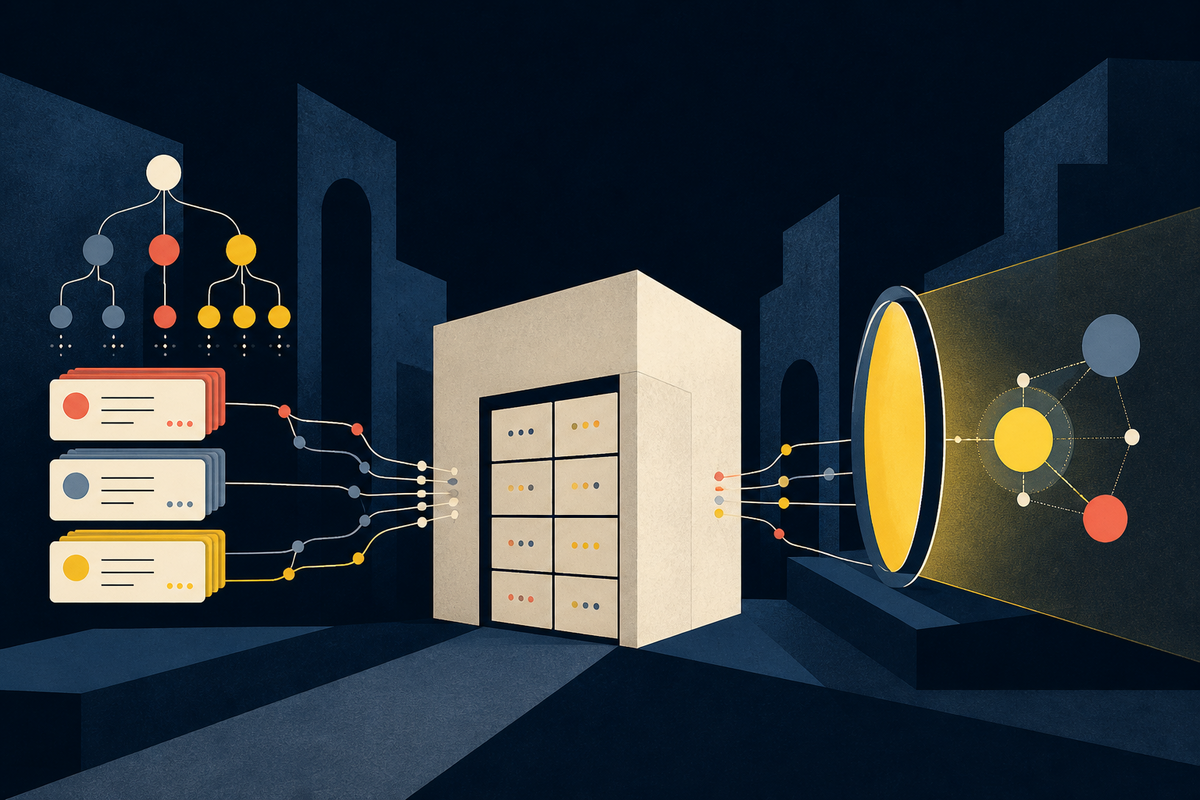
The easiest way to buy customer success software is to count features. Health scores, playbooks, account views, renewal forecasts, email cadences and AI summaries line up neatly in a spreadsheet. The harder way is to imagine the morning after the software is gone. Can the company still identify every customer and product relationship? Can it reconstruct why an account was marked at risk six months earlier? Does it retain the history that taught a model which customers renew?
That exit-day thought experiment exposes the real choice between Totango and Hook. Totango is the broader post-sale operating system: configurable account structures, segmentation, workflows, campaigns, portfolio views and a large integration surface. Hook is the more opinionated prediction-and-action layer: it pulls together product, subscription, user and interaction data, then tries to tell a revenue team where risk or upside lives and what to do next.
Both can help. They create different kinds of gravity.
The model decides what the team can see
Totango begins with explicit objects and keys. Its documentation says every account, user and collection needs a unique binding ID, managed by the customer. It supports flat accounts and multi-level hierarchies, including product nodes. Numerical usage can roll from the lowest level upward, while people do not automatically roll up the same way. That distinction matters when a global parent buys several products through regional subsidiaries: revenue, adoption and human relationships do not share one natural grain.
The flexibility is useful, and it extracts a price in design work. Totango itself advises keeping hierarchy simple because removing levels later may cost data. A team must decide its working level, where contract value belongs, where usage lands and which stable identifier binds application records to CRM accounts. Totango recommends an internal application ID, a Salesforce ID or a hybrid with a foreign key. For users, it recommends email while permitting another stable ID.
Hook presents a tighter public model. An account is a current or former paying customer. Subscriptions carry dates, value and licenses. Users belong to accounts and are classified by behavior, from power users to licensed people who have never logged in. Product usage, support, meetings and subscription facts become key metrics and engagement signals. Multiple products receive separate engagement and upsell levels.
What Hook’s public material explains less fully is cross-system identity resolution. Its integration catalog is broad, but buyers should ask how duplicate accounts, merged CRM records, changed emails and parent-child reorganizations are reconciled. A connector moves data. Identity resolution decides whether the moved data refers to the same customer.
The portability ruleIf the vendor is the only system that knows who the customer is, the vendor owns more of the operating model than procurement may realize.
Totango’s center of gravity
Configurable lifecycle operations for complex portfolios: hierarchy, segmentation, health design, campaigns, tasks, touchpoints and cross-functional workflows.
Hook’s center of gravity
Machine-learned prioritization: renewal likelihood, expansion potential, explanations, suggested actions and agents that reduce manual portfolio work.
Import is easy to demo. Export is harder to judge
Totango accepts data through files, APIs, CRM connections, product instrumentation and warehouse or lakehouse connectors. Its documented warehouse list includes Snowflake, BigQuery, Databricks, Redshift and several relational databases. Usage can arrive near real time or in scheduled aggregates. That gives architects options, but also creates a choice: send raw user events into Totango, or calculate durable metrics in the warehouse and send only the results.
For export, Totango documents CSV and Google Drive downloads plus generated API endpoints for segment data. It also supports CSV exports for reports, tasks and touchpoints. Those paths are material. They do not, by themselves, prove that every derived object, historical health state and workflow dependency is available in a form that another system can reproduce.
Hook connects to CRM, product analytics, support, meeting, engagement and warehouse systems. Its catalog lists Snowflake, BigQuery, Databricks, Redshift, PostgreSQL, S3 and Azure Blob Storage among the routes. Current Snowflake instructions recommend a limited read-only user. Customer, user and key-metric table views can be exported for outside analysis.
The asymmetry is familiar: vendors describe inbound plumbing in architectural detail and outbound portability as a report action. A serious evaluation should request an export inventory. Include account and user keys, subscription history, raw and derived metrics, score history, explanations, notes, tasks, interventions, model versions and renewal outcomes. Then load the files into a blank database. If relationships or timestamps disappear, portability was only partial.

Health is a decision product, not a color
Totango gives operators room to compose health around their business. That is a strength when renewal risk differs by segment, product or lifecycle stage. It also makes governance essential. Teams can spend months debating weights and thresholds, then produce a score that reflects internal opinion more faithfully than customer behavior.
Hook argues for learned scores. Its engagement model uses historical renewals and churn, and its documentation describes product usage, user activity, subscription information, support and meetings as inputs. It distinguishes prediction quality with precision, recall and lift, and turns actionable signals into suggested actions. Models are updated over time. This shifts work from hand-tuning weights to validating data coverage, model calibration and whether suggested interventions actually alter outcomes.
For retention and expansion, Hook therefore has a sharp proposition: rank the portfolio by predicted revenue consequence and reduce guesswork. Totango has the wider operational canvas: encode onboarding, adoption, renewal and expansion programs, then coordinate work across them. Hook may reach an initial useful answer faster when clean history exists. Totango may reach a more complete operating state when the company has complex products, roles and journeys.
Time to value depends on restraint
Hook advertises a seven-day path to a first agent. Totango promotes fast implementation and modular SuccessBLOC programs. Those claims describe possible starts, not finished transformations. A quick connection can still inherit duplicate IDs, ambiguous renewal dates and inconsistent product telemetry. Machine learning does not clean contract definitions by wishing harder.
The best pilot is narrow: one product, one segment, one lifecycle outcome and a cohort with known results. Establish a canonical account key. Freeze the definition of renewal, churn and expansion. Back-test health against historical outcomes. Give CSMs one new prioritization queue. Record every action and its timing. After a renewal cycle, ask whether the intervention changed behavior, not whether the team logged in.
Adoption follows usefulness. Totango can improve daily consistency because tasks, segments, playbooks and communications live in one operating surface. Hook can improve adoption by taking work away: fewer manual risk updates, faster meeting context and smaller lists of accounts worth attention. In either case, forcing CSMs to maintain the same truth in CRM, a CS platform and spreadsheets will corrode trust.
Ownership is an architecture, not a clause
Legal terms matter. Totango’s data processing agreement says personal data can be returned or deleted at the customer’s choice after service ends, subject to the agreement and legal requirements. Its product documentation also exposes configurable entity-retention policies, a 30-day revive period after records are marked for deletion, and a standard 365-day account-history window for paying customers, with other options.
Operational ownership goes further. A company may legally own its data while lacking the pipelines, definitions and history required to use it elsewhere. Hook’s predictive output is especially valuable when trained on organization-specific behavior, which makes model history and outcome labels important migration assets. Totango’s configured hierarchy, segments and SuccessPlays can become an equally important form of institutional memory.
The defense is a boring architecture. Keep raw events in the warehouse. Maintain canonical account, user, subscription and product mappings there. Store metric definitions in version control. Write score snapshots, interventions and outcomes back to a controlled analytical layer where possible. Treat the CS platform as the place that coordinates judgment and action, not the sole archive of how judgment became possible.
- Show us the complete offboarding export, including derived and historical objects.
- Explain how identities survive CRM merges, email changes and hierarchy redesigns.
- State retention windows for raw events, scores, notes, backups and deleted accounts.
- Demonstrate model calibration on our historical cohort, not a pooled marketing result.
- Prove we can rebuild one renewal view from exports in a buyer-controlled database.
Totango and Hook can both make a customer portfolio more legible. Totango offers more ways to design the work. Hook offers a stronger opinion about where attention should go. The winning choice is the one that matches the company’s constraint while leaving the underlying truth portable. Ask for the onboarding demo. Then spend equal time on the exit.
Questions buyers ask
Which platform better fits complex account hierarchies?
Totango documents deeper hierarchy controls, including unlimited levels, product nodes and numerical rollups. Hook supports accounts, subscriptions, products and users, but its public emphasis is prediction and action.
Which is more focused on predictive churn?
Hook puts custom machine-learned renewal and expansion prediction at the center. Totango also markets AI churn intelligence while pairing it with broader workflow and lifecycle operations.
Can both platforms export data?
Yes, at least in documented report and table contexts. Totango supports segment CSV, Google Drive and API endpoint options; Hook documents table-view exports. Buyers should verify derived score and history coverage.
Does a warehouse connector prevent lock-in?
No. It helps only if canonical data remains in the warehouse and derived scores, actions and outcomes can be written back or exported with enough context to reconstruct them.
What should a portability test include?
Export identities, relationships, raw metrics, score history, explanations, notes, tasks, interventions and outcomes, then rebuild a useful renewal view in an empty buyer-controlled database.