A blood sample is a peculiar kind of evidence. It arrives in one tube, but its contents have travelled from many places. Cells shed fragments of DNA into circulation. Some fragments come from blood cells; others come from organs. A doctor wants to know what is happening in the liver. The tube contains messages from the rest of the body, too.
Curve Biosciences has built a company around that problem of attribution. Its proposition is that a blood test becomes more useful when you know where the signal began. To work that out, the company first went looking somewhere else: in tissue.
- Build the reference first. Curve’s atlas contains more than 400,000 manually curated tissue samples.
- Start with the liver. Its initial tests target chronic liver disease monitoring.
- Make the result useful. Clinical validation and insurance reimbursement are central to its commercial plan.
01 The address book inside the algorithm
Curve calls its reference collection the Whole-Body Atlas. Samples are characterized by organ and disease state. Its models examine DNA methylation, chemical patterns that can help distinguish tissue origins and changes associated with disease. The atlas supplies a biological reference against which fragments circulating in blood can be interpreted.
Think of an envelope without a sender’s name. The handwriting may offer a clue, provided you already have examples from the possible senders. Curve’s tissue data plays that reference role. The analogy has limits, but it explains why the company gives such prominence to material collected before a patient’s blood reaches the model.
The names describe three different layers. Whole-Body Atlas is the reference. Whole-Body Intelligence is the computational platform. Whole-Body Blood Tests are the intended clinical products. An atlas, however substantial, still has to become a dependable test that answers a doctor’s question.
02 The glamour was in the checking
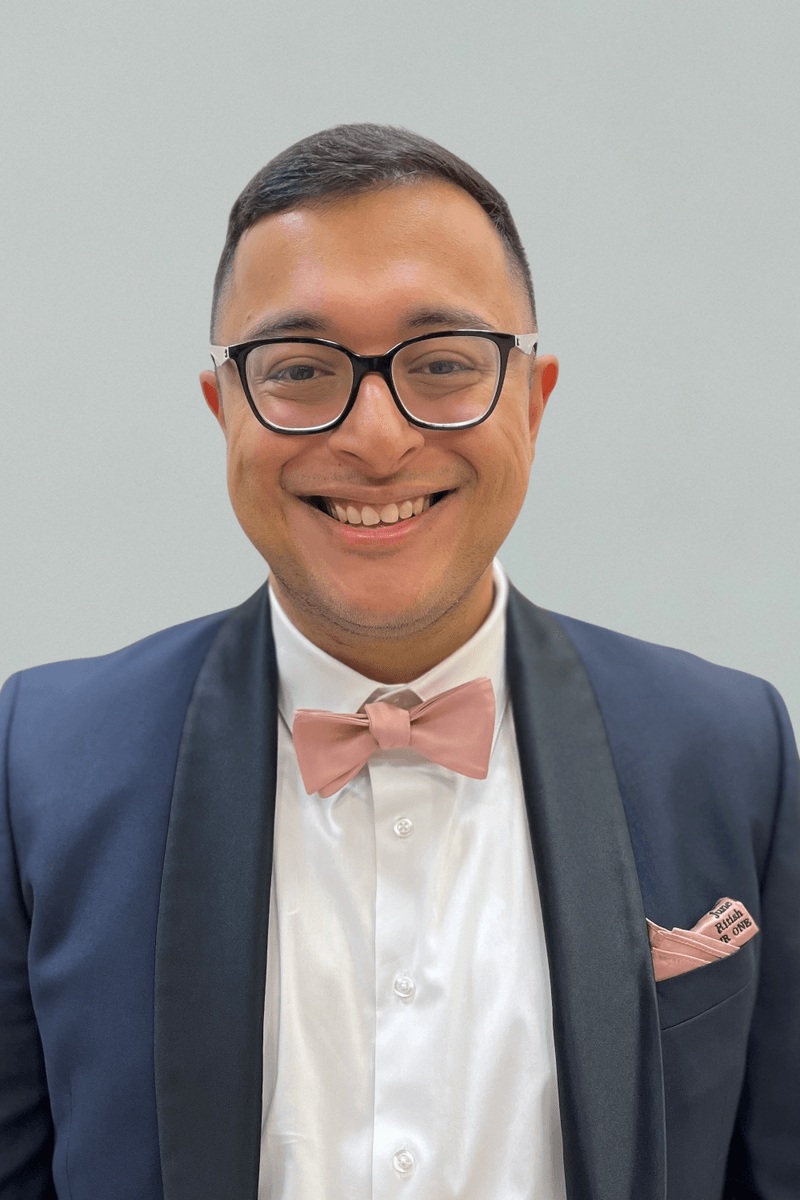
The origin sits in Ritish Patnaik’s graduate work with Stanford professor Shan Wang. In a public account of Curve’s beginnings, Patnaik recalled a whiteboard discussion with his adviser more than eight years before the company’s 2025 unveiling. The company itself was founded in 2021.
Luma Group, which led Curve’s $40 million financing, describes researchers reviewing inconsistent records and contacting investigators to correct them. It called the curation “painstaking and slow work.” That is a revealing detail in an AI business. The impressive noun is intelligence; the consequential verb may be checking.
A lesson for other builders follows from that choice: inspect the reference data before asking an algorithm for confidence. Useful labels require work. A larger dataset can multiply confusion when its samples are poorly characterized. Curve’s approach puts the biological identity of the training material near the beginning of the product story.
03 A whole-body ambition, one organ first
Curve’s initial focus is chronic liver disease. Its development plans include cirrhosis and liver inflammation monitoring, alongside liver cancer screening research. The ambition eventually extends to multiple organs, but the first practical question is narrower: can blood provide better information about a liver patient’s disease?
For liver cancer surveillance, an incumbent approach combines ultrasound with alpha-fetoprotein blood testing. Helio Genomics offers another blood-based approach through HelioLiver LDT. Curve enters a market with existing tools and competitors; its broader chronic monitoring plan must earn its place through particular clinical uses.
There is a useful restraint here. A platform can describe a future spanning the body. A physician needs an answer for the patient in front of them. Beginning with a defined patient group gives the company a concrete setting in which to test its idea.
04 The patients the model had not seen
In April 2026, Curve announced a completed cirrhosis study involving 1,482 patients at 23 sites. After atlas pretraining, the model was trained further using blood data from 885 participants. It was then evaluated on a separate, fully blinded group of 597 patients. The company described strong performance and said it was preparing a clinical manuscript.
The separation matters. Learning from patients and being evaluated on different patients answer different questions. The announcement marks a development milestone; it does not establish that every proposed application works or that patient outcomes have improved.
05 The insurer belongs in the room
The intended business has several audiences. Patients stand to benefit. Physicians would use the results. Insurers and employer payers are the intended economic customers, according to Patnaik’s account of the strategy. Pharmaceutical companies could also use better biological measurements to understand treatment effects.
That arrangement makes usefulness more demanding than producing an interesting signal. A result needs to influence a decision, and that decision needs to justify the cost. The company is pursuing clinical validation and reimbursement as part of bringing its tests into care.
The capital supports that work. Curve announced $40 million in October 2025, led by Luma Group. Separately, Texas’s cancer research agency, CPRIT, awarded $11.34 million for a liver cancer screening clinical utility study. The award describes a comparison with standard care involving 2,000 high-risk patients. Investment and grant funding finance development; neither is a per-test price.
06 A return to Texas, with homework ahead
Curve moved its headquarters to Dallas’s Pegasus Park in 2025 while retaining California operations. Patnaik grew up in Plano. By the time he returned, the region’s laboratory and clinical infrastructure offered a different proposition from the one he had left. “North Texas is home,” he told Plano Magazine.
“North Texas is home.”Ritish Patnaik · Plano Magazine · January 2026
He has assembled blood-testing veterans from GRAIL, Natera and Counsyl. In April 2026, hepatologist Amit Singal joined as chief medical officer; a scientific advisory board followed in June. Their task is to connect the research platform to clinical practice. A tissue reference cannot guarantee that its signals remain reliable across every patient population. A reliable signal cannot, by itself, guarantee useful treatment decisions. Curve’s next chapter depends on doing both.