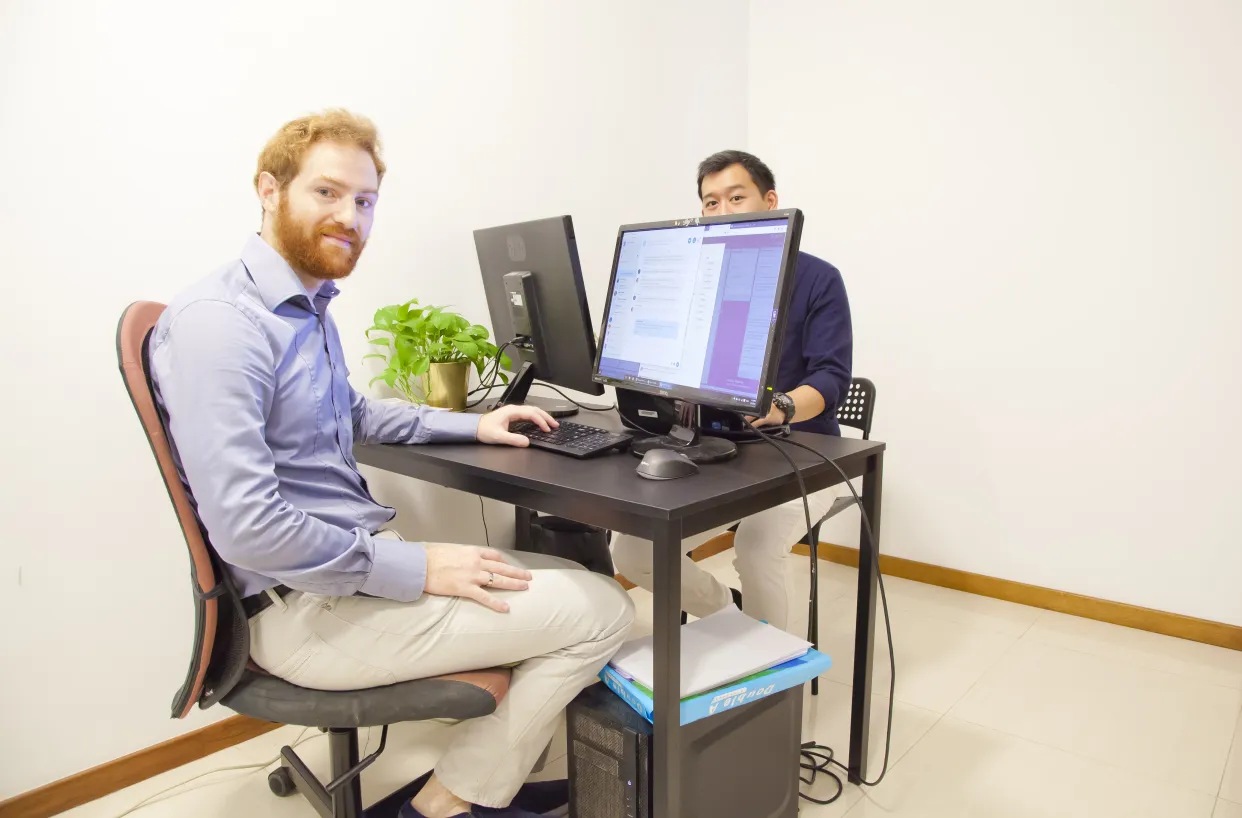
Guillaume Catella’s first Creatella office was his kitchen. In the photograph, two men sit behind monitors at a small table, with a plant wedged between the screens. It is an ordinary room for an unusual proposition: what if the technical co-founder a startup needed could arrive as an entire team?
Catella founded Creatella in Singapore in 2015. He had studied nuclear engineering in Japan and later earned an INSEAD MBA. Software offered a shorter distance between an idea and something people could use. Creatella applied that attraction to other people’s businesses: help the person who understands a market find the people who can build for it.
- A fractional CTO and technical team for early-stage founders.
- Design, development, growth support and investor introductions.
- A historical fees-plus-equity model that trades some ownership for execution.
The missing person is a team
Consider the founder who knows an industry intimately but cannot write the software it needs. Recruiting a permanent technology leader takes time. Commissioning an app settles a narrower question: who will deliver this particular piece of work? Product decisions continue long after the first version ships.
Creatella occupies that awkward middle. Its offer combines a fractional CTO with designers and developers, adding advice and growth support around the product. The founder leads the venture. The studio supplies technical judgment and execution. Its current selection criteria favor experienced founders, idea- or MVP-stage companies and large markets, with a preference for Western Europe.
The distinction is the scope of responsibility. An agency can build to a specification; an accelerator can introduce mentors. Creatella offers to participate in shaping and building the venture over time. Those categories overlap, of course. The meaningful question is who remains responsible when the specification changes.
The price has two parts
An October 2018 INSEAD study described Creatella charging service fees and taking a small equity stake, approximately 5%, while providing technical development and digital marketing at reduced or sometimes zero service cost. That is a historical account, rather than a standing offer. It makes the underlying bargain unusually clear.
The founder preserves some cash and gives up some ownership. The builder receives revenue to support its team and a claim on future value. The report described a self-funded studio, long-term agreements and no fixed exit plan. Patient participation was built into the arrangement.
Reduced cash cost. Shared ownership. Terms described in the INSEAD study.
For a founder comparing options, the practical calculation includes both the invoice and dilution. A capable internal team may eventually be preferable. A tightly defined project may suit an agency. The studio model earns its place when continuing technical leadership matters enough to justify an ownership relationship.
Two and a half months to something real
The company’s published iDoo case provides a useful sequence. The founder arrived with an idea, market knowledge and a little capital. A CTO translated the business into wireframes and a development roadmap. Creatella says its team built and launched the MVP in 2.5 months.
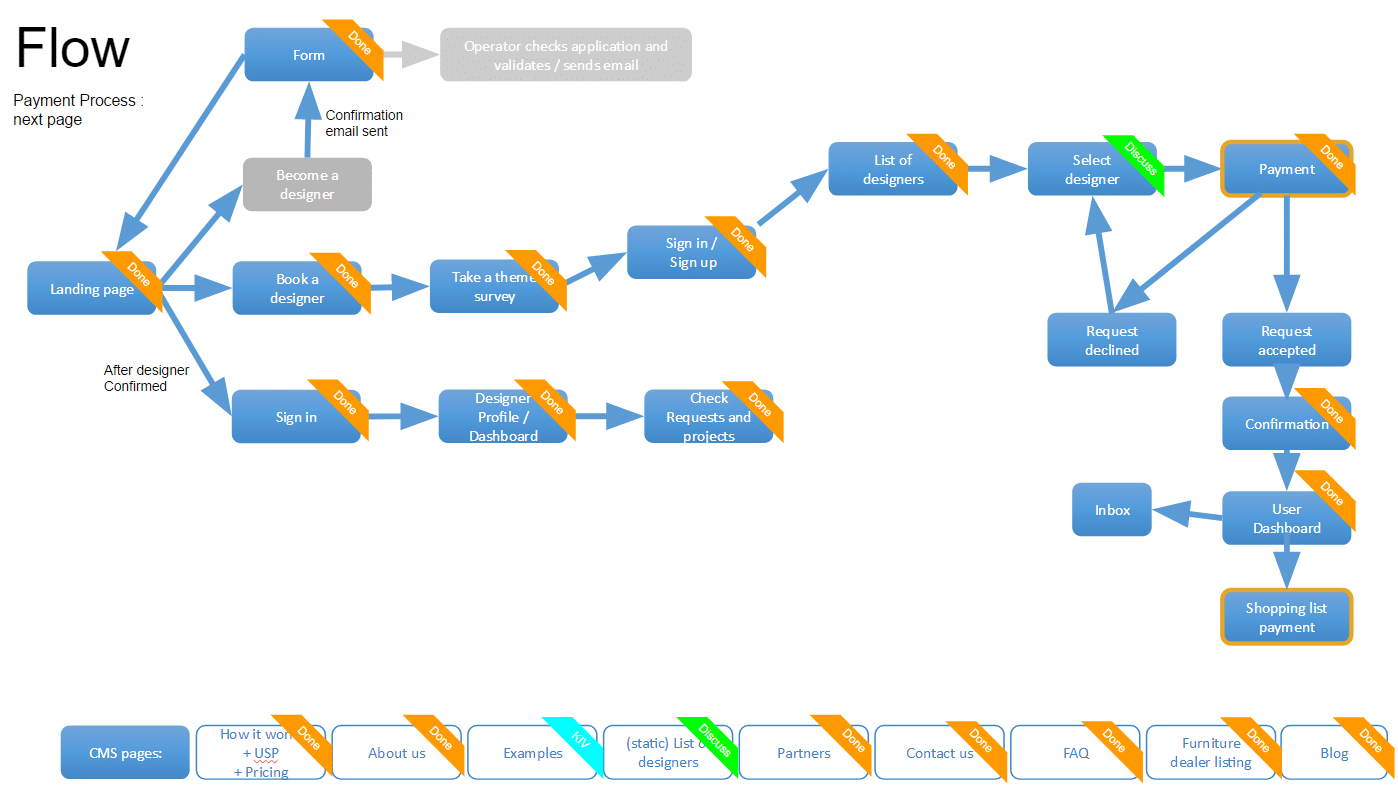
First revenue followed two weeks after launch, according to the case study. Advice covered the business plan, incorporation, accounting and hiring; investor introductions helped the company secure funding. These are reported outcomes for one venture, rather than a timetable another founder can order.
“They don't only produce, they also advise.”
Ben De Mot, iDoo founder
The lesson worth borrowing is the order. Market understanding comes first. The roadmap makes assumptions concrete. The product reaches customers, and their response becomes information for the next decision. Building faster is helpful when it shortens that learning cycle.
The builder becomes its own customer
Creatella also develops ideas internally. Bilingua, its language-exchange app, matched learners with compatible conversation partners and used a tiger mascot, Shiro, to encourage practice. The company’s historical launch account reported 30,000 beta users in four months.
The idea came from the team’s own international experience. Creatella says it handled research, prototyping and a global launch within six months. Here the studio was choosing the problem as well as executing the product. For a prospective partner, that distinction matters: building an internal venture exposes a team to the decisions and uncertainty its customers face.
The first bottleneck was paperwork
One of Creatella’s more revealing experiments involved its own recruitment. A 2017 company article described almost a dozen open roles, hundreds of applications and an HR team of one. Reading resumes and cover letters consumed attention before the company had established whether applicants could do the work.
It changed the first screen to a short, role-specific questionnaire, using digital portfolios as supporting evidence. Carefully chosen written questions replaced the conventional cover letter. The article claimed applications could be reviewed up to ten times faster, while later assessment remained intensive.
This is a more useful operating lesson than a vague instruction to hire good people. Identify the decision that needs making. Ask for evidence relevant to it. Spend the saved time on the candidates who warrant a closer look.
Distance is an operating problem
Creatella’s remote-work writing is similarly practical. Its 2017 coordination guide separates scheduling, shared documents, communication and task management. It recommends making ownership visible and breaking large objectives into specific tasks. A spreadsheet can be sufficient. The expensive mistake is leaving responsibility ambiguous.
Culture enters through ordinary choices, including separate formal and casual channels and flexibility for people observing different cultural holidays. In a distributed team, those arrangements help people understand both the work and one another. Geography becomes a management problem with specific parts to solve.
Give the team room to be useful
In a 2018 INSEAD essay, Catella described micromanagement creating decision bottlenecks and driving away contributors. That warning exposes a condition of Creatella’s offer: a founder buying technical judgment must allow the team to exercise it. Keeping every decision at the top defeats much of the arrangement’s purpose.
The portfolio spans different customer problems: YoRipe’s cooking community, Flyp Academy’s learning resources and Kindred’s women’s health services. Sector variety puts more weight on the founder’s expertise. A shared product team can help turn that knowledge into software; the founder still needs to know whose problem deserves solving.
For someone weighing the model, the next conversation should cover decision rights, development scope, ownership and the path toward an internal team. Creatella makes technical capacity available early. The founder’s job is to give that capacity a market worth serving.
Visit Creatella ↗ · LinkedIn · X · Facebook
The hiring experiment · The remote-team guide · Listen to Catella’s LaunchX interview