Corina Tracy has a useful habit for someone who ends up running the company: paying attention to people who know more than she does. She has described it as “watching, learning, and absorbing.” The order is worth keeping. Observation comes first. A chief executive has plenty of occasions to speak; the harder discipline may be deciding when another person has something better to say.
Tracy now leads U.S. Urology Partners from a career base in Tennessee. Her work concerns a familiar business puzzle with unusually personal stakes for the owners involved: how to assemble a larger organization while preserving the local identities of the businesses joining it. Scale brings resources. It also brings the possibility of becoming remote from the people whose work gives the organization its value.
Her route to that responsibility involved regional operations, national executive roles and a change of company. It makes a more interesting story than a title alone. The thread running through it is the work of learning enough about an organization to help it grow, then finding the people who can carry its expanding responsibilities.
When the job outgrew the map
Tracy joined Compassus in 2003. By 2009, she had moved from Iowa to Nashville with her family to become part of its executive leadership team. At the end of 2014, she took on the chief operating officer role. Those dates trace a change in the size of the questions on her desk: from responsibility within an organization to responsibility across it.
A regional position and a national one can share the same vocabulary while requiring different work. Operations still means making an organization function. The distance between decisions and their consequences, however, increases. More locations mean more people with information that the executive cannot gather alone. A larger organization makes the ability to listen useful in a thoroughly practical way.
During Tracy’s tenure, Compassus grew from 20 locations in 2006 to nearly 200 across 30 states, with 6,000 team members. She contributed to that expansion through several leadership positions. The figures describe an organization’s collective work, and they belong beside the people who carried it out. They also give a sense of the operating experience she would bring to her next company.
A mentor, and another set of books
One person Tracy credited with helping her progress was Compassus CEO Jim Deal. He encouraged her to study business. She went on to earn a Bachelor of Science in Business Administration from Upper Iowa University. A mentor’s encouragement can sound like a pleasant detail in a career biography. Here it points to a concrete addition to her preparation for leadership.
Business education gives a developing executive another way to examine a problem. A decision has consequences for staffing, resources and the rest of the organization. Understanding those connections makes it possible to ask more precise questions. It also makes the person asking them better equipped to understand the answers coming back from colleagues with different specialties.
There is something appealing about an experienced operator returning to formal study. Expertise in one area can make learning another feel awkward. The person used to having an answer has to become comfortable asking for one. Tracy’s degree sits in her career alongside years of increasing responsibility, a reminder that education and experience can continue to develop together.
“Our partnership with TGN has been the main staple of our success for leadership development, business outcomes, and retention.”
Corina Tracy
Her endorsement of leadership consultancy TGN connects people development with business outcomes and retention. It is her assessment of the partnership. The interesting choice is what she puts together: the organization’s results and its ability to develop and keep people. For an executive overseeing expansion, those responsibilities occupy the same sentence.
Twenty-four offices, then the CEO’s chair
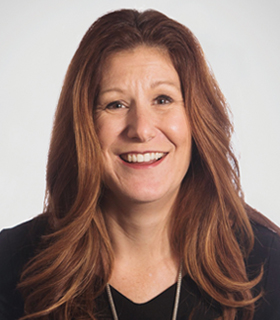
In June 2021, U.S. Urology Partners announced Tracy’s arrival as chief operating officer. The company’s network then included 24 locations in Ohio and New York. It had been formed in 2018, and its founding chief executive, Mark Cherney, was still leading it. Tracy entered a younger business with experience gathered across a much larger organization.
The appointment gave her responsibility for operations. Before the year ended, the company announced the next transition: Tracy would become chief executive on January 1, 2022. Cherney would remain involved as executive chairman, with a focus on strategy and development. The arrangement placed responsibility for leading the company with Tracy while retaining the founding executive in a different role.
A succession announcement provides a date. The more consequential change is the range of decisions attached to it. The chief operating officer is responsible for making operations work; the chief executive must also hold the company’s direction, people and partnerships together. Tracy’s promotion brought those responsibilities into the same job.
The names stay on the doors
The company Tracy leads offers affiliates shared management infrastructure while allowing them to keep their local brands and identities. Its stated support includes technology, financial reporting, marketing, legal assistance and revenue cycle management. These are the less photogenic parts of business expansion. They are also the parts that must function after everyone has finished celebrating an agreement.
The distinction between local identity and shared administration gives her work a particular shape. An established business has accumulated relationships under its own name. Joining a larger organization adds another layer of people and systems. The company’s proposition asks those layers to coexist, with resources shared across the network and local identity remaining visible.
That promise creates an ongoing management question. Which tasks benefit from a common system? Which decisions require local knowledge? A chart can assign responsibilities, but people have to make the arrangement work. Tracy’s operating background belongs directly in this part of the story: the business is organized around supporting other businesses whose identities already mean something in their communities.
Capital arrives. The work continues.
April 2025 brought a change in financial backing. General Atlantic made a growth investment in U.S. Urology Partners, and NMS Capital exited its partnership with the company. Tracy described plans to deepen the business in its existing markets and expand into new geographies. The announcement connected the investment to another period of organizational growth.
General Atlantic’s Robbert Vorhoff and Jon Michael Reese were to join the board, which would also include substantial physician representation. That detail matters to the company’s structure. Its governance would bring together investor involvement and representation from the profession around which the affiliated businesses were built.
In October 2025, the company added certain assets of New Jersey Urology’s central and south divisions. The transaction wording is precise: it concerned particular divisions and assets. The announcement reported a network of six affiliated groups and more than 70 locations. For Tracy, the growing footprint made the work of coordinating a national organization more substantial.
The people beside the chief executive
Expansion also showed up in the executive team. In June 2025, the company announced Rey Pascual as chief financial officer and Trip Cothren as chief strategy and integration officer, while promoting Kiersten O’Hara to chief people officer. Finance, integration and people each had an explicit place in the leadership structure. The appointments offered a practical view of the responsibilities surrounding the CEO.
The team continued to change in 2026. Russ Adkins joined as chief legal officer in February. His background included nearly 13 years in that role at Compassus, another connection to an organization where Tracy had developed her executive experience. In July, the company announced Maggie Bahou as chief people officer. Her previous employers also included Compassus.
In August, Jonathan Coggins arrived as chief operating officer, and Mandy Lawrence moved into the newly created chief experience officer position. Different titles gave distinct responsibilities a place at the executive table. Read alongside Tracy’s own progression from COO to CEO, the changes show an organization continuing to divide its expanding work among senior leaders.
Beyond the organization chart
There is a less corporate side to Tracy’s account of herself. Her interests have included being outdoors, spending time with family, dinners with good wine, Chicago Cubs baseball and Nashville Predators hockey. Iowa and Tennessee meet quite comfortably on that sporting calendar. Neither team supplies a dependable shortcut to a quiet evening.
Those ordinary preferences give the career dates a human setting. A move between states also moves a family. A promotion changes the working week. Executive biographies tend to compress both into a few lines, even when the responsibilities described have grown over many years.
Tracy’s story leaves a useful question for anyone taking on a larger job: who will help you understand it? Her career includes a mentor’s encouragement, formal business study and teams with responsibilities of their own. The next chapter will require people across an expanding organization to work together. Her habit of paying attention to what others know seems well suited to the assignment.