The phone had buttons on every side. In NONOBJECT, the book Branko Lukic made with Barry M. Katz, this was a proposal worth entertaining: a handset whose surfaces all carried controls. Most designers spend their time deciding where a button should go. Here was a designer willing to put them everywhere and see what that did to the question.
Published by MIT Press in 2010, the book also offered a spoon with many little bowls and an umbrella that sent rain through its handle. These were design fictions, invitations to reconsider the relationship between an object and its owner. Their usefulness began with the small interruption they caused in your head.
That interruption is a helpful way into copyself_xyz, Lukic’s current AI and design practice. Its central concern is what happens to a person’s particular way of seeing when the tools can produce something plausible almost immediately. The awkward idea, the strange preference, the decision you cannot yet explain: will any of it make the trip?
A speaker, then a different kind of instrument
Lukic’s earlier work gives this question some weight. NONOBJECT designed UE BOOM, introduced in May 2013. Its cylindrical body delivered sound around the speaker; its shape fitted into a water-bottle holder. Water- and stain-resistant material helped it survive the life it was meant to accompany. In 2014, it received an IDEA Gold award in entertainment.
The design argument was concrete. Music was something people carried and shared. The object had to accommodate that behavior. A technical specification could describe a speaker’s output; a bottle holder described where it might actually go.
The current company LinkedIn page makes an important distinction in the chronology. Logitech acquired NONOBJECT in 2018, Lukic writes, and the studio no longer exists. copyself_xyz lists 2025 as its founding year. The speaker belongs to its founder’s earlier career, not to a new company’s sales catalog.

The trouble with a very good first draft
In his writing on authenticity, Lukic argues that identifying an image as AI-made tells us too little about the person behind it. His concern is the repetition that can arise when people use similar tools and instructions. A recognizable human perspective can disappear beneath a perfectly presentable finish.
“Are you still in it?”
Branko Lukic, Authenticity After AI
That is his test of authorship. It is also a useful commercial question. If a design department values a particular visual sensibility, a workflow that quietly removes it has changed more than production speed. It has changed what the department delivers.
copyself_xyz organizes its work around this problem through research, design collaborations, workshops and speaking. The named frameworks include Copyself Protocol, Vibe Designing and Creative Fingerprint Transmission. The public offer is an engagement with a practitioner and a method: work on how people direct AI, how interfaces receive their intentions, and how teams retain a recognizable point of view.
The closest alternatives depend on the assignment. A company could develop these practices inside its own design team, hire an AI workflow consultant, or bring in a product design consultancy. copyself_xyz’s distinctive emphasis is the passage of creative judgment through the process. That is a positioning argument, not a claim that other designers ignore originality.
designers involved in AI transformation at Logitech
Prior professional work described by Lukic and iF Design. This is not copyself_xyz’s customer count.Lukic’s biography supplies examples beyond images: a brand intelligence agent adopted across Logitech and experimental AI versions of team members for collaboration over distance. He also describes designing supercomputers for Cerebras. Across these accounts, the expertise spans physical products, interfaces and organizational workflows. The common question is how people use the intelligence, not merely where it sits.
When the spreadsheet became a ship
One workshop account makes the method easier to picture. Lukic and Katz worked with 50 Chinese business executives on a familiar deadlock: innovation needed money, and money was unavailable. In his February 2026 essay, Lukic describes using AI to turn the dispute into a dramatic script. The chief executive became a ship’s captain. The finance counterpart became a quartermaster protecting dwindling supplies.
In Lukic’s telling, reading the scene helped participants recognize fear and safety beneath the budget argument. The conversation shifted toward the danger of standing still. This is a reported workshop outcome, not evidence that storytelling creates capital or that every financial objection conceals anxiety.
Still, the exercise has a sensible mechanism. Give the disagreement different characters and participants can examine their positions at a little distance. The useful output is the discussion that follows. A convincing scene earns its keep only if the people in the room can connect it to what is actually happening.
The experiment you can borrow
The 2025 Vibe Designing workshop description is more practical than the name suggests. It includes visual concept exercises, a personal creative fingerprint map, a vibe board and tests of how much creative intent survives AI collaboration. The audience includes creative directors, design leaders and practitioners interested in distinctive work.
Here is an editorial exercise informed by that approach. Before generating anything, gather a few sketches or references and write down three decisions that matter to you. Be specific: an off-center balance, a material that looks handled, a gesture that should feel hesitant. Then make variations and compare them with that original record.
What must survive?
Explore variations.
Where did intent go?
The interesting moment is the attractive result that violates your own brief. Keep it beside the less polished one that preserves the idea. Decide which difference matters. This is a judgment exercise, not a numerical measure of originality, and it should remain open to the possibility that the unexpected result is better.
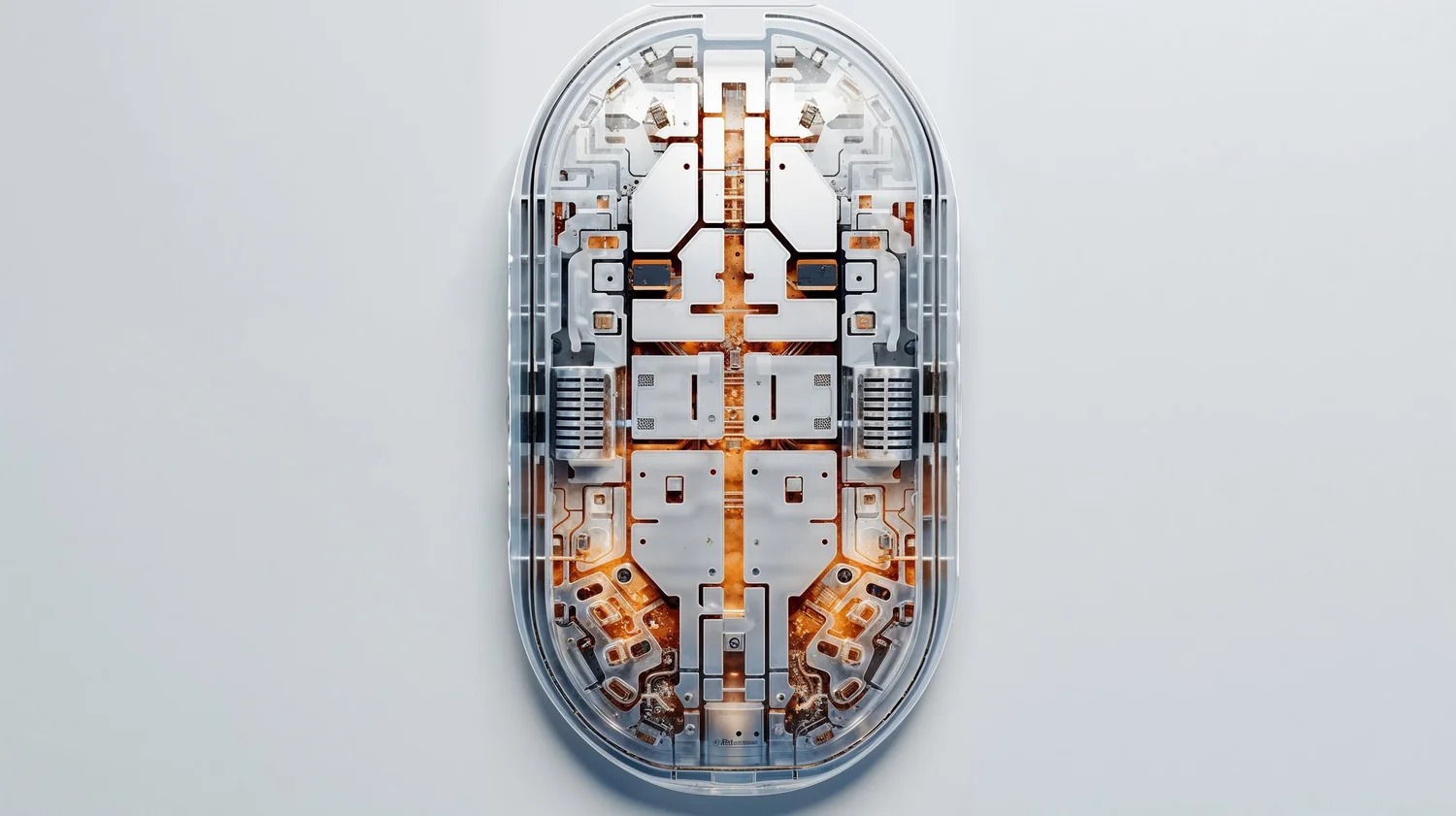
That distinction matters for industrial design. Exploration can help a team see a possibility; it cannot establish that a component fits, a surface wears well, or a proposed object can be manufactured. Anyone borrowing the exercise still needs the appropriate engineering and user evaluation. Personal taste is an input to that work, not a substitute for it.
The useful machine in the Downloads folder
For all the ambitious language around cognition, one of Lukic’s clearest examples is domestic. He describes accumulating 2,400 files in Downloads, then building a small agent to watch incoming files, sort them and archive older material after 30 days. Screenshots went into their own folder; PDFs were organized by topic.
It made mistakes, he writes. But during the first week he kept looking for the disorder he expected and finding something manageable instead. His account turns on that recognition: the benefit was less recurring mental effort. A modest task had been consuming attention every time it reappeared.
This offers a grounded way to think about cost. In an experiment of your own, count setup and correction time against the repeated decisions removed. A file sorter whose errors demand constant investigation has simply relocated the work. An image workflow deserves the same accounting: include the time spent choosing, rejecting and repairing, not just the seconds spent generating.
Lukic’s public practice also makes room for quiet. His March 2026 essay connects meditation, which he practices, with bringing clearer intentions to AI work. At the iF Design Trend Conference in Berlin that April, he presented Perfect Flaw: When Imperfection Becomes Gold. The theme is consistent: pay attention to what the person contributes.
The most portable idea in copyself_xyz is therefore a habit of comparison. Keep a trace of what you meant before the machine offers its answer. Look at the two side by side. Somewhere between them is the decision that still belongs to you.