A retirement provider had three recordkeeping systems. Three places to keep plan information, three sets of limitations, three opportunities for a perfectly ordinary payroll file to become somebody’s afternoon. The obvious remedy was to combine them. According to Congruent Solutions’ published account, incompatibility and prohibitive cost defeated that plan.
What happened next is the interesting part. The provider, an unnamed Fortune 500 insurer, brought in Congruent to put a cloud front end over the existing systems. Sponsors would get self-service. The old machinery would keep doing its work underneath. For a business concerned with people’s distant futures, this was a pleasingly practical concession to the present.
- Congruent sells retirement software and the specialist administration that goes with it.
- CORE can sit alongside existing systems, with modules adopted in stages.
- Its newer connections span payroll, trading, rollovers and retirement income.
- The buyer’s hard work includes integration, data quality and deciding who owns each exception.
Three systems, one expensive temptation
The insurer’s difficulty was more particular than “old technology.” Its systems struggled with different eligibility rules for different employees and with complex employer matching formulas. Agents stepped in to perform transactions that sponsors could not complete themselves. Selling and servicing competed for the same pair of hands.
Congruent says it demonstrated simple, medium and complex plans on CORE Payroll in two weeks. That proof gave the customer something concrete to judge. The implementation began in June 2018 and went into production in January 2019, combining census, eligibility, enrollment and payroll capabilities with the existing back ends.
The company reports that the project made two supporting systems redundant and gave agents more room for client engagement. These are vendor-reported results, but the decision itself is instructive: the customer bought a common way into several systems after the attempt to collapse them into one had become uneconomic.
system 01
system 02
system 03
Another case shows an earlier obstacle. A Fortune 100 retirement provider had legacy software with little documentation, limited internal knowledge and no original developers available. Congruent describes two weeks of due diligence followed by three months producing a blueprint of architecture, database relationships, business rules and interfaces. Before anyone could modernize the system, someone had to explain what it did.
The work beneath the balance
Congruent occupies the business-to-business layer beneath the participant’s account. Its buyers include recordkeepers, third-party administrators, plan providers, banks and annuity carriers. The sponsor is the employer offering the plan; the participant is the person saving through it. Both may use Congruent-powered interfaces without becoming its direct customer.
The offering combines cloud software, outsourced administration and custom technology work. Operations services cover contributions, loans, distributions, census data, compliance testing, Form 5500 preparation and reconciliation. These are recurring obligations. A provider needs them completed reliably through busy periods as well as quiet ones.
Alongside more than 55 clients and over five million participants, as reported by Congruent in its October 2025 expansion announcement.
CORE supplies modular recordkeeping capabilities. A provider can select a bounded task or adopt the broader platform. That flexibility matters commercially: a buyer with a functioning back end may still want better payroll handling or a more usable sponsor interface. Congruent can sell into that gap.
Its history also explains the mixture. The company dates its U.S. establishment and first 401(k) client to 2000, its first web self-service delivery to 2002 and its first outsourced administration customer to 2003. CORE development began in 2012. The sequence suggests a product business informed by years of handling the underlying work.


A payroll file learns to travel
A retirement platform becomes more useful when information can enter and leave it without being typed again. Congruent’s recent partnerships map those journeys. Its May 2025 Finch agreement adds access to payroll and HR systems: census and pay data can flow into CORE, while deductions and contributions can be written back to payroll.
The Broadridge agreement, announced in June 2025 through its Matrix subsidiary, addresses trading and settlement. It connects CORE with capabilities for mutual funds, exchange-traded funds and collective investment trusts, including the CC360 trust system. The practical ambition is fewer manual handoffs between the record and the transaction.
Retirement Edge reaches a different stage of the same journey. Congruent acquired the platform from IPX Retirement in April 2025. It supports in-plan guaranteed-income options, from education and enrollment through policy issuance and reporting. The guarantees belong to the underlying income products; Congruent supplies the technology that helps providers administer them.
Then came the April 2026 Manifest partnership, intended to embed digital rollovers and account consolidation across CORE, Retirement Edge and administration services. Its significance is the connection between gathering retirement assets and making income options available within the same broader environment.
- 01 / Employment dataFinch connects payroll and HRIS.
- 02 / Plan operationsCORE handles records and workflows.
- 03 / TransactionsBroadridge/Matrix connects settlement.
- 04 / Consolidation & incomeManifest and Retirement Edge extend the journey.
CORE PlanSuite, launched that April, tackles the paperwork at the beginning. It uses AI-assisted document interpretation, guided workflows and validation to turn plan provisions into configuration. Congruent’s related onboarding case describes delays extending by up to three months and error rates of 20-25% before the intervention. The proposition is specific: capture a rule once and carry it into the systems that must execute it.
Captain Firewall has a day job
A company can buy modern software tools more easily than it can teach people the exceptions in retirement administration. Congruent’s unusually cheerful response appeared in 2022: weekly training comics featuring Bruce, Bella and Captain Firewall, accompanied by monthly quizzes.
The subjects included data protection, privacy, cybersecurity and retirement fundamentals. Congruent reported that roughly 90% of employees benefited from or enjoyed the initiative. Treat that as the company’s account of reception. The useful detail is the format: short lessons, repeated regularly, followed by a chance to retrieve the knowledge.
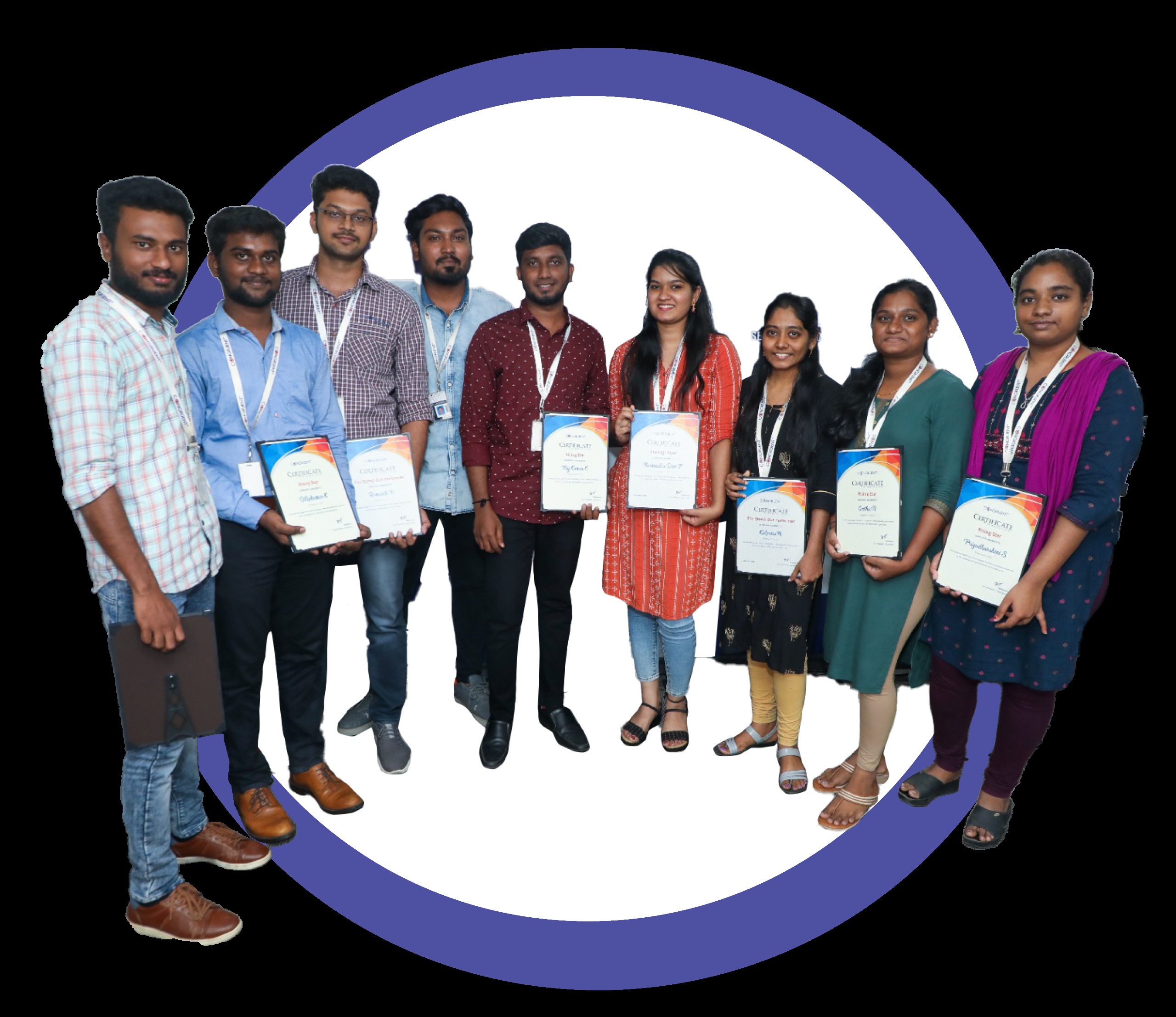
The specialist argument also appears in a compliance case. An administrator had outsourced work to an IT services organization, yet compliance testing still fell short after six to seven months of guidance. It then chose Congruent for trained resources, defined processes and retirement-domain experience. That account offers a credible reason for the switch: capacity alone had not solved the task.
The bill is bigger than the license
Congruent’s model combines SaaS licensing and implementation with administration contracts and custom engineering. The spending decision therefore includes software, integration work, data preparation, staff time and ongoing support. A modular purchase can narrow the first project; it still needs a realistic budget for connecting to existing operations.
“The integration to the admin systems was the most difficult part”
An anonymous CORE customer, in Congruent’s published testimonials
That customer assigned the integration work to its own internal teams. The distinction is worth carrying into procurement: a working demonstration establishes product capability, while a successful rollout also requires access to systems, dependable data and someone responsible for resolving mismatches.
For a reader considering a similar project, the insurer case offers a method to copy. Test simple and awkward plans before committing. Pick a workflow with visible manual effort. Agree on how the old system and the new module exchange information. Measure the handoffs and exceptions that remain after launch.
This approach is less promising when nobody can explain the incumbent system, when essential data is unreliable, or when the organization cannot assign an integration owner. The reverse-engineering engagement shows why discovery may need to come first. A new interface cannot settle an unresolved business rule.
Congruent has sought capital to widen the business: a Rs 8 crore Fulcrum Venture India investment was reported in January 2013, and Sanaka Capital’s investment was announced in May 2023. In October 2025, the company announced a Coimbatore delivery center starting with 70 employees, supporting administration, product development and business continuity.
Its position is clearest at the handoff: between payroll and a plan, a document and a rule, a recordkeeper and an income provider. Retirement savers see a balance. Congruent’s customers have to account for everything that happened before it appeared.
Go behind the account screen
Explore the products, company channels and demonstrations.