A sore shoulder is a medical problem. A sore shoulder acquired while lifting a box at work becomes something more elaborate. There is a supervisor to notify, a visit to authorize, a claim to document, perhaps a therapist to see. Someone needs to explain what the worker can safely do tomorrow. The shoulder belongs to one person. The process belongs to several.
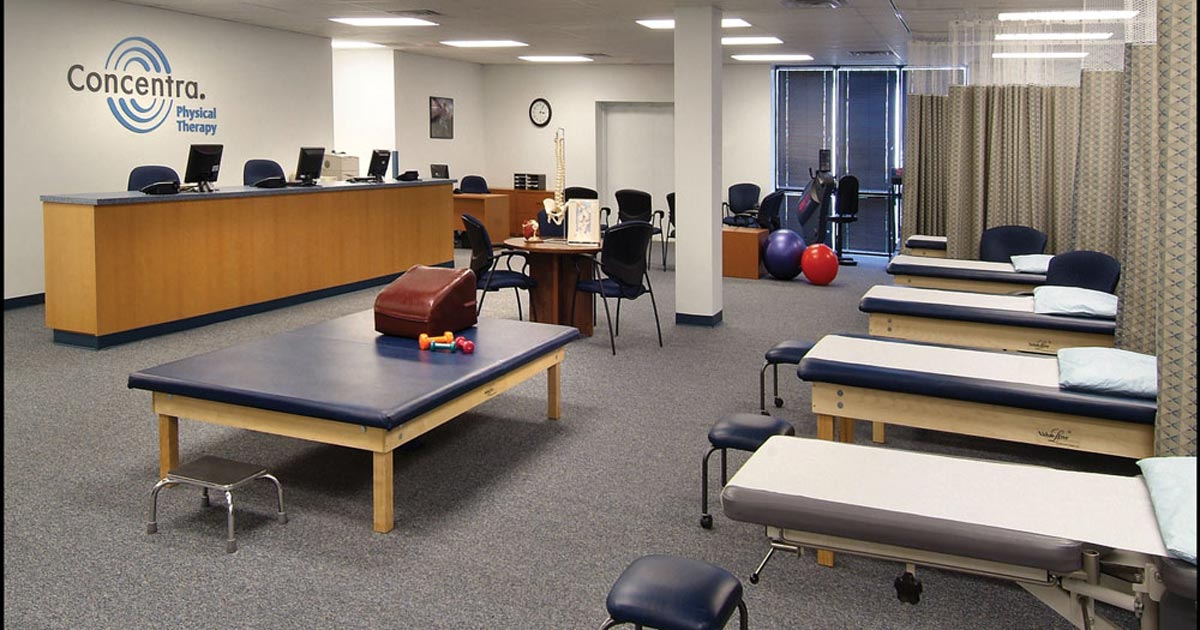
This is the territory Concentra occupies. Its clinics deliver occupational medicine, physical therapy, exams, and testing. Around those services sits another business: helping employers, insurers, and injured employees navigate the same event. The treatment room is where the company becomes visible. The handoffs help explain why it exists.
- The patient and the purchaser differ. Employees receive care; employers and workers’ compensation payors buy much of it.
- Specialization drives the offer. Injury care, rehabilitation, screening, and reporting belong to the same work-related problem.
- Expansion has a price. Two 2025 acquisitions cost approximately $319.4 million combined.
01The injury is only the beginning
Consider the range of reasons someone might enter a Concentra center. A commercial driver needs a DOT physical. A new hire needs a pre-placement exam. An injured employee needs treatment followed by rehabilitation. An employer needs drug testing or health surveillance. These encounters differ clinically, but they share a setting: health care organized around the requirements of work.
Concentra’s expertise includes the administrative language surrounding that care. A work status report matters because a supervisor needs to understand restrictions. A scheduled follow-up matters because recovery continues after the first appointment. Its customers include small businesses and national employers; its network gives a company operating in several markets a common provider to work with.
- 01AuthorizeEmployer arranges care
- 02EvaluateClinician assesses injury
- 03CoordinateReports and follow-up
- 04RecoverTherapy when indicated
The money follows the service. Employers purchase exams, screenings, and workplace clinic services. Workers’ compensation payors reimburse injury care under applicable fee schedules or negotiated arrangements. That creates a business with several buyers and payment rules, even when the patient sees one brand. For an employer comparing providers, the useful question is what happens across the whole sequence: who treats, who reports, who follows up, and which services the arrangement covers.
That positioning separates Concentra from a neighborhood urgent care practice whose occupational services are one part of a broader menu. Alternatives include independent specialists, hospital clinics, and regional occupational groups. For clinics at employer worksites, competitors include Premise Health and Marathon Health. Concentra’s argument rests on occupational focus and the connections among its services.
02The wrong fit explained the right business
The business traces its clinical roots to 1979 and an occupational medicine practice in Amarillo, Texas. The Concentra corporate identity arrived through the 1997 merger of OccuSystems and CRA Managed Care. That distinction matters: the company’s history contains both a medical practice and a succession of corporate arrangements.
One ownership change is especially revealing. Humana acquired Concentra in December 2010 while pursuing convenient, affordable care for its members. By March 2015, Humana had agreed to sell it for approximately $1.055 billion in cash to a joint venture between Select Medical and Welsh, Carson, Anderson & Stowe.
Humana explained the reversal plainly. Its investments in primary care had proved better suited to its integrated care strategy than Concentra’s concentration on occupational injuries. The strategic fit came undone. Occupational medicine served a different purpose within health care, and shared industry membership had not made the businesses interchangeable.
“To improve the health of America’s workforce, one patient at a time.”
Concentra’s mission
03Two purchases. Two kinds of proximity.
Concentra returned to public markets in July 2024. Its IPO sold 22.5 million shares at $23.50 each, raising $528.8 million before expenses. Select Medical completed its spin-off that November. Independence was followed by two purchases that show how the company thinks about access.
In March 2025, Concentra acquired Nova Medical Centers for $265 million, subject to adjustment. Nova brought 67 occupational health centers across five states. The customer transition described practical changes: additional locations, broader services, telemedicine, and online authorization and reporting. Buying buildings was only the start; those centers had to become part of a common operation.
Purchase prices, subject to customary adjustments. Different businesses, different footprints.
In June, it acquired Pivot Onsite Innovations for $54.4 million, also subject to adjustment. Pivot operated more than 240 onsite clinics. Here, proximity meant care inside an employer’s workplace. The two deals addressed different journeys: getting to a nearby medical center and getting care without leaving the site.
The financial result was substantial growth, with reported 2025 revenue of approximately $2.16 billion, up 13.9%. That increase included acquisitions. It should not be mistaken for a measure of improvement in every existing clinic, or proof that a larger network automatically produces better care.
04A screen with a clinic behind it
Concentra Telemed launched in California in 2017. Its useful feature is the connection between a video appointment and subsequent care. Employees with appropriate minor injuries can see a clinician remotely; those needing hands-on treatment can be directed toward a medical center. Church Mutual offers the service to its workers’ compensation customers.
The boundaries matter. Concentra excludes head injuries, eye injuries, and certain inhalation injuries from its telemedicine offering. The patient also needs suitable technology and authorization. A virtual visit is useful when the condition and circumstances fit. A national network cannot make every examination possible through a camera.
Concentra HUB handles another kind of distance: the gap between the appointment and the people managing its consequences. Customers can authorize services, obtain work status reports, review scheduled visits, receive drug screen results, and manage invoices. This is software serving a clinical operation, with its value tied to what happens around the visit.
05The small book inside the big network
New colleagues receive an Orange Book, a guide to welcoming, respectful, and skillful service. It is a modest object for a sprawling organization. Its purpose is concrete: give people a reminder of how ordinary interactions should feel. Consistency has to survive the front desk as well as the acquisition announcement.
Employers can borrow a practical idea here: map the handoffs before an injury happens. Know who authorizes care, where follow-up information goes, and how clinical restrictions reach the person arranging the work. Concentra’s business makes those connections visible. The worker still owns the shoulder. A better organized process gives everyone else a clearer job.