A staircase is a surprisingly useful way to understand Encompass Health. In an acute-care hospital, the urgent question may be whether a patient has survived a stroke. Back at home, the question becomes whether that person can reach the bedroom. The distance between those questions is where this company works. Its hospitals organize recovery around abilities that once seemed too ordinary to notice: walking, dressing, communicating, managing the day.
- Intensive rehabilitation pairs therapy with hospital-level medical care.
- The business grows by building hospitals, adding beds and partnering with health systems.
- Its history includes HealthSouth’s accounting scandal and a later shift to a more focused portfolio.
The staircase test
Encompass treats people recovering from strokes, neurological conditions, brain and spinal cord injuries, amputations and complex orthopedic problems. Physical, occupational and speech therapists address different parts of the return to daily life. Real-world simulations make the purpose concrete. A successful exercise matters because of what it may let someone do outside the therapy gym.
The company’s stated goal is independence. That ambition also helps explain its place in healthcare. This is a hospital business built around rehabilitation after a major illness or injury. Its distinction is the scale and concentration of its network, rather than exclusive ownership of any one therapy.
“Our goal is to help you regain your highest level of independence”Encompass Health

Fifteen hours, many moving parts
The schedule makes the proposition tangible: typically three hours of therapy a day, five days a week, alongside round-the-clock nursing and frequent physician visits. The company’s patient guide describes at least 15 therapy hours a week, distributed across the day. Caregivers can follow progress through the MyEncompass Health app or desktop portal.
Those hours are a coordination problem as well as a clinical program. Different professionals need a shared understanding of the patient’s goals. Encompass’s stated workplace values include empathy, doing what is right and being stronger together. The useful question for an operator is how those intentions become reliable handoffs between people with different specialties.
3 hours × 5 days = 15 hoursTypical schedule; sessions are spread across the day and care is individualized.
Technology enters at that junction. REACT, developed in 2015, estimates the risk of transfer back to acute care. A separate model predicts readmission after discharge; another evaluates fall risk near real time. These are tools for clinicians. Their practical value depends on whether a warning reaches someone who can respond.
The numbers have a past
A company that emphasizes measurement deserves scrutiny of its own numbers. Encompass began in 1984 and was formerly HealthSouth. Co-founder Richard Scrushy led the earlier company. In March 2003, the SEC charged HealthSouth and its then-CEO with accounting fraud, alleging earnings had been overstated by at least $1.4 billion since 1999. HealthSouth later paid $100 million to settle the SEC’s charges.
That episode belongs in the story without becoming a convenient explanation for every later decision. The corporate name changed in January 2018; the wider rebranding finished in 2019. In July 2022, the company spun off its home health and hospice business as Enhabit. Whatever a reader remembers from older descriptions, today’s Encompass is centered on inpatient rehabilitation.
The spin-off offers a documented change in thinking: after reviewing strategic alternatives and engaging shareholders, the board chose separation. It gave two businesses separate public-company futures. The result was a cleaner boundary between rehabilitation in a hospital and care delivered at home. For patients and investors reading old company descriptions, that boundary matters.
A hospital is expensive to repeat
In 2025, Encompass reported $5.935 billion in net operating revenue and 263,299 discharges. It invested more than $525 million in new hospitals and bed additions, opening eight hospitals and adding 127 beds at existing sites. Together, those projects supplied 517 beds of additional capacity. Expansion means buildings and staffing before it means more patients.
Reimbursement makes the economics more specific. Medicare generally pays inpatient rehabilitation hospitals a case-based amount per discharge, adjusted for patient characteristics. Insurers also fund care. The patient, the referring hospital and the organization paying the bill therefore occupy different positions in the transaction. More activity alone does not settle whether a particular admission is appropriate or reimbursable.
Alternatives include Select Medical’s rehabilitation hospitals and local health systems’ rehabilitation units. Skilled nursing and home-based care can serve different needs. Encompass also partners with health systems, including MaineHealth in Portland, rather than treating every nearby provider solely as a rival.
Smaller buildings, familiar resources
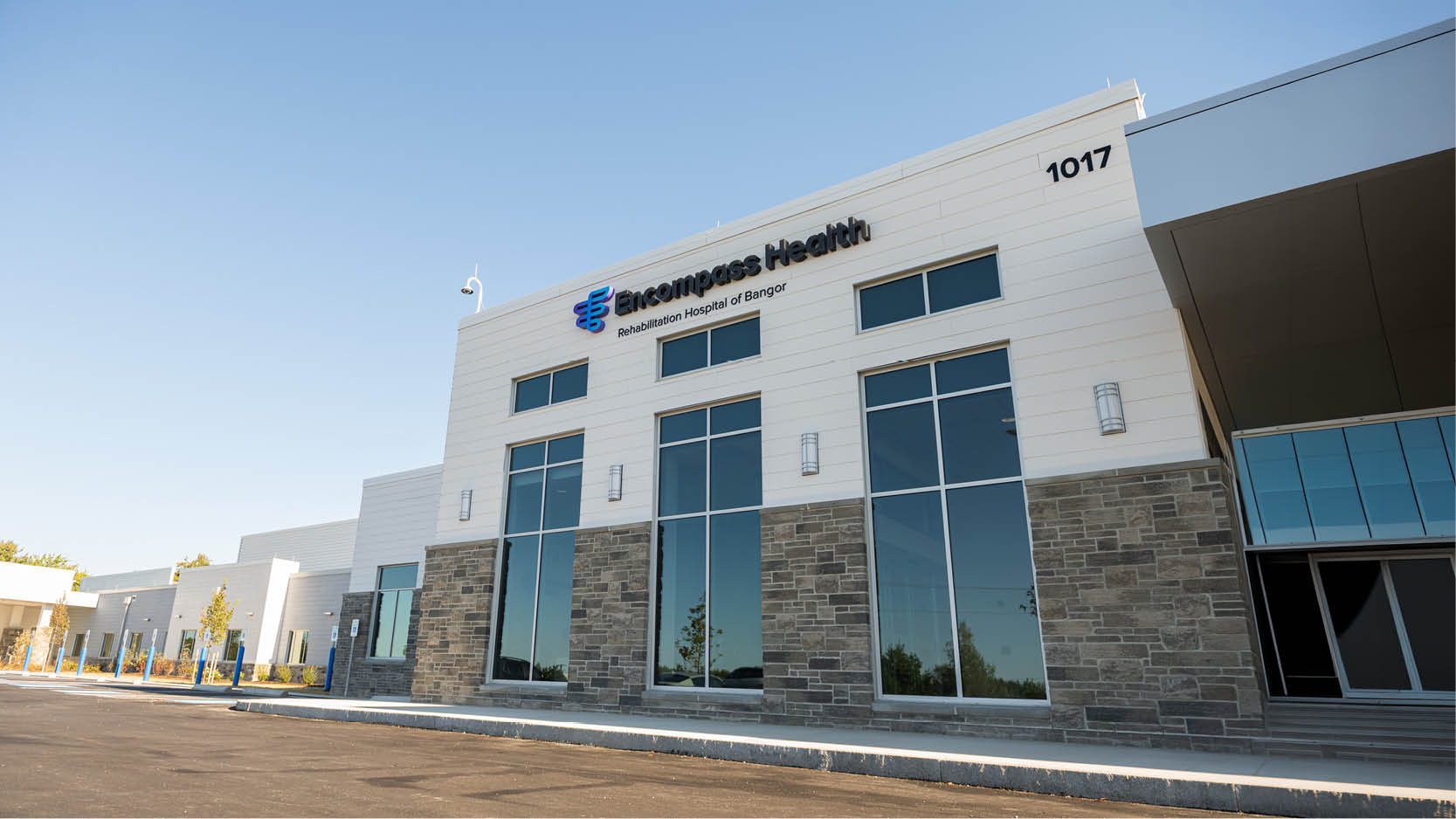
By October 6, 2026, the company reported 178 hospitals in 39 states and Puerto Rico, following its Bangor opening. Its next development variation is deliberately smaller. A planned 24-bed Conroe hospital will operate as a satellite of its Woodlands hospital, with opening expected in late 2027.
The stated logic is to extend existing resources and expertise into a growing community. The general lesson is usable elsewhere: expand around capabilities already working nearby. The conditions matter. This approach needs an established hospital to support it, sufficient local demand, clinicians to staff it and the necessary approvals. A small building cannot supply those things by itself.
What to ask before the transfer
Families can copy an equally practical habit: translate recovery into specific questions. What activities matter at home? What therapy does the care plan include? Who will explain progress and prepare the household for discharge? Eligibility depends on medical need and the ability to participate in intensive rehabilitation; this setting will not fit everyone.
Price requires its own conversation. Encompass’s hospital billing information distinguishes estimates from final charges and notes that physicians may bill separately. Coverage and cost sharing vary. Its reported 84.6% discharge-to-community rate for 2025 is encouraging context, not an individual promise. The question waiting at home remains personal: can this patient manage this staircase?