Company Profile / Digital Health / Austin, TX
The Speech Therapist Who Bet the Parents Do the Real Work
A speech pathologist got tired of watching kids wait months for care they could barely access. So she built a company on an uncomfortable premise: the therapist is not the one who fixes your child's speech - you are.
Most digital health startups sell software and pray a clinician shows up to use it. Expressable did the opposite. It started with a speech-language pathologist, a real one who had spent years in the field, and only then built the technology around a fact she kept running into on the job: a child's speech improves fastest when the people at home - not just the therapist on the screen - know how to run the drills.
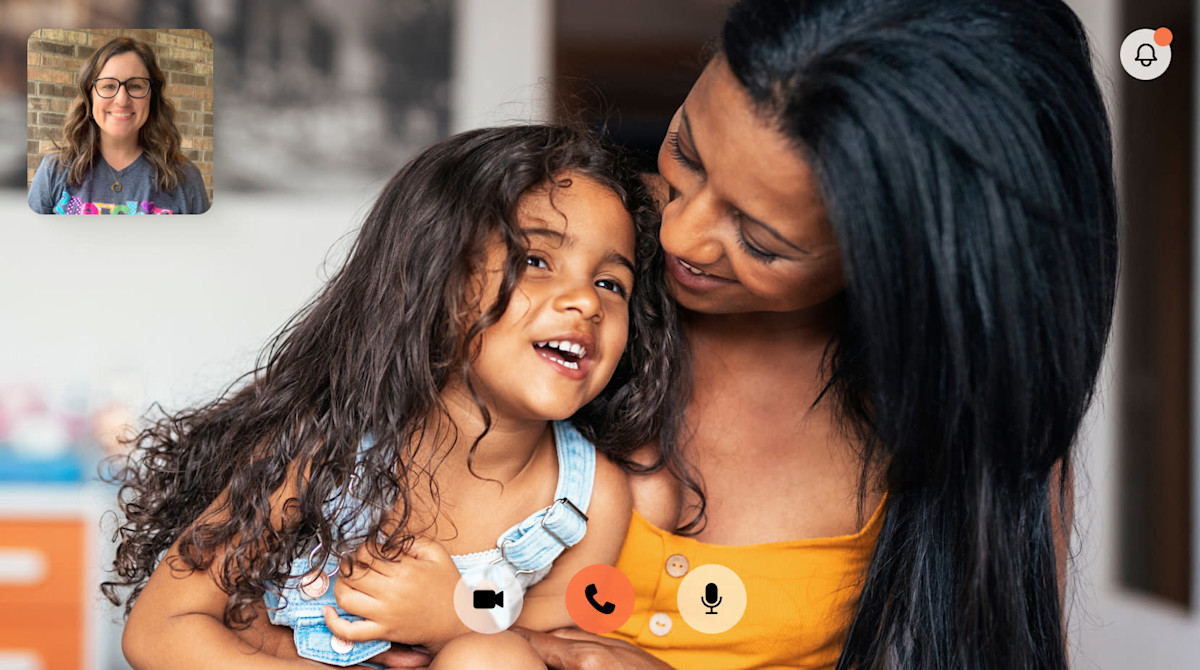
That fact is the whole company. Expressable, founded in Austin in 2019 and launched into virtual care in 2020, delivers one-on-one speech therapy over video with licensed clinicians. But the sessions are only part of the product. Layered underneath is a platform of home programming, weekly practice activities, progress tracking, and a text thread to the therapist - all designed to make the parent competent between appointments. The pitch, stripped down: the therapist coaches, the caregiver executes, and the therapy happens the other 167 hours of the week.
The ProblemA waitlist the size of a country
The need is not subtle. Roughly 8 to 9 percent of American children have a speech sound disorder, and by most estimates only about half of them get treated. The default provider is the public school system, which, as co-founder and Chief Clinical Officer Leanne Sherred has put it bluntly, is "the number-one provider for pediatric speech, but they are unfortunately notoriously underfunded." Families that go looking privately hit a different wall: limited choice of clinicians, long waits, and sessions that end the moment the hour is up, with little support until the next one.
Sherred saw the gap from inside it. She had worked as a certified SLP and watched families struggle to find her, let alone practice between visits. Her husband and co-founder, Nicholas Barbara, had come up through early-stage healthcare startups and read the same problem as an operations question - something a product-driven company could actually fix at scale. They started Expressable together, with co-founders Spencer Magloff and Ryan Hinojosa, on the theory that the bottleneck was not a shortage of good therapists but a delivery model that wasted them.
Speech therapy has transformational impacts on a child's life, yet too many children today are left severely underserved.
The ModelMake the parent the therapist
The research Expressable leans on is unglamorous but well established: caregiver-implemented intervention works. When parents fold speech techniques into ordinary daily life - naming things at the grocery store, drawing out a word during play - kids progress more than they do from a weekly session alone. Most therapy models treat that home practice as a nice-to-have handout. Expressable treats it as the product.
It is a small reframing with large consequences. It changes what the software has to do - less scheduling widget, more coaching tool. It changes who the customer is - the parent is a participant, not a spectator in the waiting room. And, Expressable says, it moves the numbers: the company reports that more than 90 percent of its patients make clinical progress toward their established care plans, backed by thousands of five-star reviews.
The practical texture matters here. The home programming is not a photocopied worksheet; it is multimedia, sequenced week to week, and tied to the specific goals a child is working on. The SMS line means a parent stuck on a tricky sound at 6 p.m. on a Tuesday is not stuck until the next appointment. Progress is visible to the family, not locked in a clinician's chart. Each of those is a small thing. Stacked together, they change whether a family actually keeps going - and in speech therapy, consistency is most of the battle.

The Contrarian BetEmployees, not gig workers
Here is where Expressable diverges most sharply from the telehealth playbook. Many virtual-care platforms staff themselves with contractors - a marketplace of 1099 clinicians who log on when they want. Expressable hires its speech-language pathologists as W2 employees. That is more expensive and less "asset-light," and it is deliberate. Speech therapy is not a one-and-done urgent-care visit; it is a relationship that can run for months or years, especially for complex cases like apraxia, autism-related communication, or post-stroke aphasia. Employees can be trained to a consistent standard, held to it, and kept long enough to carry a case to the finish.
Public schools are the number-one provider for pediatric speech - but they are notoriously underfunded.
The same instinct shows up in how the company gets paid. Rather than living as a cash-pay luxury for well-off families, Expressable does the grinding work of insurance contracting. It is in-network with hundreds of health plans, including Medicaid and Medicare Advantage plans, and accepts HSA and FSA dollars. Private pay exists too, averaging around $59 a week. It is accredited by The Joint Commission. None of that is exciting on a pitch deck. All of it is what "access" actually requires.
The MoneyClimbing through a healthtech winter
Investors bought the boring, durable version of the story. Expressable raised a $4.5 million seed in 2021, co-led by Lerer Hippeau and NextView Ventures; a $15 million Series A in 2022 with F-Prime Capital; and, in May 2024, a $26 million Series B led by global investment firm HarbourVest Partners, with Digitalis Ventures and existing backers joining. That is roughly $45.5 million in total - raised, notably, across a stretch when a lot of flashier digital-health companies were stalling out.
The Series B money is pointed at three things: expanding the technology platform, hiring more staff SLPs, and deepening relationships with health plans and provider organizations. The company has also signaled it will apply AI in a supporting role - cataloging common speech errors and cutting the administrative load on clinicians - rather than as a replacement for the human on the other end of the call.
Who It's ForNot just kids
The quiet surprise inside the business is its adult clientele. Children are the majority of Expressable's clients, treated for articulation and speech-sound disorders, language delays, stuttering, apraxia, and social communication. But roughly 35 percent of clients are adults - people recovering speech after a stroke or injury, managing a voice disorder, working through aphasia, or doing accent modification. Expressable also broadened into occupational therapy, widening the family-centered model past speech alone. It is a reminder that communication care is a lifelong category, not a pediatric niche.
Behind the service is a company that has grown to around 260 people, built on stated values of empowerment, integrity, innovation, and collaboration - and on a clinical culture that treats its therapists as the asset to invest in rather than the line item to trim. The co-founder structure is unusual too, and probably load-bearing: Sherred owns the clinical model as Chief Clinical Officer, while Barbara runs the company as CEO. Healthtech is littered with startups where the operators never quite understood the medicine, or the clinicians never quite understood the business. Expressable put both in the same house, literally.
The FieldWhere it sits
Expressable is not alone in virtual speech therapy - competitors include Great Speech, Presence, and Better Speech, alongside in-person clinic chains and the school-based SLPs that still handle most pediatric cases. Practice-management tools like TheraPlatform and WebPT serve the same clinicians but do not deliver care themselves. What separates Expressable is less the format than the posture: it made three things its identity - caregiver coaching, employed clinicians, and insurance coverage - that most rivals treat as costs to minimize. That is the part a founder in any category can study and, if they are honest about the tradeoffs, copy.
The obvious caveat is that the model is not for everyone. Severe or highly specialized cases can still need hands-on, in-person care, and virtual therapy leans on a caregiver who has the time, bandwidth, and willingness to run the practice at home - not a given in every household. Expressable's bet is that for a large share of the millions currently going untreated, a trained parent plus a licensed therapist on a screen beats a waitlist and nothing. So far, the outcomes and the payers seem to agree.