A damaged building presents two different problems. One is financial: what does the policy cover, and how much is owed? The other is stubbornly physical: who will inspect the damage, find a contractor and get the place working again? Crawford & Company occupies that space between a promise on paper and a usable building. It is a business that becomes easiest to understand when something has become difficult for somebody else.
- The work: investigate claims, administer them and coordinate recovery.
- The buyers: insurers, brokers and self-insured organizations.
- The tension: prepare for surges without depending on disasters for growth.
Crawford is paid for handling claims. It generally earns fees per case, rather than collecting premiums for the underlying insurance. That distinction explains both its usefulness and its exposure. Its customers can outsource complicated work. Crawford must keep enough expertise available to accept it, even though the arrival of that work depends partly on the weather.
A classroom before a platform
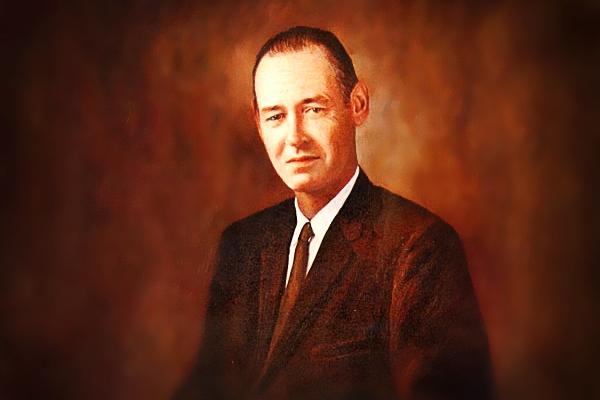
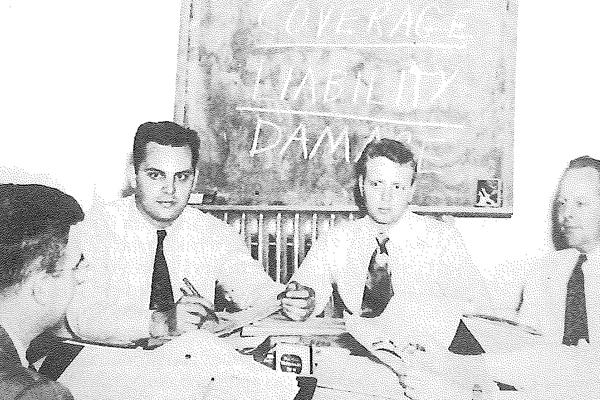
Jim Crawford opened the first office in Columbus, Georgia, in 1941. Five years later, he created an employee training program. The sequence is revealing. Before the international network and digital tools came the problem of teaching people to make consistent judgments. A distributed service company needs its work to remain recognizable when the person delivering it changes.
The company adopted “Top quality, promptly” as its slogan in 1948. It reads like something a customer might write on a complaint form. Accuracy alone leaves people waiting. Speed alone leaves mistakes. Crawford’s proposition was to supply both. In 1950, it bought an independent adjusting business in Baton Rouge for $7,000; in 1957, it opened in London.
Training remains part of its stated culture. The company’s RESTORE values include respect, empowerment and training, alongside sustainability and entrepreneurial spirit. Its careers material emphasizes movement across roles and regions. The practical appeal is straightforward: a claims organization needs people who can learn a specialty and then apply it away from headquarters.
The check is only the halfway point
Today, the service menu follows a loss through several kinds of trouble. Loss adjusters investigate and evaluate damage. Global Technical Services brings specialist knowledge to complicated commercial claims, including cyber incidents and business interruption. Forensic accountants can examine the financial consequences; technical specialists can examine the physical ones. The value lies partly in coordinating people who speak different professional languages.
Broadspire handles third-party administration and medical management. An employer retaining its own risk can use it for workers compensation and liability claims, while injured-worker services include case management and medical bill review. This is a different relationship from sending someone to inspect a damaged roof: it can involve managing a continuing program of claims.
Contractor Connection extends the job into repair. Crawford acquired it in 1999. Its managed repair offering combines contractor credentialing, estimates, oversight and project tracking. For suitable low-to-medium-complexity claims, assessing damage and estimating repair can happen together. Its U.S. program includes a five-year workmanship warranty on completed repairs. The insurer gets a coordinated process; the policyholder gets help reaching a finished job.
- 01Report
- 02Assess
- 03Coordinate
- 04Repair
Capabilities across the group. The route depends on the claim and contract.
When good weather is bad business
Here is the uncomfortable part. A company organized to respond to disasters can suffer when disasters generate less work. In 2025, Crawford’s Platform Solutions revenue before reimbursements fell 30.5%, to $120.8 million. Reduced weather-related activity was a principal reason. Across the company, revenue before reimbursements fell 2.1%, to $1.266 billion. Calm conditions exposed the vulnerability of the surge-dependent work.
The counterweight had been built over decades. In 2006, Crawford agreed to buy Broadspire for $150 million, anticipating that the deal would more than double revenue from self-insured clients. Broadspire produced $401.9 million in revenue before reimbursements in 2025. Buying another stream of work, however, did not remove the need to manage capacity.
The 2006 annual report records that declining claims volume had increased excess capacity in the Broadspire segment. Crawford targeted roughly 325 positions for consolidation and began consolidating offices. This is a useful corrective to the tidy acquisition story: adding customers and capabilities still leaves the buyer with payroll, premises and difficult integration choices.
Two reported segments, different exposures. Bars use the same scale.
By the second quarter of 2026, net income had risen to $13.4 million from $7.8 million a year earlier, while revenue before reimbursements was slightly lower. Bruce Swain, appointed permanent CEO that March, emphasized growing revenue streams less dependent on weather. The results support diversification as a buffer; they do not make storms predictable.
“Organic revenue growth and profitable market share gains are our top priorities”Bruce Swain / Q2 2026 results
Software still needs someone with tools
Crawford’s technology work is increasingly specific. CoverAI supports coverage review by interpreting policy wording and can operate independently or integrate with claims systems. A Helixco partnership announced in March 2026 tackles time-and-materials documentation for commercial repairs. By June, Crawford reported the integrated workflow operational and scaling nationally. Better records help participants examine what labor and equipment were used.
Physical constraints remain. In October 2026, Contractor Connection reported that 58% of responding restoration contractors were absorbing higher labor costs; 73% reported operational effects from labor-market conditions. These are findings from its network respondents, rather than a census of the industry. They nevertheless identify a limit: software can organize a repair without creating an available crew.
Crawford competes with other claims specialists and with insurers keeping work internally. Its broad service mix and geographic reach suit buyers coordinating multiple claim types or locations. A smaller local adjuster may offer lower rates or better local knowledge. The lesson to copy is operational: connect the handoffs, train the people and balance unpredictable assignments with continuing work. That approach requires enough volume to support the machinery. For one straightforward local claim, the machinery may be more than the buyer needs.
For a prospective customer, the starting point is the job itself: a single loss, a repair network or an outsourced claims program. Those needs call for different teams and contracts. A risk manager considering medical management should examine the case-management and review services; a property insurer should examine contractor oversight and project visibility. The useful buying question is how the service will fit the next person’s work, from the initial report through the eventual resolution.