The useful thing about a towel is that it refuses to be impressed. It does not care how many parameters a model has, how elegant the demo looked, or whether a robot’s silhouette resembles a person. It lies in a heap and waits. Somewhere nearby, a business owner has an exact opinion about what should happen next: fold it lengthwise, twice, at a steady pace, without stopping the rest of the operation.
This is the sort of stubbornly ordinary problem Cody Swain has chosen. As co-founder and CEO of Parametric, he is building robots for physical businesses with co-founder and CTO John Newsom. Their public pitch is not built around android theater. Customers, they say, ask for three things: reliability, throughput and control. The company’s machine has a wheeled base and two arms. Its more consequential feature is meant to be a feedback loop: watch what the customer accepts, use an intelligent judge to turn that reaction into a reward signal, and improve the model toward that customer’s standard.
That sounds technical because it is. It is also a very old commercial idea wearing fresh machinery. The customer is explaining what “good” means. The vendor is supposed to listen.
The destination is not a generic average. It is a repeatable behavior that matches a real operator’s definition of done.
Before the robot, the blast radius
Swain arrived at robotics by a route with several trapdoors. At UCLA, he studied computer science and electrical engineering, participated in the engineering honor societies UPE and HKN, and served as president of Bruin Entrepreneurs. In 2017 he received a National Science Foundation Principal Investigators Award and presented a model ion thruster in Washington, D.C. A 2018 campus panel placed him among students discussing why startup work offered unusual autonomy and impact. He was then working as an engineer at the health-tech startup iBeat.
After graduating, Swain worked at Facebook. Rather than return, he chose to co-found Alice, a non-custodial wallet for algorithmic stablecoins. His account of the company reads less like mythology than a systems diagram with a storm moving in. The team spent roughly six to eight months assembling a product with fiat on-ramps, key management, infrastructure as code, Postgres and GraphQL. Swain led technical architecture, including database design, microservices and the state-machine complications that arrive whenever money must move without becoming lost, duplicated or imaginary.
Alice reached 10,000 users and collected a waitlist of 30,000. The company was preparing for a Series A when the collapse of a major algorithmic stablecoin erased the ground beneath it. The technology had not become trivial. The context had become fatal.
Swain’s next company, Alder Labs, carried a second lesson in correlated fortune. Funded by FTX Ventures, it planned a customizable white-label exchange for a large client. Swain, then CEO, again handled technical architecture, including a reverse proxy for FTX’s API and access control expressed through a JSON schema. FTX imploded before the plan became a product. Twice, a team had built against infrastructure controlled by forces much larger than itself. Twice, the surrounding system failed spectacularly.
“We believe the right approach is to work directly with customers.”Cody Swain, on building Parametric
There is an easy, false neatness available here: finance was vapor, so Swain fled to hardware, where objects are solid and therefore honest. Hardware engineers would laugh until a gearbox failed. The real distinction is not between unreal and real. It is between distant feedback and close feedback. A wallet can have users and still depend on a monetary mechanism it does not control. A robot can fail in a hundred physical ways, but the towel, the operator and the correction are all in the room.
A co-founder relationship with sawdust on it
Parametric’s origin story moves quickly because its friendship story does not. Swain and Newsom have known each other since high school. They grew up in the same town, lived together in Los Angeles for two years and spent weekends building robotic arms, 3D printers and miscellaneous projects. Years before they had a company name, they had already seen how the other person behaved when instructions ended and a half-built machine declined to cooperate.
Newsom went on to robotics research at Berkeley AI Research and later led self-driving work at Parallel Systems. Swain returned to Meta, working on recommendation systems and leading measurement of machine-learning model return on investment. Their eventual division of labor has the pleasing inevitability of a reunion episode: the longtime builder of software and companies as CEO; the autonomy researcher as CTO.
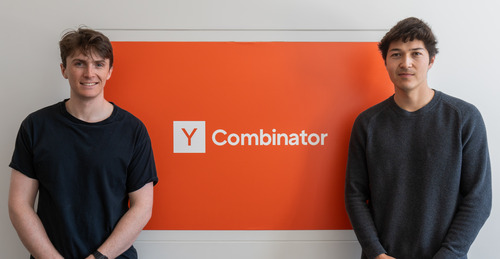
Then came the application. Two days before Y Combinator’s deadline, they decided to try. They submitted on the last day. An interview invitation arrived Thursday. They flew to Northern California for a Monday meeting and were accepted that night. Swain has described the pivot with calendar-page efficiency. On Monday he was working toward his next Meta promotion. On Tuesday he announced his departure plans. Newsom had already left Parallel.
The compressed decision could be mistaken for spontaneity. It was closer to a long-running test finally receiving a name. The pair knew they worked well together. What they needed was a problem large enough to justify doing it full time.
The benchmark after the benchmark
Parametric first described its mission around safe, interpretable general-purpose robots. Its current public materials emphasize autonomous physical businesses and reinforcement learning from customer feedback. The emphasis has become more operational: robots should not merely acquire a generic skill from an enormous dataset. They should learn how a particular customer wants that skill performed.
Consider the nuisance hidden in “fold laundry.” A T-shirt is unlike a fitted sheet. One operator wants towels folded lengthwise twice; another may optimize a different stack for different shelving. Speed matters, but so does uptime. A clever manipulation that works in a clipped video and fails during the afternoon rush is a party trick with expensive wrists.
Parametric says its models can learn new on-site behavior with less than an hour of data. The claim points toward the larger wager: the long tail of physical work will not be captured by one averaged policy. It requires adaptation across many businesses whose requests sound similar until the work begins.
This also explains why Parametric starts with businesses rather than a catalogue of robot tricks. A working site supplies consequences. A missed fold affects an order. A slow cycle affects throughput. A correction can be stated in ordinary language by the person who knows the job. The business becomes both customer and classroom, while the robot’s education is tied to something more demanding than a benchmark score.
There is restraint in the hardware choice, too. A wheeled base does not satisfy the science-fiction appetite for a machine that walks into any room. It does satisfy the engineer’s appetite for removing a difficult problem when wheels can do the work. Two arms preserve the ability to manipulate soft, unruly objects. Long uptime and useful speed remain design requirements, not details to add after the intelligence is impressive. Form follows the shift.
A clever manipulation that fails during the afternoon rush is a party trick with expensive wrists.
In a July 2026 essay, Swain and Newsom widened the frame. Robotics advances, they argue, are constrained by tightly coupled choices in hardware, data and modeling. Choose a gripper and you change what data can be collected. Choose a data source and you shape the model’s capabilities. Each decision is a bet, and each bet needs an evaluation that measures the distance between present behavior and desired behavior.
Their argument has a modest title and an immodest consequence: evaluation precedes capability. As automated research improves, machines may conduct more of the search over training recipes, rewards and environments. Humans will spend more of their effort defining the outcomes they want and the measurements that express them. The most important future job may be telling a machine, with unusual precision, why its perfectly respectable towel is nevertheless wrong.
The essay imagines the standard rising with the machine. First comes one shirt, towel or pair of shorts. Then all clothing. Then loading and unloading machines as well as folding. Success creates a new complaint, and the new complaint becomes the next evaluation. Progress is less a finish line than a customer steadily becoming harder to please - which, in commerce, is another name for Tuesday.
Abundance, without the brass band
Swain’s aspiration for the technology stretches well beyond laundry. He argues that repetitive physical work sits on an elastic demand curve: lower the cost and difficulty, and society can do more of it. Automate solar installation and more panels can be deployed. Reduce construction costs and more housing can be built. The desired work exists; capacity is the bottleneck.
It is a hopeful argument, though Parametric’s near-term method remains deliberately prosaic. Go into a business. Observe the work. Let the customer correct the system. Measure what changes. Repeat. Swain has written online that people should “spend time on positive sum games.” In robotics, he appears to have found his version: machinery that does not merely perform labor, but expands the practical supply of useful things.
The biographical symmetry is satisfying. A student who once built an ion thruster moved through recommendation engines and financial engines before arriving at actual motors. Yet the deeper continuity is measurement. At Meta, Swain measured the economic return of models. At Alice, he wrestled with state transitions that had to remain correct. At Parametric, the question has become visible enough to pick up: did the robot do what this person wanted?
The towel, still immune to rhetoric, will supply the answer.