Making the paperwork nobody wants a few clicks anyone can finish
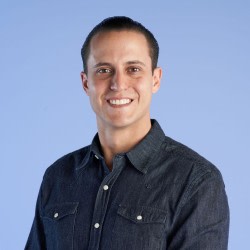
Roughly seven in ten American adults do not have a will. Cody Barbo looked at that number and did not see a legal problem. He saw a design problem - a process so expensive, so awkward, and so easy to postpone that most families simply never got around to it. Trust & Will, the company he founded in 2017, is his answer.
Barbo is a San Diego entrepreneur who has now started three companies. Before estate planning, he built Industry, a professional network for the service and hospitality world, taking it from a self-funded idea to millions of dollars in venture capital. Before that, while still tied to San Diego State University, he served as CEO and President of Associated Students, a nonprofit with a budget north of $25 million that represented tens of thousands of students. Running an organization of that size in his early twenties gave him a head start on the mechanics of leadership: budgets, boards, hiring, and the daily grind of keeping a large group pointed in the same direction.
The idea for Trust & Will came out of a simple, uncomfortable observation. Estate planning was stuck. The traditional route meant lawyers, appointments, and a bill that could run into the thousands. For most households, that cost competed directly with mortgages, childcare, and everything else that felt more urgent than planning for a day nobody likes to think about.
The average household would need to spend 5 to 10% of their annual income on an estate plan. But that money goes to mortgages, kids, everything else first. We wanted to remove the cost barrier with technology.
So he and his co-founders built a web platform that walks people through wills, trusts, guardianship, and health directives in plain language, at a fraction of the traditional price. The market they were chasing was enormous and almost entirely offline - by some estimates a $170 billion opportunity, with more than 90 million American adults who say they need a will but have never made one.
Turning "no" into fuel
Early on, the pitch was a hard sell. Estate planning is not a category investors gravitate toward, and death is not a comfortable dinner-table topic. Barbo has been candid that rejection is part of the job, and he leans on the history of companies that heard plenty of it before they worked.
A lot of those initial objections will help you build a thicker skin and continue to persevere.
Estate planning is about more than just legal documents. It's about values. It's about peace of mind.
It's about making decisions that reflect who you are and what matters most.
That persistence has shown up in the fundraising numbers. Trust & Will has raised more than $80 million to date. The company's 2025 Series C, which closed at over $25 million, brought in a telling roster of backers: Northwestern Mutual Future Ventures, UBS, and Erie Insurance. These are institutions whose entire business is protecting family wealth, and they were signing checks for the platform that handles the last step - the plan itself.
From a website to an operating system
Trust & Will did not stay a single product for long. It grew into a distribution business as much as a consumer app, wiring itself into the places where families already manage money. Today it supports more than 26,000 financial advisors and works with over 145 enterprise partners, including AARP, Northwestern Mutual, Fifth Third Bank, UBS, and USAA. Customers have logged more than $300 billion in self-reported estate assets on the platform.
In 2025 the company pushed its next chapter: EstateOS, which Barbo positions as the first intelligent estate planning platform. The premise is that AI can do the tedious, easily neglected work - reading an existing plan, flagging what is out of date, delivering personalized recommendations, and keeping documents current as life changes. It is a natural fit for a product whose biggest enemy has always been procrastination.
Trust & Will, by the numbers
The person behind the platform
Barbo has stayed close to where he started. He teaches as an adjunct professor at SDSU's Fowler College of Business, and volunteers with the university's Alumni Board of Advisors and the Phi Kappa Theta National Foundation Board. The recognition has followed the work: he was named a San Diego Business Journal Top Tech Exec of the Year in 2021 and an EY Entrepreneur Of The Year Pacific Southwest winner in 2023. Trust & Will has landed on the Inc. 5000, the Deloitte Technology Fast 500, and CNBC's Disruptor 50.
Away from the office he is an avid skier who grew up taking winter trips to Mammoth Mountain, and he still calls powder days and backcountry runs unbeatable. He is married with a daughter, and lists cooking and exercise among the things that keep him grounded. Trust & Will is a certified B Corporation - a legal commitment to weigh mission alongside profit that Barbo built into the company rather than bolting on later.
His ambition for the company is not subtle. He has talked openly about wanting to take Trust & Will public, and about pushing past a million users toward many more. The through-line, from a student nonprofit to a hospitality network to estate planning, is the same one he keeps returning to: take something that feels heavy and out of reach for ordinary families, and make it accessible. If most people avoid thinking about wills, the goal is to make the thinking easy enough that they finally don't.