A trading turret is an odd kind of antique. It is still useful, still urgent, and still capable of making a modern desk look like the cockpit of a small aircraft. Its banks of buttons connect a trader to brokers, clients and colleagues, often over dedicated private wires. A missed call can mean a missed price. A call that cannot be recorded can become a compliance problem. Cloud9 was built around a question that sounds simple only until you try to answer it: why must that conversation belong to the desk?
- Cloud9 sells cloud-native trader voice to financial firms, with software-first calling, recording, directory and analytics.
- Its counterparty network now spans about 13.9k users at more than 900 firms, according to Symphony.
- Banks helped finance the company; Symphony acquired it in 2021 and expanded the product into mobile and AI-assisted voice analytics.
A phone with a very expensive address
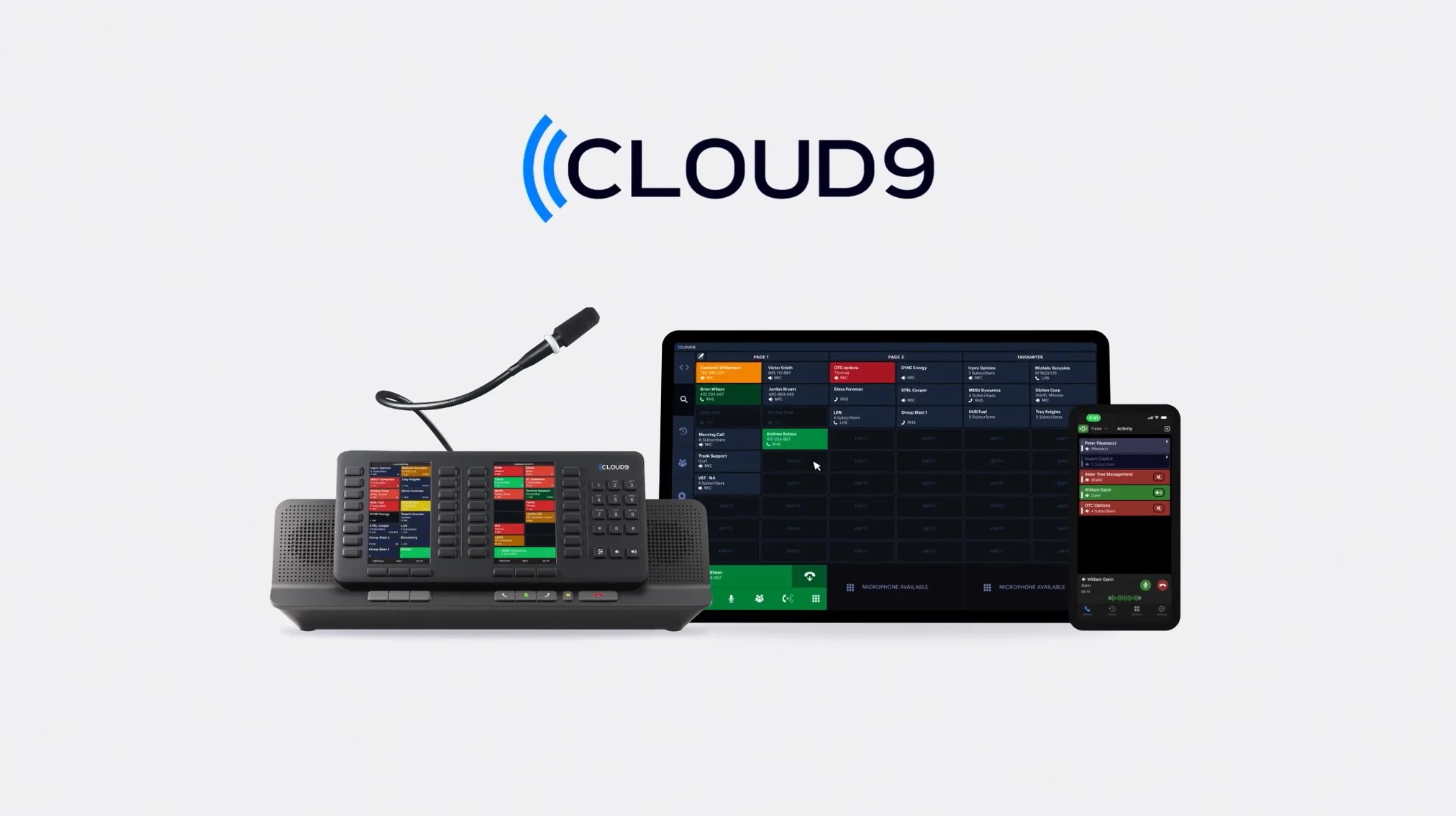
Cloud9 launched in New York in 2014. The people behind it knew the turret business: co-founders Gerald Starr, Leo Papadopoulos and Stephen Kammerer had backgrounds in trader voice technology. Their target was not the casual phone call. Traders need ringdowns for immediate point-to-point contact, hoots for always-open group audio, broadcast channels, clear sound and a reliable record of what was said. A generic meeting app cannot casually inherit those duties.
The old arrangement bought speed with infrastructure. Dedicated hardware and private lines tied users to a place, added equipment and telecom costs, and made changes slow. Cloud9 put the controls in a software application running over standard internet protocols, with optional tactile hardware for people who still prefer physical buttons. It was a fairly cheeky proposition: the desk could keep its muscle memory while the network shed much of its furniture.
The first obstacle was the person on the other end
A communications network has an awkward first day: if your counterparties are absent, who do you call? Cloud9’s 2016 Gateway Service addressed that problem by allowing users to reach contacts who had not installed the Cloud9 application. The feature sounds administrative. It was strategic. Every bank had a reason to wait for the others; the gateway gave early customers a reason to start.
Cloud9 also put a searchable directory inside the software. Traders could find a counterparty instead of rebuilding a private-line map one connection at a time. That directory is now a product feature in its own right, with profiles organized around market expertise. The current Cloud9 Trader tier adds global directory access, external connectivity, up to 600 combined ringdown and intercom connections, and more than 50 speaker channels. Other subscription levels serve internal desks and users who mainly need to hear the trading floor.
Scale figures come from Symphony’s current product page. Funding sums the three disclosed rounds listed in company announcements.
The backers tell their own story. JPMorgan Chase led a $30 million round in 2016 alongside ICAP, Barclays and Point72 Ventures. Barclays led a $14 million raise in 2018. UBS led another $17.5 million in June 2020, when Cloud9 said new business had risen more than 50% since March. These institutions were funding a product for an irritation they knew intimately. Capital One later supplied a customer testimonial about using the same application in the office, at home and on the road.
“Cloud9 has really helped our traders become agile. They’re able to use it in the office, on the road, at home and it is the same exact application everywhere.”Steve Surdykowski · Capital One
What a voice call becomes after it ends
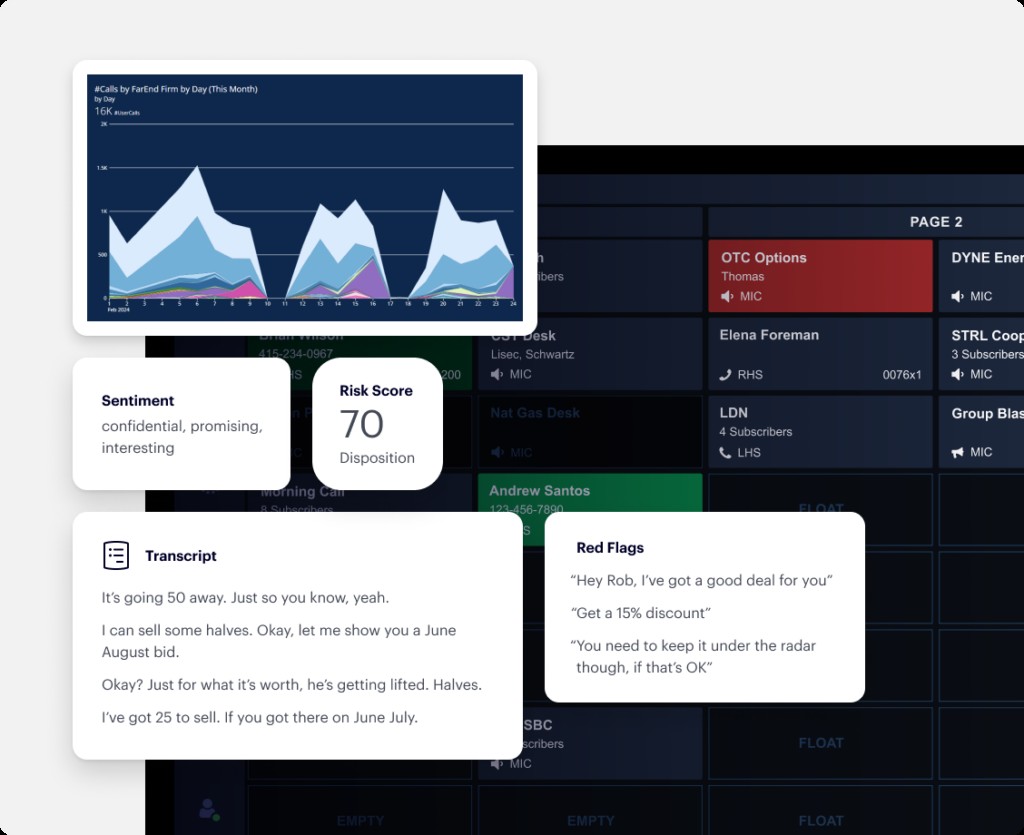
Cloud9’s distinction is not only that a call travels over the cloud. Digital voice can leave structured traces. Calls can be captured, separated when speakers overlap, transcribed, tagged and searched. That matters to the trader trying to reconstruct a deal and the compliance team trying to verify what happened. Recording is a duty in this market, but useful metadata can turn the duty into an operating tool.
The company had to make this work amid market jargon, overlapping speech and the racket of a live floor. Papadopoulos has described modifying WebRTC for packet loss recovery and capturing speakers in separate streams to improve transcription. Symphony later announced work with Google Cloud’s Vertex AI to tune speech recognition for financial language. Its current Trader Voice Analytics offering presents transcripts, summaries, deal metadata and dashboards. None of that makes a call infallible; it makes more of the conversation available for review.
The useful artifact is not just a recording. It is a call that can be found, checked and placed back into the trade.
The market bought mobility, then asked for more
When remote work became urgent in 2020, the argument for a trading system tied to one desk weakened sharply. Cloud9’s software could follow an authorized user to another location. Its sale was not merely convenience; it was continuity with the same communications controls. Cboe’s 2021 notice for its new trading floor named Cloud9 as the voice system and told firms they would contract directly for a monthly licensing fee. That is a particularly concrete picture of the business model: a subscription attached to a trading workflow, with a CloudHub available where a turret-like device was wanted.
Symphony bought Cloud9 in June 2021. Financial terms were not disclosed. The match had an obvious logic. Symphony already served financial firms with messaging and collaboration; Cloud9 supplied the specialized spoken channel. NICE had integrated its trade recording system with Cloud9 back in 2018, and the relationship expanded after the acquisition. The product now sits where calling, recording, retention, directory and surveillance meet. Its competitors include turret veterans such as IPC and BT, as well as other cloud voice providers. Cloud9’s case rests on software delivery, network reach and the data created around each call.
The next requests were predictable once a trader could leave the desk. Symphony unveiled Cloud9 Mobile, a revised directory and integrated voice analytics in 2025. Its 2026 demonstrations added tablet controls and a reconciliation dashboard to expose gaps in recorded calls. In a regulated business, the cleverest new screen may be the one that tells an operator a recording is missing.
The lesson hiding under the buttons
Cloud9 did not win attention by asking traders to stop talking. It kept the familiar behavior and changed the machinery beneath it. It connected to non-users before expecting a network to exist; it offered optional hardware where hands still needed buttons; it treated recording and reliability as product features instead of chores for someone else. Those choices are portable lessons for any company replacing entrenched equipment: preserve the critical habit, build a bridge to the old world, and make the new system useful before everyone moves.
The limits are just as concrete. A desk with fragile connectivity, a firm that cannot approve cloud delivery, or a workflow dependent on existing private wires may need gateways, hybrid arrangements or a different provider. Cloud9 itself offers legacy wire connectivity. Its story is therefore less a funeral for the turret than a quiet demotion. The voice still matters. The fixed address no longer has to.