The short version
- Cleantech Group maps emerging clean technologies, advises organizations, runs industry forums, and builds policy coalitions.
- Its customers include corporations, investors, governments, professional-services firms, nonprofits, startups, and scale-ups.
- Its edge is the combination of structured data, analyst judgment, direct interviews, rankings, and curated introductions.
- The lesson to borrow: name the category, maintain its map, and create the room where participants can transact.
In 2002, in the ash cloud of the dot-com collapse, two men went shopping for a domain name. Nicholas Parker and Keith Raab believed that solar cells, water treatment, biofuels, batteries, efficient buildings, and less wasteful industrial processes belonged in the same conversation. The phrase they chose was “cleantech.” The address, cleantech.com, belonged to a local dry-cleaning business.
That is a delightful accident of commercial history: a term meant to organize the environmental future had to be purchased from a shop whose own “clean” meant pressed shirts. Yet the small transaction contains the whole Cleantech Group idea. Markets become easier to fund once people know what to call them. Technologies become easier to compare once someone draws the boundaries. Strangers become counterparties once someone gives them a place to meet.
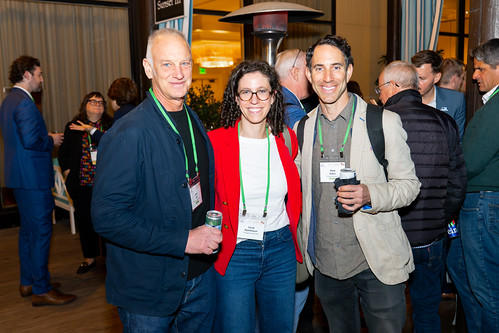
Cleantech Group built a company around those three jobs. Today it sells market intelligence, innovation advisory work, policy advocacy, and events. Its Members Hub covers more than 40,000 companies and 21,000 investors. Analysts track capital, interview operators, map value chains, and flag technologies moving from lab promise toward commercial use. Advisors turn that view into scouting projects, due diligence, pilot strategies, and ecosystem roadmaps. The Forums put founders, industrial buyers, investors, and public officials in the same room.
A map that refuses to stay still
The database is useful, but the taxonomy is the more revealing product. Cleantech Group says its first version contained 11 segments and fewer than 500 companies. The contemporary version has more than 1,500 segments and over 40,000 companies. That is not tidy growth. It is an admission that every good map eventually becomes wrong.
Company coverage shown. The underlying taxonomy moved from 11 segments to more than 1,500.
In 2024, for example, the firm split its old Resources & Environment group into Resources & Environmental Management and Waste & Recycling. Carbon accounting software, leak-detection sensors, mineral recovery, and food-waste systems had grown too numerous and too different to inhabit one drawer. A taxonomy change sounds administrative. In practice, it tells investors where new markets have become dense enough to deserve their own questions.
“Membership begins with human interaction, not a transaction.”Cleantech Group’s current membership pitch
The first thing that broke
The early cleantech story treated the Silicon Valley venture model as a universal solvent. It was not. Between 2006 and 2011, venture firms put more than $25 billion into clean-energy startups and lost more than half of it, according to research from the MIT Energy Initiative. The worst fit involved new materials, chemistries, and industrial processes: expensive equipment, long development cycles, uncertain factory scale-up, and customers reluctant to gamble a production line on an unproven supplier.
Software can be copied in an afternoon. A cement kiln cannot. The first failure was therefore less about scientific imagination than financial timing. The money expected software-shaped exits from factory-shaped companies.
Cleantech Group lived through that correction. Its modern offer reflects what the bust taught the wider market: a promising technology also needs a credible path through customers, policy, infrastructure, and capital. The firm’s vocabulary has widened from venture flows to commercialization and resilience. Its 2026 outlook talks about critical-mineral security, predictable power for data centers, water stress, and economic durability. Decarbonization remains the destination; continuity of supply is increasingly the sales pitch.
Who pays, and for what?
A corporate innovation team may ask which long-duration energy-storage companies can survive procurement. An investor may want overlooked deal flow in industrial heat. A government may need to see why its research institutions produce patents but too few scale-ups. A founder may need validation, a customer, or the right person at an infrastructure fund. Cleantech Group sells each of them a different route through the same network.
Revenue comes from annual memberships, bespoke advisory assignments, event tickets, sponsorships, and custom programs. The entry-level Members Hub plan is free for innovators who want to maintain their company profile. The broader membership starts with a conversation rather than a posted checkout price. For a visible benchmark, 2026 Cleantech Forum North America tickets ran from $1,645 for an early-stage innovator buying early to $3,400 for a standard corporate, investor, or professional-services attendee buying onsite.
Those numbers make sense only if a meeting is worth more than admission. Cleantech Group’s advantage over a generic database is its claim to know why a company matters and whom it should meet. Swire Pacific says the relationship helped it implement more than 15 sustainable-innovation projects. The Global Cleantech 100 performs a similar trick at scale: it is a research report, a credibility marker, and an efficient guest list.
The play worth borrowing
There are five moves here for anyone building an expert business. Give an emerging field a memorable name. Publish a taxonomy precise enough to argue with. Let contributors improve the database while experts improve the interpretation. Create a flagship list that rewards participation. Then convene the people on the map so information can become action.
The sequence has limits. It works when the market is fragmented, decisions are expensive, and trusted introductions can change outcomes. It is weaker for a buyer who wants a cheap, self-serve data feed, a precise prediction, or broad consumer advice. Human intelligence is slow and costly. A curated room is valuable only when the right people accept the invitation.
That may be why Cleantech Group remains a relatively small company after more than two decades. Its ambition is global, but its mechanism is intimate: an analyst call, a shortlist, a carefully arranged meeting. The company helped make cleantech large enough to become unwieldy. Now it earns its place by making the field feel small again.