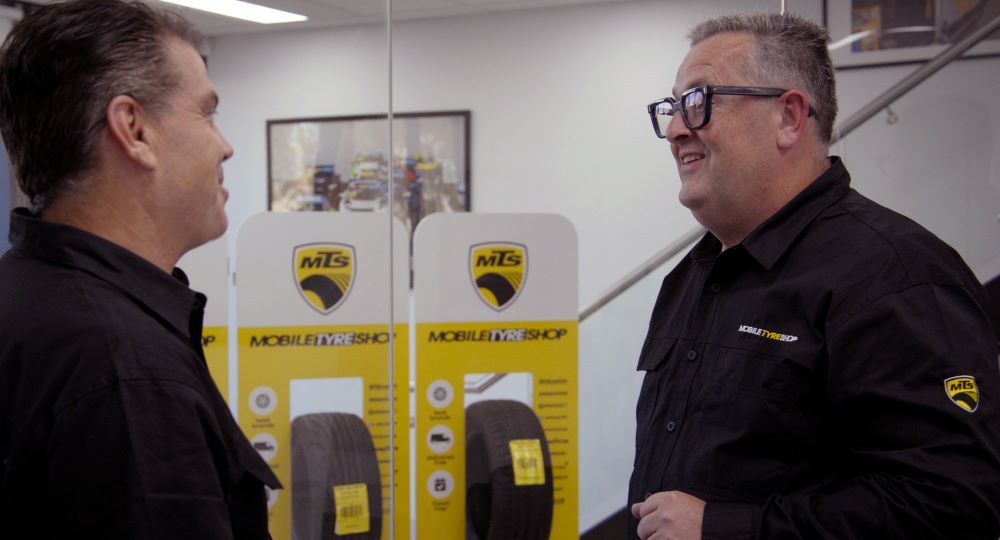
The first useful thing to know about Claris is that a tyre business helps explain it. Mobile Tyre Shop sends technicians to customers rather than making customers visit a workshop. Its software had to accommodate that particular arrangement. According to Claris’s customer account, an off-the-shelf ERP took two years to implement, then proved too rigid. The company needed another way forward.
- FileMaker puts business data, rules, and app design together.
- Teams can start with one workflow, then extend it.
- Licensing is only part of the cost; development and upkeep matter.
- Studio closes in March 2027, making product choice consequential.
A tyre company takes the smaller bet
COO Jamie Cartwright remembered FileMaker from an earlier career in music. With Claris Partner Digital Fusion, he proposed a limited first project: feeding product information into the website. That made a cautious CEO willing to proceed. The working result prompted interest in a call-center quoting screen. Later, route optimization saved roughly ten minutes per job, the customer reported.
There is a useful buying principle here. A bounded project gives a team something concrete to judge. Did information arrive correctly? Did somebody stop retyping it? Can the next person use it? Those questions are easier to settle than whether a platform will someday transform an entire organization.
The database that became a workshop
Claris is an Apple subsidiary whose main product, FileMaker, combines a database, business logic, and interfaces in one development environment. The combination matters. A database alone can store an invoice. A working business application must also decide who may change it, calculate its totals, and present it to someone trying to finish a job.
The company emerged in 1987, with Bill Campbell as its founding president. It became FileMaker Inc. in 1998, then restored the Claris name in 2019. That return accompanied the acquisition of integration startup Stamplay, the basis for Claris Connect. The history explains an unusual position: a long-running database business selling tools for contemporary custom applications.
FileMaker Pro is the workshop for creating apps and accessing them on Mac or Windows. FileMaker Go brings them to iPhone and iPad; WebDirect supplies browser access. Cloud and Server provide different hosting routes. Connect links applications and services into workflows. Together, they address the stretch of business activity that falls between isolated tools.
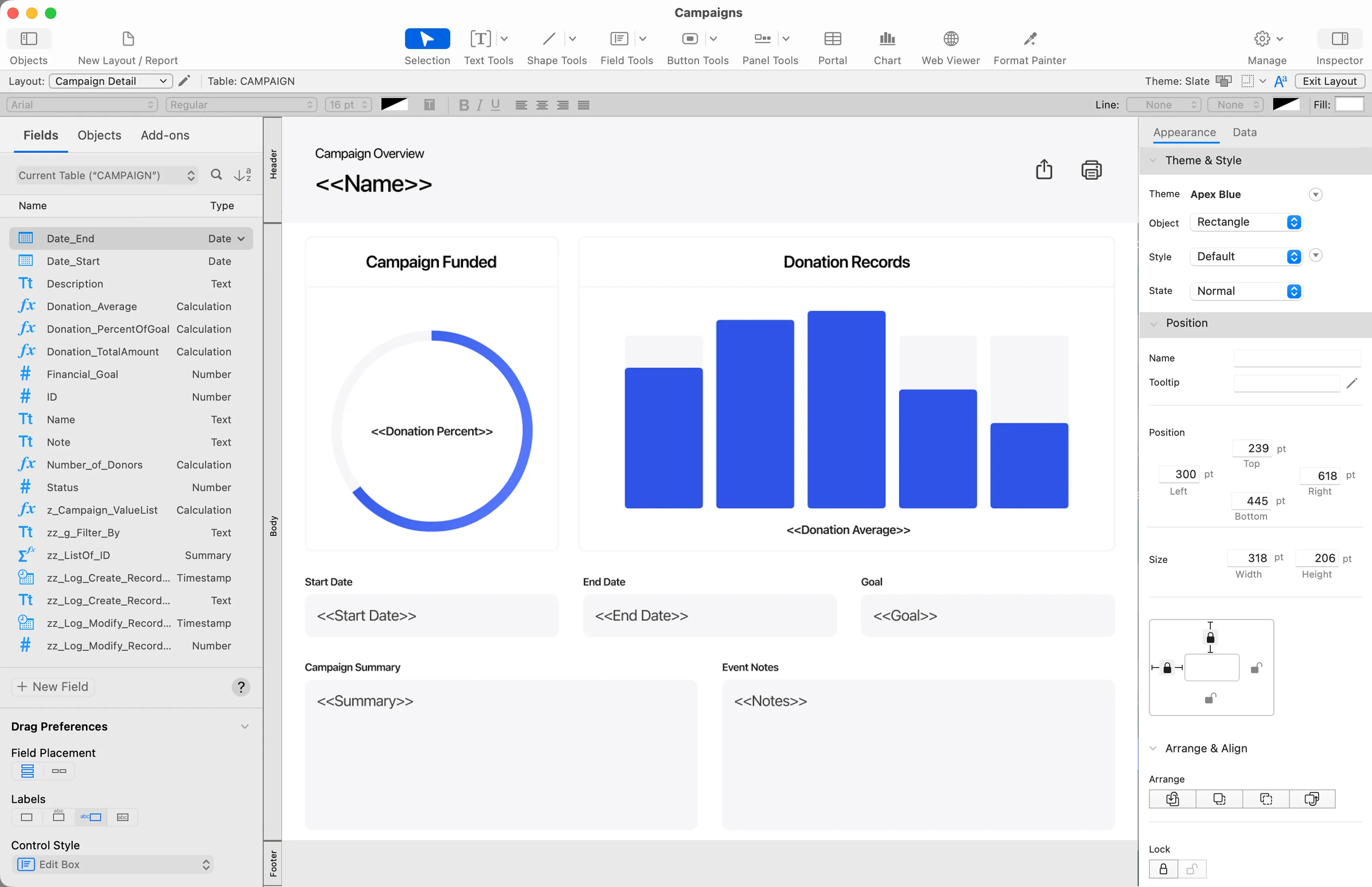
A school, nonprofit, service company, or enterprise department can use that environment for records, inventory, scheduling, or reporting. Claris’s public customer library ranges from hospitals to housing assistance. In its 2019 announcement, the company reported more than 50,000 customers and a million end users. Those are historical figures, but they establish that this is an operating software business with a substantial installed community.
Five seats, one real bill
Low-code describes a method of building; it does not remove the work of understanding a process. Someone still has to define records, permissions, and exceptions. Claris’s partner network offers development, consulting, hosting, and training. That ecosystem is part of its practical appeal for an organization that needs an application but lacks a dedicated software team.
As checked in October 2026, FileMaker Cloud Starter costs US$22 per user monthly, billed annually, for five to ten users. Five seats therefore mean $1,320 a year before tax and development. Starter permits three hosted apps. Max costs $45 per user monthly, also billed annually. Licensing includes FileMaker and Connect.
The competing choice depends on the job. A workflow already handled comfortably by a standard application may not justify custom development. For a team with unusual rules, compare the cost of adapting a platform with the cost of repeatedly working around someone else’s design. Include the people who will maintain the result after launch.
Hosting is another dividing line. FileMaker Cloud shifts infrastructure management to Claris. FileMaker Server gives an organization a route to run applications on infrastructure it controls. That choice reaches beyond an initial demonstration: it affects who handles access, recovery, and the next upgrade. The sensible evaluation includes an actual workflow, representative users, and the person responsible for keeping it available. A polished screen can show what an app looks like. A trial with real work reveals whether the team has designed the right app.
The product Claris is leaving behind
Claris’s own decisions provide a useful correction to the sales pitch. In an August 2026 announcement published on its Japanese site, the company said Studio would close on March 15, 2027. It acknowledged that growth had not reached the pace needed to sustain investment, and that it had not closed functional and practical gaps quickly enough.
The announcement also pointed to the changing market for AI-assisted web application creation. This is a revealing admission: even a company selling adaptable software must decide which tools deserve continued investment. For customers, the consequence is practical. An application’s usefulness depends partly on the continued availability of the service beneath it.
“Reliability and resilience earn long-term trust from our customers.”Ryan McCann, Claris CEO, June 2026
FileMaker’s direction is different. The June 2026 release added optional Remote Backup and Standby Server services, alongside development improvements and AI updates. Remote Backup automates encrypted offsite backups; Standby Server maintains a secondary system. These are operating concerns, the things a team notices when an application has become necessary to its daily work.
The distinction is worth carrying into a demonstration. Ask the builder to change a rule while you watch: add an approval, restrict a field, or move a step to a different person. Then ask what happens to existing records. These are ordinary requests in an operating company. They reveal how much of the application belongs to the team and how much depends on assumptions nobody has written down. For Claris, whose proposition rests on accommodating particular needs, the ability to make and maintain those changes is a more useful selling point than a long list of possible features.
Start where the work gets stuck
CEO Ryan McCann’s May 2026 strategy essay argues that easier code generation increases the value of people who understand business context. Claris is investing in ways for AI coding tools to work with FileMaker interfaces, scripts, and schemas. The claim deserves a practical test: can the person closest to the process turn that understanding into something dependable?
A reader can borrow a modest approach. Choose one recurring handoff. Describe its inputs, its owner, and the error that costs time. Build the smallest useful improvement, then observe it in actual work. Claris offers a place to do that. The first decision is still yours: which awkward detail is worth fixing?