Before the first patient enters a clinical trial, somebody has already made a prediction: these sites can find these people in this much time. A molecule may deserve its optimism. An enrollment forecast has to earn it. That gap between scientific promise and operational evidence is where Citeline has built its business.
- Trialtrove tracks studies. Sitetrove tracks investigators and sites. Pharmaprojects tracks drugs.
- Drugmakers and research contractors pay for intelligence, software and expert help.
- The next move: connect those records to patient journeys and the tools where trials get planned.
Consider a simple planning question: which investigator should run a study? A prestigious name gives you one answer. Prior enrollment performance, competing studies and proximity to suitable patients may give you another. Citeline sells the ability to investigate that difference before a sponsor commits money and a calendar.
A customer asked. A database followed.
The origin of Trialtrove is refreshingly specific. Informa’s historical account names Zorba Lieberman and Pete Sikora as Citeline’s original proprietors. In 2002, a top-10 pharmaceutical company identified an unmet need; Trialtrove was created to address it. Citeline assembled a team to take it to market in 2003. During 2004 and 2005, nearly all the top 20 pharmaceutical companies adopted it, according to that account.
There is a useful business lesson here. A customer with a recurring decision supplied the starting point. The company then built a product other customers could use. Informa acquired Citeline in 2006; Pharmaprojects was integrated in 2008. The questions expanded from what studies were happening to which drugs were advancing and who might conduct the next study.
Three views of the same expensive question
Trialtrove organizes information about trial design, endpoints, populations and enrollment timelines. Sitetrove connects studies to investigators and research sites. Pharmaprojects follows drug-development pipelines, helping a team understand which competing assets could arrive and how a company’s portfolio compares with another’s.
Drugs & competition
Design & benchmarks
Sites & investigators
Its customers include pharmaceutical and biotechnology companies, contract research organizations, and the competitive-intelligence and business-development teams around them. Different desks buy different answers. A licensing team needs the competitive landscape. Clinical operations needs a credible site list. A disclosure team needs the study’s information submitted correctly.
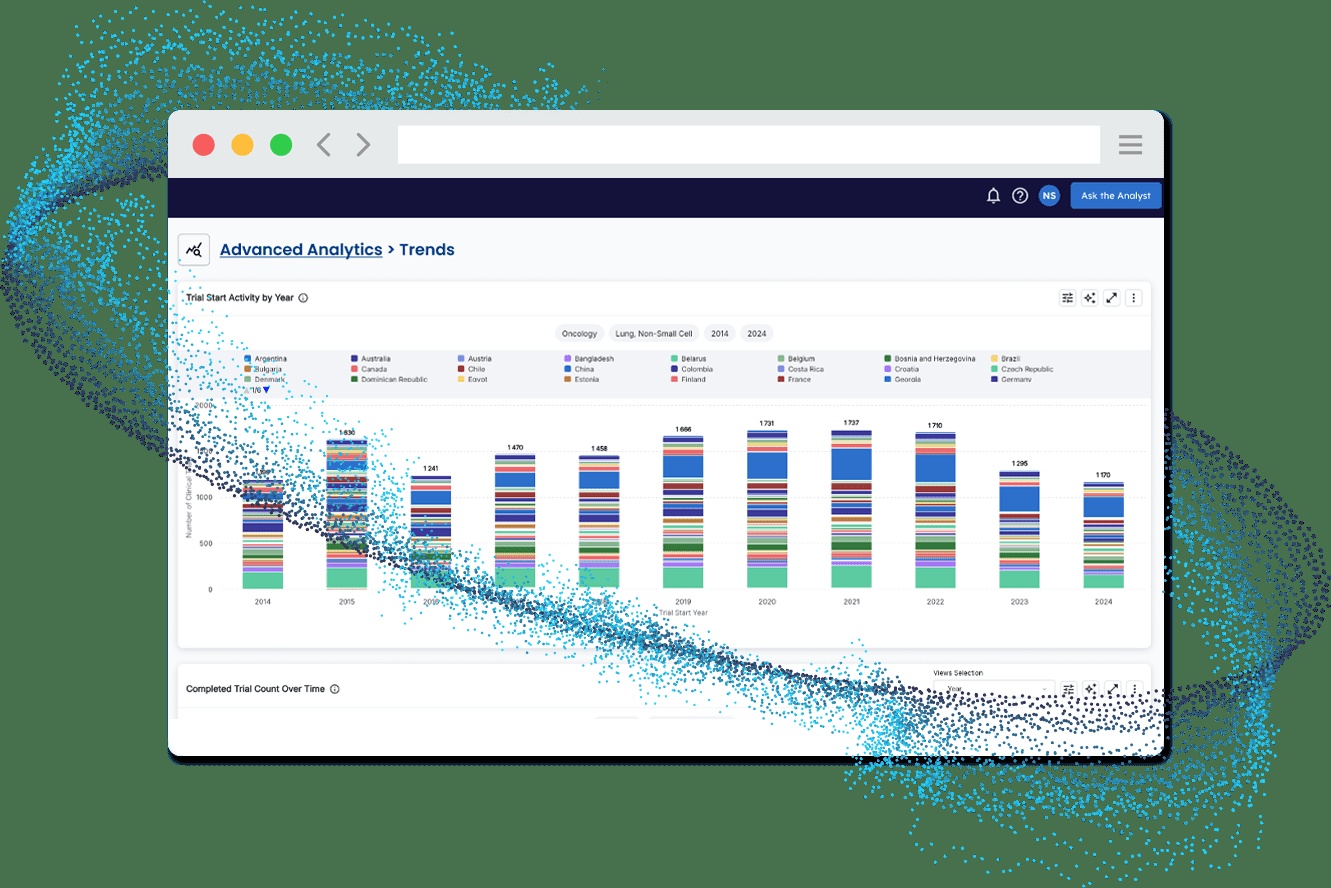
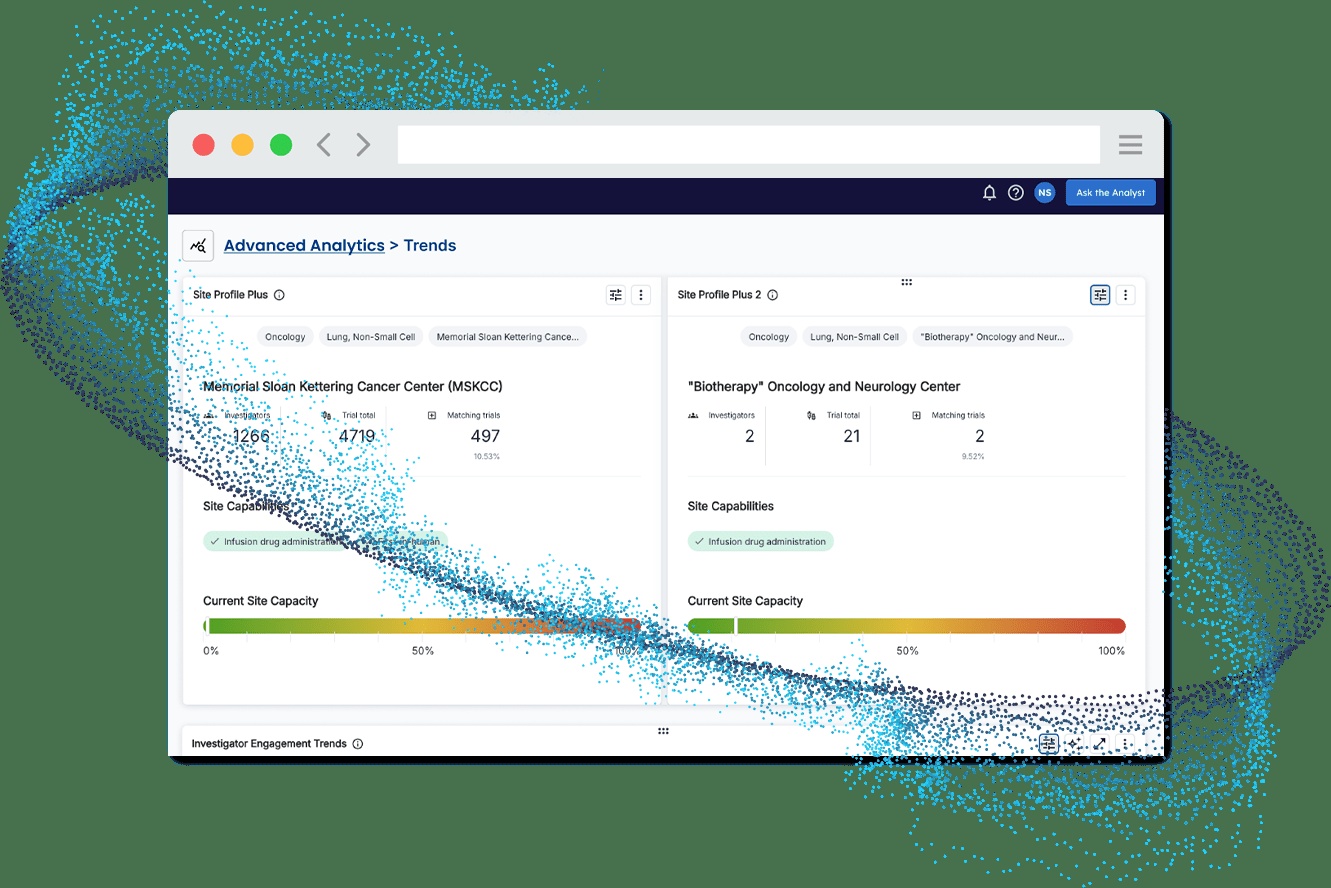
The Plus editions add analytics to the underlying records. Trialtrove+ benchmarks recruitment performance; Sitetrove+ compares sites and helps identify experts; Pharmaprojects+ includes Company Compare and Drug Similarity. Ella, the chat assistant shared across the three, helps construct and validate searches. The practical attraction is getting from an imprecise question to a usable comparison faster.
The humans underneath the interface
Citeline’s expertise sits partly in the people who organize the evidence. Its public portfolio figures include more than 500 subject-matter experts, 400,000 clinical trials and 96,000 drugs. These are company-reported coverage figures. The relationship between them matters: a large archive becomes useful when records can be interpreted and compared.
Pharmaprojects subscribers can also contact therapeutically aligned analysts through Ask-The-Analyst. That makes the offering more than a search interface. It gives a customer someone to ask when a result needs interpretation.
“Citeline gives us access to huge amounts of insight within minutes”
Emily Jensen, Senior Manager, Site Engagement, Genmab, in a Citeline-published testimonial
Citeline occupies a crowded market. GlobalData also sells drug, trial and investigator intelligence. IQVIA combines data and technology with broader clinical services. Citeline’s case rests on its connected, curated records and the workflows built around them. Evaluate, another familiar intelligence brand, sits inside the same Norstella family.
The patient enters the planning meeting
On September 10, 2026, Citeline launched Patient Intelligence. It combines patient-population information, standard-of-care recommendations, patient journeys and access-and-proximity data with its trial, site and pipeline intelligence. The initial standard-of-care offering starts with oncology. Patient journeys draw on de-identified claims, electronic health records and other NorstellaLinQ data.
The distinction is practical. Knowing that a hospital has run relevant studies does not establish that suitable patients can reach it. Mapping care and referral possibilities gives planners another way to test their assumptions. Historical trial activity and present patient access answer related, separate questions.
Citeline Connect addresses the next handoff, supplying education, engagement and recruitment tools that link sponsors, recruitment partners and sites. TrialScope Disclose handles another unglamorous necessity: registering studies and submitting results. Its AI Importer extracts protocol information into disclosure forms, reducing repeated entry. Human review still matters when those records become public.
Put the evidence where the decision happens
The 2026 partnerships reveal a distribution choice. February’s Evinova agreement brings Trialtrove and Sitetrove intelligence into Study Designer for customers with the relevant access. March’s expanded Recursion partnership adds real-world data and evidence capabilities to its clinical-development work. July’s Cytel agreement connects Citeline intelligence with Enforesys 4.0 enrollment simulations.
The business model is subscriptions and enterprise software access, with additional services. The large ownership number needs careful handling: the November 2022 merger created a combined Norstella organization valued at $5 billion. That figure describes the group, rather than Citeline’s revenue or a customer’s subscription bill.
For a buyer, the useful unit is the decision improved. Repeated feasibility reviews, portfolio assessments and site comparisons give a subscription more opportunities to pay its way. A team doing one narrow lookup has a different calculation. During evaluation, ask the vendor to reproduce a real question from a recent project: show the comparable records, explain the filters and identify what the answer leaves unresolved. A polished dashboard is pleasant. A defensible planning assumption is what belongs in the budget meeting.
The discipline readers can copy is straightforward: choose comparable studies, examine actual enrollment, then challenge site choices against the patients a protocol requires. These tools help when history is relevant and teams act on what it says. Thin evidence in an unfamiliar indication limits the comparison. A database cannot create staff capacity, make travel manageable or turn an ineffective treatment into an effective one. It can make a planning assumption harder to hide.