The object that nudged Cipriano Echavarria home was not a plane ticket, a term sheet or a grand speech about Latin America. It was a nameplate on a desk in New York. Echavarria was working at Morgan Stanley, covering investment funds in the Financial Sponsors Group, when he noticed the name of a former occupant: David Vélez, the Colombian founder of Nubank. He took a photograph and found Vélez online. The coincidence became a conversation; the conversation became an invitation to help build Nubank in Colombia.
It is an unusually tidy anecdote for a career that has been guided by a fairly untidy question: why do routine financial tasks remain so annoying? Echavarria had left Medellin to study economics at Duke University with the intention of returning to Latin America and starting a company. Wall Street gave him fluency in the machinery of capital. Nubank let him watch a technology company take on the paperwork, fees and habits of a large incumbent industry. Palomma, the company he later co-founded, would begin with one of the chores hiding in plain sight: paying a business directly from a bank account.
He has the résumé of someone who planned each step and the origin story of someone alert enough to improvise. The combination is worth studying. A plan gets you into the room. Curiosity tells you which plaque on the desk might open the next door.
Finance, by way of a family conversation
Echavarria’s interest in finance started with two practical ambitions. As a first-semester Duke student, he wanted to learn how to invest. He also wanted enough financial knowledge to have intelligent conversations about business with his father. The university’s Investment Training Program caught him. He later described the encounter as “love at first sight,” an expression usually reserved for people and occasionally for Italian sports cars, rather than discounted cash-flow models.
The interest turned into responsibility. Echavarria became co-president of the Duke Investment Club. With other student leaders, he helped connect seniors and sophomores for mock interviews before finance recruiting. Dozens of older students volunteered. In 2019, Duke’s Financial Economics Center gave him and two classmates its Leadership Award, recognizing both the initiative and the mentoring instinct behind it.
He graduated that year with a B.S. in economics, a finance concentration, and certificates in decision sciences and markets and management studies. He also co-authored an honors thesis on the long-term performance of companies after initial public offerings with private-equity ownership. Before graduation, he had sampled a J.P. Morgan trading desk and a Morgan Stanley investment-banking summer role. Afterward, he joined Morgan Stanley full time in New York.
His progression was less a rejection of conventional finance than an accumulation of its useful parts. At Morgan Stanley, he learned how established companies and funds think. At Nubank, which he joined in 2021, he worked in strategy and business development while the company expanded in Colombia. He had returned to the country as intended, but the older plan to become a founder was still waiting.
“Desde que me vine a Colombia sabía que mi objetivo era apoyar el crecimiento de producto en el país para obtener las habilidades tanto de negocio como de mercado para emprender.”Cipriano Echavarria, 2023
An inconvenience with a balance sheet
The idea that became Palomma did not arrive dressed as a revolution. It arrived as friction. In Colombia, person-to-business bank payments could require a thicket of redirects, forms and verification steps. Merchants faced failed checkouts, awkward recurring payments, unclear confirmation and transaction descriptions that made reconciliation feel like amateur archaeology. Cards worked more smoothly but charged merchants a meaningful percentage of every sale.
Echavarria began digging into the problem while at Nubank. He saw room for a product that would connect directly with banks, leave customer accounts linked and give businesses cleaner information. When Palomma entered Y Combinator’s Winter 2023 batch, it was still largely an idea. He was a first-time founder and wanted the accelerator’s pattern recognition. He recruited two technical co-founders with MIT backgrounds: Felipe Monsalve, a Colombian engineer who had worked at Meta and Bloomberg, and Nicolás Gómez del Campo, a Mexican engineer who had built algorithmic-trading systems at J.P. Morgan.
The early pitch was crisp: a single platform and API for pay-by-bank transactions in Latin America, starting in Colombia. Palomma said its method could lower payment costs, improve checkout conversion, enable recurring payments and make confirmation and reconciliation less mysterious. The team planned to charge merchants a commission per transaction. The pigeon in the company’s name and logo was a pleasant bonus. Financial infrastructure can use a bird now and then.
The company launched with early customers that included investment platform Trii, fintech Plenti and retailer Enjoy Sportswear. Yet its lasting opportunity became clearer by narrowing the customer. Real estate has the recurring money movement Palomma already understood, plus a nest of related work: answering leads, arranging viewings, following up with prospects, collecting rent and reconciling what arrived. A payment product could become the financial layer beneath a larger operating system.
The pivot was hiding inside the payment
Palomma now describes itself as an AI and financial-services company for Latin American real estate. Its sequence begins with AI agents for property managers across leasing, sales and collections, then adds payments around the flow of rent. The longer ambition includes credit and insurance. It is a vertical strategy: choose one industry, learn its verbs, and build around the places where work and money touch.
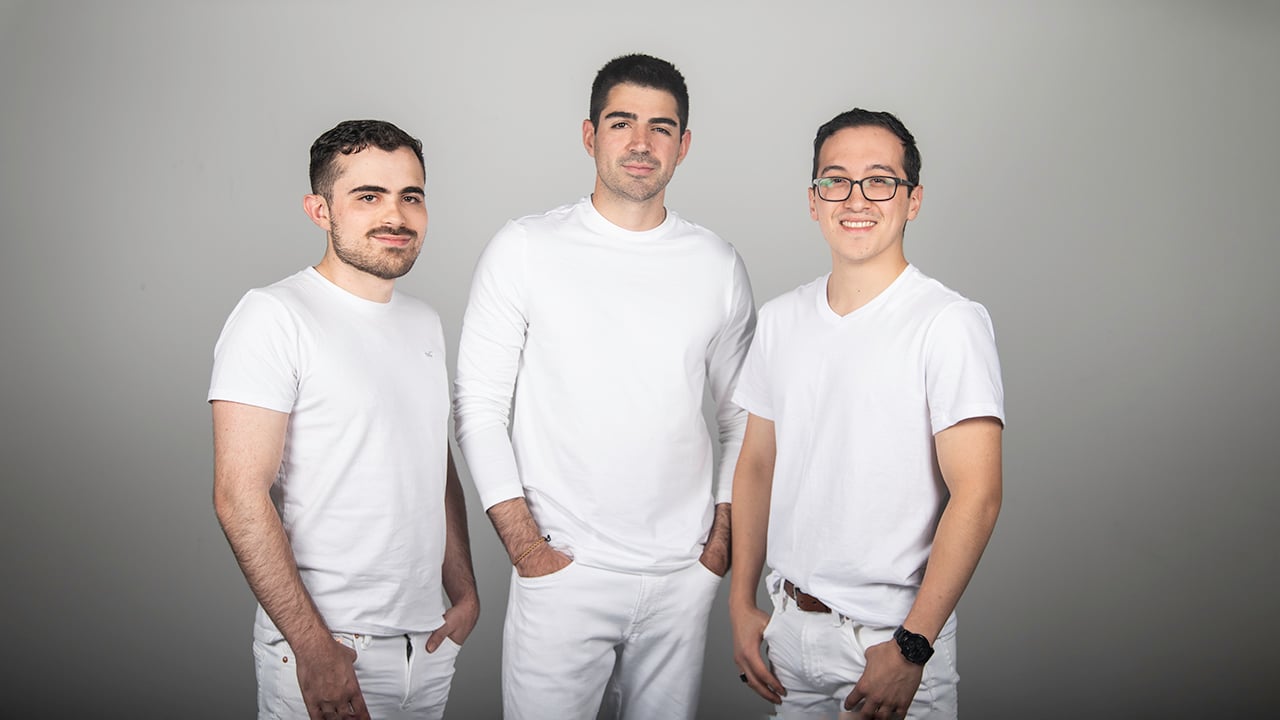
By 2025, the three co-founders were 27 and Palomma was working with more than 70 builders and real-estate agencies. The company had raised US$2.3 million. That year, the trio appeared on Forbes’ first regional 30 Under 30 list for Latin America in the technology and innovation category. Echavarria also joined other young fintech founders in Bogotá to discuss the slower, more complicated work of scaling financial technology in Colombia.
The change in focus reveals something about Echavarria’s operating style. He talks publicly about selling before building, making a minimum viable product quickly, working in ambitious two-week sprints and speaking constantly with customers. These are familiar startup maxims. Their value depends on whether the founder is willing to let the answers alter the company. Palomma’s route from broad bank payments to real-estate software and finance suggests that the conversations did more than decorate a pitch deck.
It also helps that the co-founders bring different forms of impatience. Echavarria knows finance, distribution and growth. Monsalve and Gómez del Campo bring software and systems experience. Real estate provides enough manual work to offend all three sensibilities at once. The target is not a single prettier button. It is the chain of tasks surrounding the button.
The useful founder move was not spotting that payments were broken. It was following the broken payment into the industry where fixing it could unlock the next ten jobs.
Still day zero
Echavarria’s public persona carries an earnest appetite for building, softened by a sports fan’s taste for shorthand. He calls himself an avid soccer fan and squash player, announces progress with rockets and Palomma’s pigeon, and returned to the phrase “Day 0” after the 30 Under 30 recognition. It is a tidy defense against premature ceremony. Awards may recognize a journey; customers still arrive on Monday morning with collections to chase.
The older mentoring habit has stayed visible too. At Duke, he benefited from upperclassmen who helped younger students prepare for interviews, then built more of that bridge for those behind him. In interviews about entrepreneurship, he has aimed his advice at bankers, consultants, lawyers and engineers who want to start something but have not made the jump. His own route offers a sympathetic case. He did not leap from a dorm room. He gathered tools inside large institutions, returned home, studied a problem and then moved.
There is restraint in that arc. Entrepreneurship is often narrated as escape, with the employer cast as a gray building one must heroically flee. Echavarria treated each job as an apprenticeship in the company he hoped to create later. Morgan Stanley taught one language, Nubank another. Medellin supplied the market context and the reason to come back.
The future Palomma describes is larger than its starting point: an AI-native bank for real estate across Latin America. The phrase contains plenty of ambition. The more revealing part is “starting by rent.” Rent is repetitive, unavoidable and unphotogenic. It creates work for the tenant, the property manager, the landlord and the bank every month. In other words, it is an excellent place for a patient operator to become gloriously annoyed.
A nameplate may have changed the direction of Echavarria’s career, but the habit underneath matters more than the coincidence. He noticed. Then he acted. He noticed the clumsy payment too, and acted again. The founder’s craft begins before the company, in the decision that a familiar inconvenience deserves a second look.