Christopher Michel went hunting submarines without thinking to take photographs. Years later, he would remember the omission: hours in a Navy patrol aircraft, extraordinary work happening around him, and scarcely a thought about recording it. The future photographer was occupied with being a flight officer. It is a pleasing complication in a career that can look, from a distance, as though somebody arranged it for an adventurous magazine cover.
The camera came later. So did Military.com, a second company, an investment firm, polar journeys and portraits of scientists. Michel has worked in places where a person needs a mission briefing and places where a person needs a pitch deck. His present occupation can require either, along with some patience about the light.
There is a temptation to turn such a life into an itinerary. The locations certainly cooperate. But the more interesting story concerns his repeated willingness to change what he does, while carrying an interest in other people into the next job. Military.com helped a scattered community find itself. A portrait offers a more intimate version of the same possibility: here is someone you ought to meet.
The community in the room
Before there was a company, there was a familiar conversation. In 1999, Michel was attending a Naval Reserve drill weekend when people began discussing how to reconnect with shipmates and obtain benefits information. These were ordinary frustrations with considerable consequences. He had finished Harvard Business School the previous year and wanted to build something. Here, among people he understood, was a reason to begin.
His service had included navigating and commanding missions aboard P-3C Orion patrol aircraft, followed by work at the Pentagon. Business school introduced another way of thinking about a working life. Dan Bricklin, the VisiCalc co-creator, made a particular impression. Michel was drawn to the satisfaction of creating something that would matter beyond its creator. A spreadsheet was an unlikely recruiting poster, but it did the job.
Military.com launched in March 2000. By May, it announced 200,000 registered members. The constituency included serving personnel, veterans, relatives and others with military ties. The attraction was practical: information and connections gathered around a shared experience. Membership offered a reason to return that had little to do with the novelty of being online.
The timing was inconvenient. The website arrived just before the internet bubble collapsed. Michel has been candid about the company’s difficulties: money spent, mistakes made, a dismissal and a return to the chief executive’s job. His account gives the founder photograph a little necessary texture. There was work between the idea and the acquisition, and some of it involved being told he was no longer in charge.
Monster acquired the business in 2004. By then, the military audience and a recruitment company had an obvious point of connection. Service members eventually need civilian jobs; employers need people with useful experience. The original insight had survived a punishing period for internet businesses because the community’s needs kept existing after the excitement cooled.
A second sale, a different decision
Michel’s next company, Affinity Labs, extended the professional-community model. Founded in 2006, it created sites for particular occupations, including law enforcement and education. A shared profession supplied the context: people could exchange information, develop connections and consider their next move among others who understood the work.
This time, he had lessons to reuse. He described building separate communities much more quickly and cheaply than the original Military.com had been built. Monster bought Affinity Labs in January 2008. Repeating a useful idea had produced a second transaction with the same buyer. It was a respectable argument for remaining in the business of respectable arguments.
Instead, photography became his primary pursuit that year. It had been growing alongside the companies for a decade, beginning with a camera given to him around his business-school years. A drive west to California became an opportunity to make pictures. By 2008, what had accompanied his working life was ready to occupy much more of it.
He also established Nautilus Ventures in 2008, so the change did not require a ceremonial burning of business cards. But his description of photography as a third career matters. Becoming competent in one field does not confer competence in the next. He taught himself through practice. There were subjects to approach, assignments to secure and pictures that still needed making.
Large gloves, small buttons
Consider the U-2 cockpit. Michel photographed from a reconnaissance aircraft at 70,000 feet, wearing a bulky pressure suit in a space with little room for the photographer, let alone his ambitions. In his account of the assignment, the obstacles were satisfyingly concrete: large gloves, small controls, difficult camera access and ice on the windscreen.
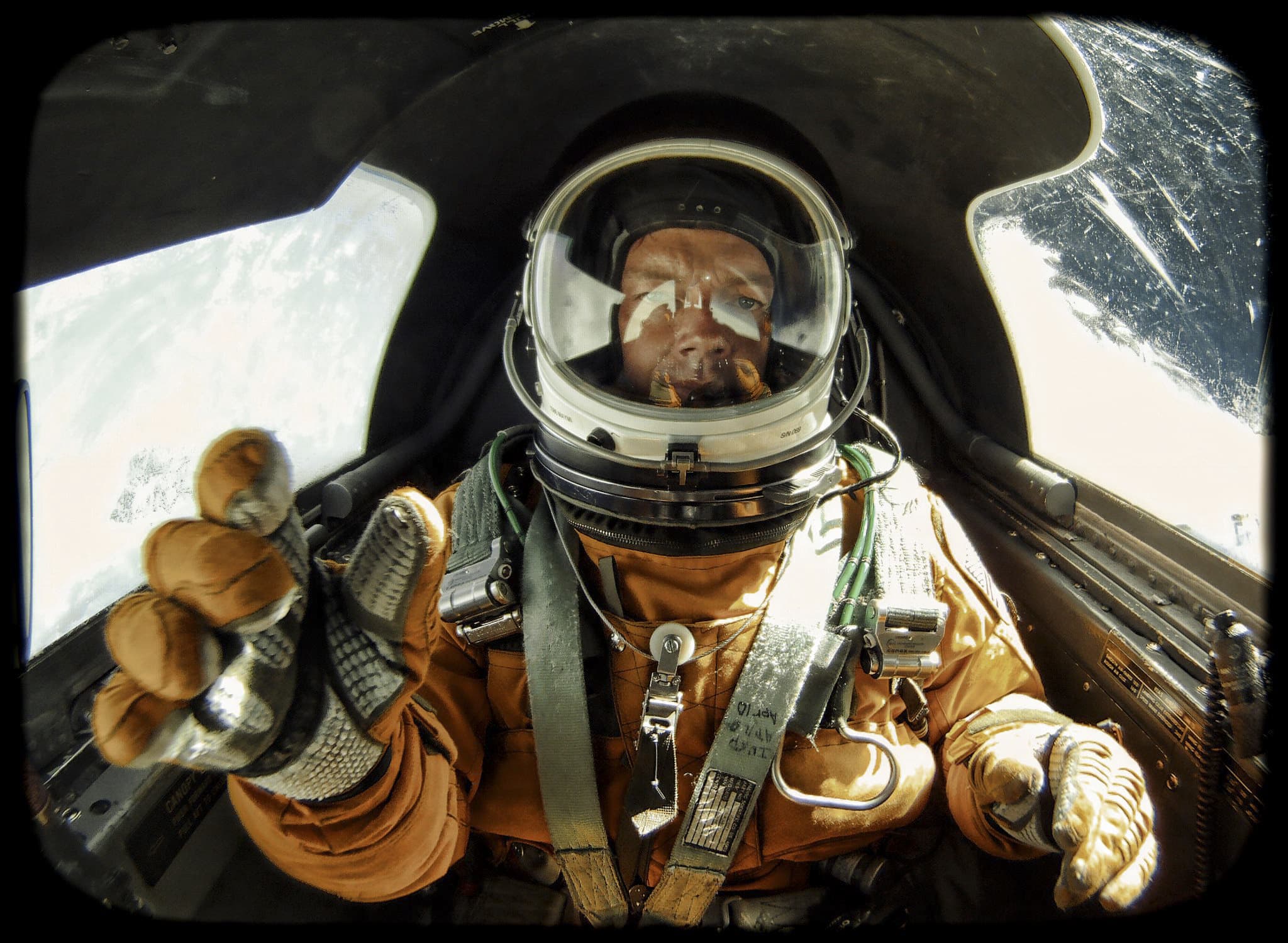
He brought a Canon 5D Mark II, an Olympus EP3 and a GoPro. The Canon failed at altitude. A GoPro mounted on the dashboard made pictures looking both outward and inward, giving the flight a human occupant as well as a view. The resulting cockpit image has the unlikely intimacy of a travel snapshot taken somewhere a travel agent would struggle to book.
The picture also makes the practical nature of his work visible. An interesting destination does not operate a camera on your behalf. Getting there leaves a series of small decisions: what to carry, where to put it, which control a glove can reach. His aviation background offers context for the scene, but the photographic task remains stubbornly specific.
“Tenacity & Love.”
Christopher Michel, on advice for aspiring photojournalists
People belong in the picture
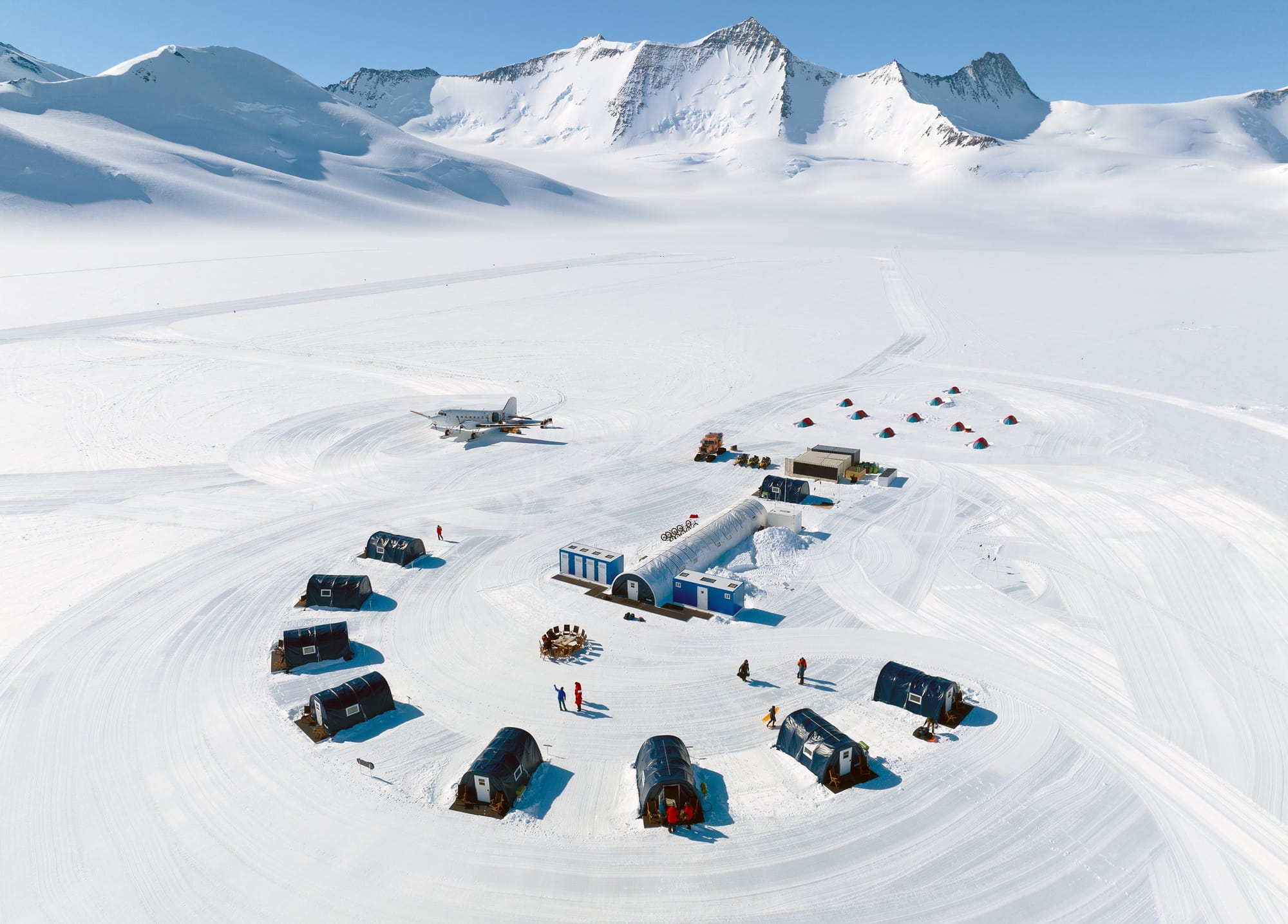
Michel’s assignments have included the North and South Poles, Papua New Guinea and the Democratic Republic of Congo. Yet a faraway location is only part of what interests him. He has described waiting for people to enter a photograph. A landscape acquires a different set of questions once somebody appears in it: what are they doing, how did they arrive, what makes staying possible?
That attention can make a crowded assignment as demanding as a remote one. During a three-day commission photographing the Dalai Lama, Michel found himself amid followers, motorcades and security. Access was extraordinary; control over events was limited. He had to record what happened while avoiding becoming an obstacle to it. The photographer’s privilege came with a requirement to know where to stand.
His enjoyment of old film cameras introduces a quieter pleasure. He remembers a shutter sounding particularly pronounced in the stillness of the North Pole. Film also changes the pace: a more considered sequence of decisions, a mechanical tool whose workings remain tangible. For someone who has built internet businesses, there is a certain charm in equipment that expects no software update.
A face for the work
In March 2021, the National Academies named Michel its inaugural artist-in-residence. He had already contributed to the institution through advisory and communications work. The appointment put photography at the center of that relationship, using portraits to draw attention to scientists and engineers and encourage engagement with their work.
The project, New Heroes, gives a public face to people whose achievements may be much better known than their appearance. Research often reaches an audience as an announcement, a technical result or an institutional name. A portrait offers another entrance. Someone looking at it can begin with a person before attempting the larger explanation of what that person has accomplished.
Michel’s history gives this work a particular logic. He understands organizations from having served in one, built others and advised more. A photographic encounter relies on trust: somebody must agree to let the visitor in and accept how the encounter will be represented. Years spent working with people can be useful preparation for a few minutes spent photographing them.
He teaches through Santa Fe Photographic Workshops and serves on CatchLight’s board. Those commitments place him among people thinking about how images are made, circulated and understood. The photograph has several lives: the encounter during its making, the first audience, and the later viewer who discovers something in it that the original moment could not have anticipated.
A clock with a longer deadline
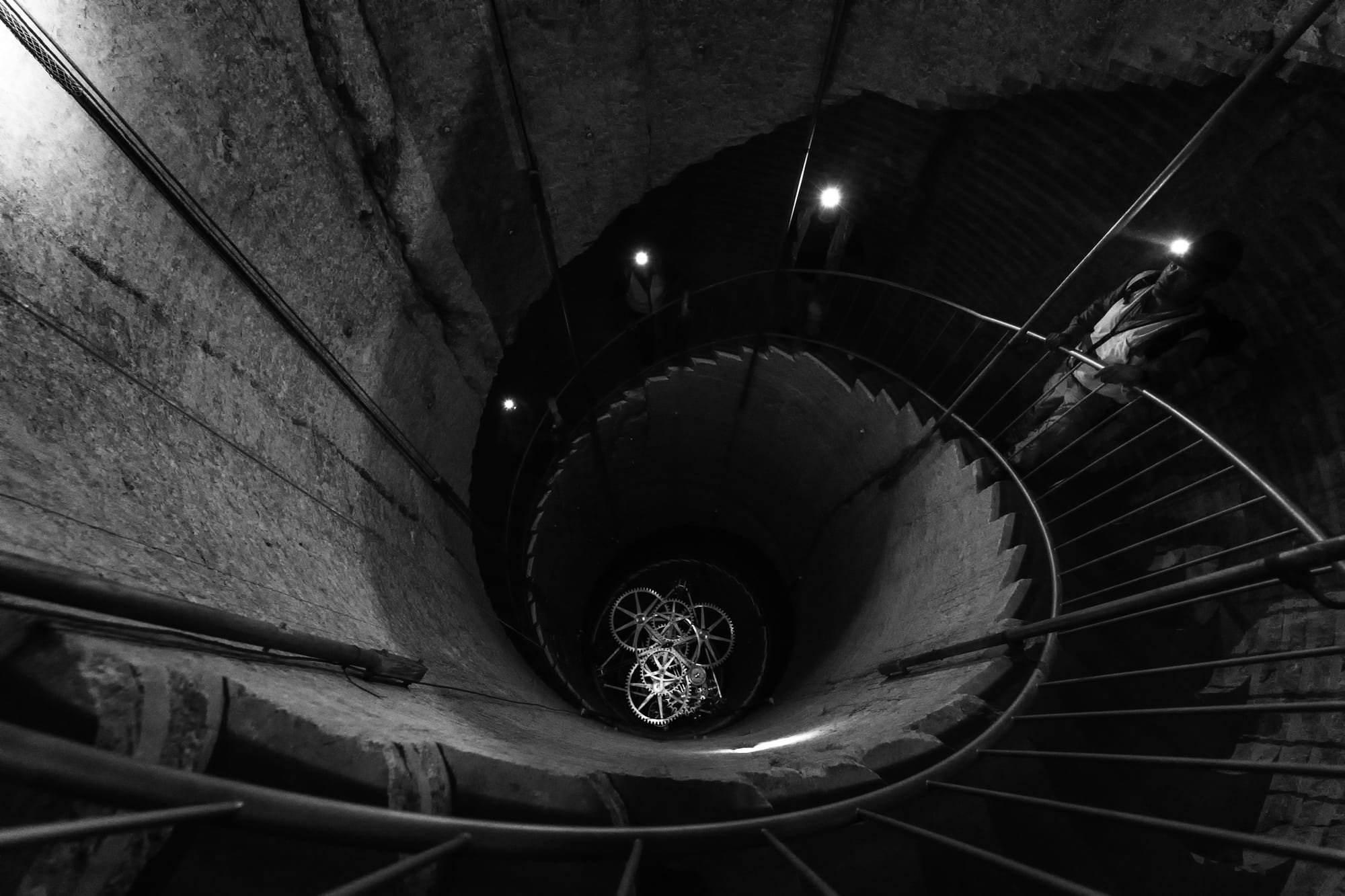
The Long Now Foundation appointed Michel artist-in-residence in May 2025. His brief includes the people and objects associated with long-term thinking, among them the 10,000-year clock and the Rosetta Project. Photography has a useful tension with that assignment. It works in fractions of a second, then leaves an object that may outlast everyone present.
He is also working with Pico Iyer on Polar, a book about high-latitude landscapes, science and human stories. The combination suits a photographer who has published fine art books while continuing to seek encounters in the field. A book allows images to speak to one another across pages, with writing supplying detail that no single frame can carry.
Home is San Francisco, where his Flickr biography includes Sadie, a Bernedoodle. It is a welcome domestic detail in a life easily reduced to departure boards. Someone who travels to the poles still has to take the dog outside. The ordinary walk and the distant expedition share at least one photographic possibility: another reason to look carefully at what is in front of you.
Early in his career, Michel missed pictures because he was busy doing the work. Now his work is to notice other people doing theirs. The shift took years, two companies and a willingness to begin again. He has kept the camera close.
Keep looking
Photographs, conversations and field notes.