Breaking
Cobaugh named CEO of Alloy Genetic Medicines - Jan 2026 First scientist in the Alexion-Moderna mRNA partnership Founded Vernal Biosciences in an 800-sq-ft Vermont lab "Everybody who needs mRNA should have a chance to get it" Raised ~$21M to scale mRNA manufacturing Now leading the AntiClastic nucleic acid platform
Person · Founder · Scientist

Christian
Cobaughbuilds mRNA.

A St. Louis kid with a Texas PhD who put an mRNA factory in the woods of Vermont - and then went back to the corner office.

Genetic Medicines mRNA Nucleic Acids Vermont Biotech
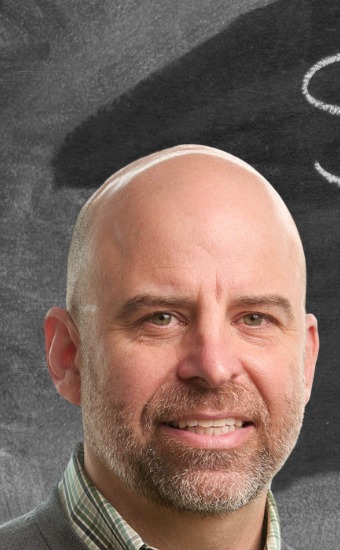
Christian Cobaugh, CEO of Alloy Genetic Medicines
Christian Cobaugh: chalkboard optional, mission non-negotiable.
15+
Years in genetic medicine
5
mRNA companies before CEO
800
Sq ft where Vernal began
~$21M
Raised to scale mRNA
The Dispatch

The builder who kept moving toward the hard part

In January 2026, Christian Cobaugh took the top job at Alloy Genetic Medicines. His assignment is a mouthful and a moonshot: use a proprietary cyclic nucleic acid technology called AntiClastic to reinvent what antisense oligonucleotides, siRNA, and other RNA-based drugs can do. Translated: make the medicines that edit and quiet genes more potent and safer, so partners can build better therapies for their patients.

He talks about it plainly. "I am honored to be tasked with leading Genetic Medicines as we utilize the AntiClastic platform to rethink what ASOs, siRNA, and other RNA-based therapeutics can achieve within the broader genetic medicines toolbox." No fireworks. Just a scientist who has spent his whole career walking toward the toughest problem in the room.

The seat is new. The instinct is old. For more than fifteen years, Cobaugh has done the unglamorous, load-bearing work of genetic medicine - discovery, development, and the part almost nobody outside the field can pronounce: CMC, the chemistry, manufacturing, and controls that decide whether a brilliant molecule ever becomes an actual dose. He was the first scientist recruited into the Alexion-Moderna mRNA partnership, back when mRNA was a promise rather than a household word. He then rotated through a murderers' row of the field - Arcturus Therapeutics, CRISPR Therapeutics, Translate Bio, and Omega Therapeutics - collecting the kind of hands-on manufacturing knowledge that does not fit on a slide.

Then he did the thing that made him interesting. He left the hubs.

In 2021, Cobaugh founded Vernal Biosciences, a contract manufacturer of high-purity mRNA, and he built it not in Cambridge or the Bay Area but in Colchester, Vermont. The premise was almost stubbornly egalitarian: the pandemic had proven mRNA could change medicine, and Cobaugh decided the ability to make it well should not belong only to the giants. "Everybody who needs mRNA should have a chance to get it," he said. That is not a marketing line bolted on afterward. It is the reason the company exists.

The origin story has the texture of a real one. Vernal started in an 800-square-foot lab. To get going, Cobaugh bartered with former colleagues at the University of Vermont, trading gloves for pipette tips - the biotech equivalent of borrowing a cup of sugar. The lab got its keys in mid-April. The first purchase order landed by mid-May. From a closet-sized room and a swap meet, he built a company that would eventually raise around $21 million and grow past sixty people, then keep going toward a couple hundred.

How Vermont happened is its own small comedy. Cobaugh, a self-described "pandemic refugee from Massachusetts," spent a month in Stowe "just for fun" during lockdown and, somewhere between the mountains and the quiet, decided to stay. "I'm not sure I could have pulled this off in Boston," he later said - and he meant it as a compliment to the place. No traffic, real estate that made sense, and a talent pipeline he could court with skiing instead of stock options alone.
Everybody who needs mRNA should have a chance to get it.

— Christian Cobaugh
AlexionModerna partnershipArcturus CRISPR TherapeuticsTranslate BioOmega Vernal BiosciencesAlloy Therapeutics

“I'm not sure I could have pulled this off in Boston.”

On building biotech in Vermont

The Bet

He saw the bottleneck before most people saw the medicine

By the time COVID vaccines made "mRNA" a phrase people said at dinner tables, Cobaugh had already spent years elbow-deep in the stuff. He had watched it move from a research curiosity to the center of modern medicine, and he had noticed something most of the excitement missed: making mRNA well, at the purity a clinical program demands, is genuinely hard. The molecule is fragile. The process is finicky. Get it slightly wrong and the science downstream inherits your mistakes.

That is the gap Vernal was built to close. Not another drug company chasing a target, but the layer underneath - the reliable, high-quality supply that lets everyone else's ideas get off the ground. It is a humble place to plant a flag, and a smart one. When a gold rush is on, there is quiet leverage in selling the shovels, especially shovels nobody else knows how to forge.

He staffed it the way he built it: carefully. A plan to add roughly one scientist every six to eight weeks sounds almost anti-ambitious in an industry addicted to blitzscaling. But it let Vernal keep its standards while it grew, and it let Cobaugh recruit the specific people he wanted rather than the ones a frenzied hiring quarter would settle for. He courted them with the things Boston could not offer - room to breathe, mountains out the window, a commute measured in minutes.

The wager paid off in the way that matters. A company that began by trading gloves for pipette tips ended up raising around $21 million and spreading across two floors, a real manufacturer with real customers, sitting in a state better known for maple and skiing than for messenger RNA.

We started out in an 800-square-foot lab, bartering with former colleagues at UVM, trading gloves for pipette tips.

— On founding Vernal Biosciences
The Long Way Around

A career map that ignores the usual roads

1999
Master's in molecular pharmacology, Northwestern University.
2007
PhD in cell and molecular biology, University of Texas at Austin.
2013-14
Joins Alexion; becomes the first scientist in the Alexion-Moderna mRNA partnership.
2016-20
mRNA discovery, process and manufacturing leadership at Arcturus, CRISPR Therapeutics, Translate Bio, and Omega.
2021
Founds Vernal Biosciences in Colchester, Vermont, with seed funding led by Alloy.
2023
Vernal raises ~$21M; team grows past sixty across two floors.
2025
Shifts from Vernal CEO to Chief Scientific Officer and board director.
2026
Named CEO of Alloy Genetic Medicines, leading the AntiClastic platform.

Read the map and a pattern shows up. Cobaugh keeps taking the seat that is one notch harder than the last: from bench science to the industrial reality of making mRNA at quality, from big-company research to a startup he had to bootstrap with borrowed supplies, from CEO to CSO and back to CEO again.

That last move is worth a second look. Stepping down from the top job at a company you founded is usually treated as a defeat. Cobaugh treated it as design. He handed Vernal's CEO chair to Jim Petrilla, took the CSO seat where the science lives, kept a board role - and left himself free to say yes when Alloy came calling with a whole new platform to run.

It is the rare founder who understands that the title is a tool, not a trophy.

Field Notes

Five things that explain him

01 / Origin

St. Louis to Austin to the north woods

Midwestern roots, a Texas doctorate, and a company built in rural Vermont. His geography refuses to match the biotech cliche.

02 / Belief

Access over exclusivity

He built a company on the idea that high-purity mRNA shouldn't only belong to the biggest players. Democratization was the whole point.

03 / Method

Grow slow, on purpose

Rather than a hiring spree, he planned to add roughly one person every six to eight weeks - a factory built in deliberate slow motion.

04 / Craft

He speaks fluent CMC

Discovery gets the headlines; manufacturing decides whether a molecule ever helps anyone. Cobaugh chose the harder, quieter half.

05 / Instinct

Trade gloves for pipette tips

The founding of Vernal ran on barter with old UVM colleagues. Resourcefulness first, capital second.

06 / Now

Rethinking the toolbox

At Alloy he's aiming the AntiClastic platform at ASOs and siRNA - trying to make gene-level medicines both stronger and safer.

Amuse-Bouche

Facts worth keeping

1

A month spent in Stowe "just for fun" during the pandemic turned into a permanent move and a company.

2

Vernal's first purchase order arrived within roughly a month of the lab getting its keys.

3

He was employee number one on the science side of the Alexion-Moderna mRNA partnership.

4

Three seats, two companies: CEO, then CSO, then CEO again. He keeps rewriting his own job description.

The North Star

Where he's pointed

The through-line of a career: make genetic medicines more accessible, more potent, and safer - so the therapies that work at the level of the gene reach every patient who needs them.

He started by fixing supply, making sure the raw material of the mRNA revolution could be produced well by more than a handful of companies. Now he's aiming higher up the stack, at the molecules themselves. Same mission, bigger lever.

The Alloy chapter fits the pattern. Alloy Therapeutics runs less like a single company and more like a scientific commons - a venture studio that spins up divisions and hands them to operators who can actually ship. Genetic Medicines is one of those divisions, and the AntiClastic platform is its bet: a cyclic nucleic acid chemistry meant to make gene-level drugs land harder and behave better in the body. Handing that to Cobaugh is a straightforward piece of logic. Few people alive have spent as much time as he has on both the biology and the plumbing of nucleic acid medicine.

What he does with it is the open question, and the interesting one. If the arc so far means anything, expect him to keep his head down, grow the thing deliberately, and measure success not in press releases but in whether the medicines actually reach the patients waiting on them. That has been the point the entire time.

Spread the word

Share Christian Cobaugh's story

Story compiled from public sources · Facts verified, flourishes labeled