The planes were only half the problem. In December 2006, Chris Morrissey was preparing for a day in Whitehorse when 1,800 athletes would leave and another 1,800 would arrive. More than 20 large aircraft were expected within 24 hours. The airport could handle the traffic. At the athletes' village, someone still had to change the beds.
Morrissey was general manager of the 2007 Canada Winter Games. He was working with airport and security officials on the movement of people through the Yukon capital. But the accommodation turnaround had its own unforgiving timetable. As he put it: “We have to clean up the village and get new bedding in all before the new athletes arrive.”
It is a useful opening scene for the career of Nova Scotia's investment chief. Economic development has a vocabulary full of horizons, opportunities and potential. Bedsheets are refreshingly difficult to confuse with potential. They are either ready when the next team arrives, or they are somebody's immediate problem.
Today, Morrissey is CEO of Invest Nova Scotia and Deputy Minister of Growth, Development and Defence Industries. His route there runs through sport, an environmental foundation and a seaweed biotechnology company. Viewed together, those jobs suggest a recurring professional problem: how to bring people, resources and an ambitious plan into the same place at the right time.
Under 24 hours to turn over the village. Logistics had a very literal deadline.
Halifax, before the opening ceremony
By 2010, Morrissey was CEO of the Halifax 2011 Canada Winter Games. The preparations included three conferences over ten days, bringing more than 160 delegates to the city. Provincial and territorial mission teams, technical advisers and sponsors had to understand how the event would work before the athletes appeared.
The February 11-27 Games were expected to bring more than 2,700 athletes to compete in over 20 sports. Nova Scotia had never hosted a multi-sport event of that size. The opening ceremony would give the preparations a public face; much of the work happened in tours, meetings and the exchange of practical questions months beforehand.
There was also a question about what should remain afterwards. In February 2010, the Support4Sport program announced a $1 million contribution to the Canada Games Legacy Fund. The fund was intended to benefit young people through amateur sport, culture and recreation. Morrissey welcomed the contribution as a beginning for the legacy plan.
That detail changes the scale of the assignment. A Games chief has an event to deliver and a community to consider after the visitors leave. The calendar supplies a finish line. The legacy fund asks a longer question. Both belong to the job, though only one comes with a closing ceremony.
A baseball diamond beneath the snow
The Games kept appearing in Morrissey's working life. In October 2016, he joined the Canada Games Council board. By then, his involvement had extended, in some capacity, to nearly every Canada Games since 1999. Whitehorse and Halifax were two particularly substantial assignments within that longer relationship.
He had also become someone other host communities could draw on. In a recollection of Winnipeg's bid for the 2017 Summer Games, Canada Games official Aaron Bruce described travelling with Morrissey and Dena Coward to assess the city's technical capacity in May 2013. Snow covered the ground. Evaluating a baseball diamond required rather more imagination than usual.
Bruce's account captures an agreeable absurdity of event planning: summer sport, inspected in winter conditions. Beneath the joke was serious work. A promising host city needed suitable venues, and experienced visitors were there to judge whether its plans could hold up.
In August 2016, Morrissey chaired the technical review committee visiting four Ontario bids for the 2021 Summer Games. Ottawa, Niagara, a combined southwestern Ontario bid and Greater Sudbury each presented venues and village proposals. His work now included examining other people's preparations, as well as having managed his own. Enthusiasm could get a city into the conversation. The review process then asked for capacity.
- 2007General manager
Whitehorse Winter Games - 2011CEO
Halifax Winter Games - 2013-14Executive director
Clean Foundation - 2025CEO appointment
Invest Nova Scotia
Selected documented milestones. The foundation entry marks its reporting year.
Taking environmental knowledge beyond the province
As executive director of Clean Foundation, Morrissey faced a different organizational task. His message in its 2013-14 annual report described a period of change, including a new name and an ambition to carry the organization's expertise beyond Nova Scotia. Knowledge developed locally could have value elsewhere.
The report also described the less celebratory side of that transition: investments in infrastructure, restructuring costs and adjustments to fit a changing policy and business environment. Expansion and internal repair appeared in the same account. Anyone who has attended a meeting about growth will recognize the attraction of discussing the first without lingering over the second.
Energy efficiency remained a priority. Emera's $37 million donation supported a ten-year program for electrically heated homes occupied by people on low incomes. The report also highlighted saltwater restoration through the Atlantic Reef Ball Program and the work of the Nova Scotia Youth Conservation Corps.
This chapter puts environmental work inside Morrissey's career as an operator. The organization had programs to run, partners to work with and a future business model to establish. Its proposed export was expertise. The practical question was how to make that expertise useful beyond the place where it had been developed.
Nine and a half years, and a disputed stapler
His private-sector chapter took him to Acadian Seaplants, the family-owned multinational biotechnology business based in Dartmouth. He served as vice-president of resource management. The job placed him inside a company whose business crosses borders, rather than in an organization considering how to extend its reach.
When Morrissey announced his departure, he said he had spent nine and a half years there. His farewell thanked the Deveau family and colleagues, including the company's chef. It was a warmer document than the usual announcement of an executive transition, with the people around the business taking precedence over a catalogue of results.
The replies added a small office comedy. One colleague wondered whether a Tim Hortons might persuade him to stay. Another asked for his stapler and hoped the change would not mean the end of Christmas cookies. These were jokes from colleagues, rather than items in an official biography. They make the departure sound like a workplace saying goodbye to someone it knew.
Professional titles tend to flatten a person. A vice-president becomes a function on an organization chart; a chief executive becomes a headshot beside a paragraph. A farewell thread lets a few other voices into the room. Here, the room contained appreciation, good wishes and an opportunistic interest in stationery.
Two jobs, one provincial brief
Morrissey's education includes an executive MBA from Saint Mary's University in Halifax and undergraduate work in economics and business at Memorial University. He also completed CommunityShift, the executive leadership program for Canadian charity and nonprofit leaders founded by KPMG and Ivey Business School. The qualifications sit alongside experience accumulated across quite different organizations.
In July 2025, the province announced that he would add the CEO role at Invest Nova Scotia to his position as deputy minister of Growth and Development. The appointment took effect on July 10. Wayne Crawley became executive chair, with responsibility for leading work on the corporation's renewed mandate.
That mandate emphasized strategic, large-scale investment. Defence, renewable energy and natural-resource industries were among the areas named, with an initial emphasis on defence and wind-generated electricity. The brief also included recruitment for financial and sector-specific executive positions. A revised direction needed people to carry it out.
By September 2026, Morrissey's government role had the title Deputy Minister of Growth, Development and Defence Industries. It involves working across Crown corporations, departments, other levels of government and private enterprise. The list of participants is long. Coordination is built into the assignment before any particular project is discussed.
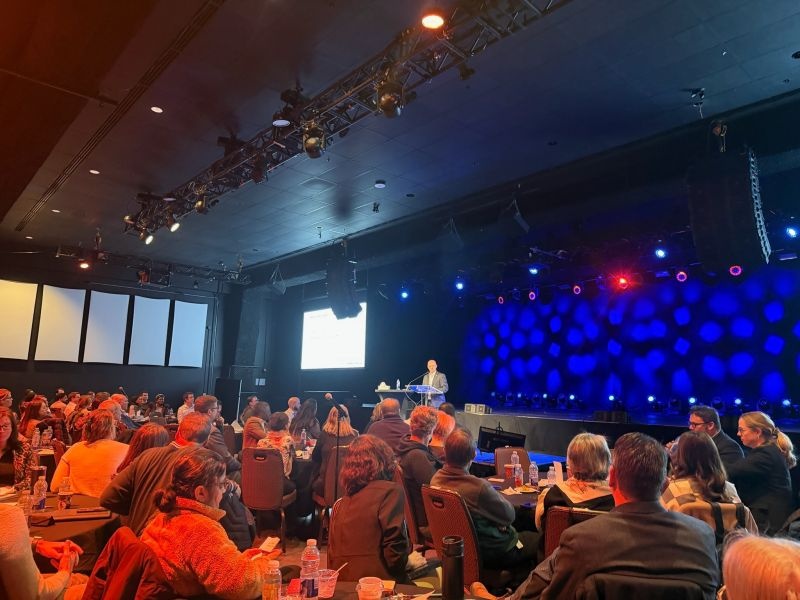
From a roomful of colleagues to a roomful of investors
Addressing his Invest Nova Scotia team about 2026, Morrissey outlined six priority sectors. His public invitation extended to businesses, researchers, investors and people building careers in the province. The ambition was to expand opportunities and diversify exports by connecting local capabilities with demand elsewhere.
Those categories combine familiar resource industries with newer technologies. They also reach beyond the startup world into construction, agriculture and energy. The proposed audience is correspondingly broad: an established company considering expansion can belong in the same discussion as a researcher trying to commercialize an idea.
“If you see opportunity in one of our priority sectors, we want to hear from you.”
Chris Morrissey / on the 2026 priorities
In September 2026, he was named among Nova Scotia's delegates to the Canada Investment Summit in Toronto. The province planned to present 20 investment-ready projects, including Wind West, Melford International Terminal and Spaceport Nova Scotia. The gathering brought the investment brief into a room with prospective partners.
A project list describes an ambition; it does not settle its outcome. That distinction matters in a career now devoted to attracting investment. The most revealing earlier episodes concern the work between a proposal and its delivery: checking a venue, preparing a village, restructuring an organization, assembling the people needed for a plan.
The journey from Whitehorse to that investor gathering covers different industries and a considerable distance. Yet the opening problem remains a useful way to read it. People can agree on the destination while leaving an impressive number of arrangements unresolved. Morrissey's career has repeatedly placed him among those arrangements. Even a grand occasion needs someone to ask whether the beds will be ready.