The most revealing thing about CEFA Early Years School is not that a toddler might encounter phonics, yoga and a science experiment before lunch. It is that founder Natacha Beim Boserup tried the polite route first. A young teacher obsessed with early brain development, she wanted existing centres to use a more ambitious curriculum. They declined. Rather than sand down the idea, she opened the school she wished existed.
That was West Vancouver in 1998. CEFA - Core Education and Fine Arts - now says it has more than 50 schools across Canada and enrolls over 6,000 children each year. The network stretches through British Columbia, Alberta and Ontario, with U.S. territories in its sights. Its customer-facing product is a full-day private program for children from about one to five. Its less visible product is the machinery required to make that program repeatable: curriculum, certification, site selection, classroom design, licensing help, marketing and operating guidance.
The product is a point of view
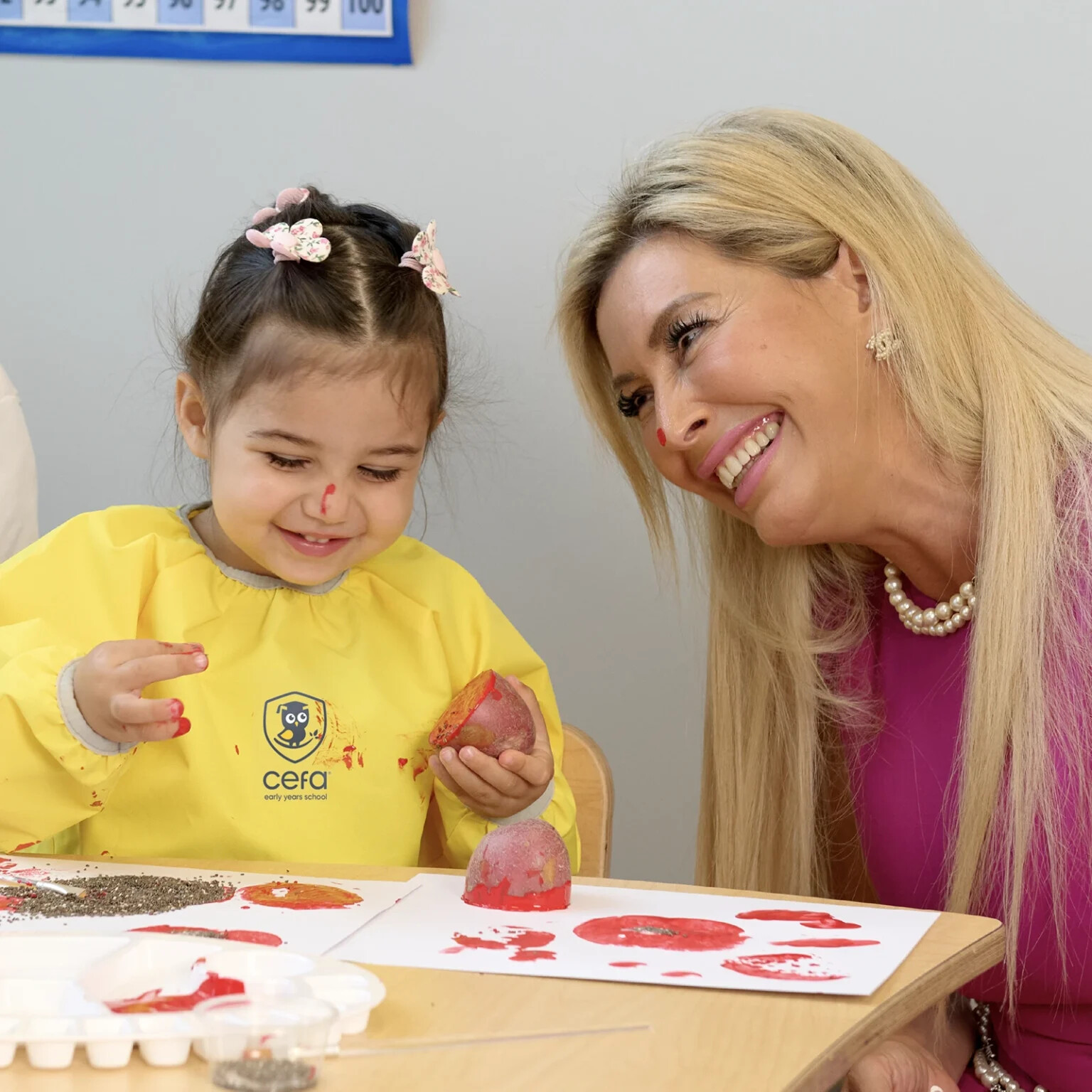
CEFA insists on the word school. That sounds like branding until you see how thoroughly it dictates the experience. Children wear uniforms. Teachers document progress and hold conferences with parents. The daily rhythm can include reading, writing, early mathematics, science, visual art, music, drama, physical education, yoga, relaxation and cultural learning. Meals are prepared by an in-house chef. Enrichment is bundled into tuition instead of bolted on as an extra.
The pedagogical mix is deliberately plural. CEFA says it borrows structure from Montessori and inquiry from Reggio Emilia, then blends both with play, teacher-led instruction and research on early development. That gives families a middle path between a purely custodial image of daycare and an anxious miniature elementary school. The child can pour, paint, sing and investigate; the parent still gets a curriculum map and a progress report.
Those four names do commercial work as well as educational work. “Whole-child development” is worthy but foggy. Innovators, Masterminds, Creators and Change-Makers are a tour script. They give a teacher a shared vocabulary, a franchisee a visible standard and a parent four handles for an otherwise invisible service. The clever move was turning a philosophy into something people can remember on the drive home.
“I could not convince existing centres to adopt a more progressive approach.”Natacha Beim Boserup, on why she opened CEFA
What failed first
Persuasion failed before the product did. Beim could not get incumbent operators to change, so she built a working demonstration. Families embraced the first location, according to CEFA's history; a second school opened in Burnaby in 2003. The failed pitch changed her mind about the vehicle, not the mission. Instead of trying to license a few lesson plans into someone else's culture, she built the culture around the lesson plans.
That distinction matters. A curriculum PDF does not hire patient educators, soothe a nervous parent, plate lunch or notice a licensing problem. CEFA's four-month teacher certification and franchise support exist because education is delivered by humans in rooms, not by brand guidelines in a binder. The company helps operators with site selection, leasing, design, construction, licensing, hiring, training, marketing and ongoing operations. Its expertise sits at the intersection of pedagogy and the unglamorous mechanics of opening a regulated facility.
The other customer has C$3 million
Parents buy enrollment. Franchise partners buy an operating system. The Canadian Franchise Association currently lists the fee at C$70,000 and total investment at C$2.5 million to C$3 million. CEFA says prospective partners generally need C$850,000 to C$1 million in liquid capital. These are substantial schools, often 8,000 to 10,000 square feet and sometimes larger. The cheque covers a real place: classrooms, a kitchen, play areas, permits, equipment and enough runway to recruit before tuition begins doing its work.
The price of opening the doors
The revenue logic is straightforward: recurring tuition, with local economics shaped by enrollment, staffing, rent and provincial childcare programs. The company has not published audited system results. A third-party database estimates C$87.1 million in annual revenue, while a 2024 marketing post cited C$2.3 million average annual school revenue and a goal of C$100 million in system-wide sales by 2025. Treat those as directional claims, not a promised return.
There are really three customers in the room. The child needs safety, attention and an interesting day. The parent needs reliable full-day care plus evidence that the hours are adding up to something. The franchisee needs enough recurring enrollment to carry a large fixed-cost operation. CEFA's bundle connects the three: a science activity is fun for the child, legible development for the parent and a repeatable piece of the brand for the owner. When those interests separate, trouble follows. A beautiful curriculum cannot compensate for an unreliable pickup routine; a polished tour cannot compensate for staff turnover.
The first-year enemy wears a name tag
A former CEFA student, Julian Beim, later became a franchise partner - a neat loop in a family-founded education company. Asked about the hardest first-year task, he did not say curriculum or advertising. He said building a good team and settling students into the routine. Years earlier, the founder had named the same day-to-day constraint: consistently finding excellent staff.
That is the honest limit of franchising. A system can specify the room, the training and the sequence of activities. It cannot make every local hire attentive, nor can it guarantee that every franchisee translates “premium” into warmth rather than polish. Parents comparing locations often report that experience varies by operator. In childcare, the last mile is a person kneeling to meet a three-year-old at eye level.
CEFA's stated culture tries to make that last mile explicit. Its values are to make a difference, inspire, lead, respect and keep improving. Teachers are trained to ask what they are teaching and why. That sounds ordinary until you compare it with the temptation of any scaled service business: follow the checklist, protect the schedule, move on. A four-month certification program gives the company time to teach more than activity instructions. Whether that culture holds is tested every morning at dozens of independently owned locations, one handoff between parent and educator at a time.
What another operator can steal
Do not copy the owl logo, the uniforms or a STEM activity. Copy the translation. CEFA took one founder's sprawling view of childhood - academics, art, confidence, movement and curiosity - and turned it into named pillars, observable classroom moments and training routines. It designed the parent explanation and the employee behaviour together.
A five-line operating lesson
- Name the philosophy in language a customer can repeat.
- Turn each promise into something visible during a tour.
- Train the frontline until the promise survives the founder's absence.
- Bundle the small extras that prove the positioning.
- Make the ugly constraints - capital, hiring, licensing - part of the sales conversation.
This approach works when the service is high trust, locally delivered and improved by a recognizable method. It does not work when a market lacks licensed educators, suitable sites, sufficient family demand or regulatory room for a for-profit operator. Nor does it work if standardization crowds out the responsiveness children need. The franchise must be consistent enough to deserve the name and flexible enough to notice the child.
The broader market makes that balance harder. Public funding has lowered fees for many Canadian families, but participation rules and economics vary by province and by centre. A premium operator must explain what families receive beyond a childcare space without suggesting that more structure is automatically better for every child. CEFA will fit families who value a long day with visible curricular intention. It may not fit parents who prefer a smaller home-like setting, a looser child-led model or a lower-cost public option. Good positioning includes the confidence to be wrong for some people.
Where CEFA sits now
CEFA occupies the premium end of a crowded continuum: public and subsidized childcare, independent daycares, Montessori schools, Reggio-inspired centres and larger chains such as Kids & Company, BrightPath and Willowbrae Academy. Its difference is the bundle - full-day care, an explicitly school-like rhythm, a proprietary curriculum, fine arts, meals and formal parent communication - delivered through locally owned franchises.
Growth is continuing. Burlington gave CEFA an Ontario foothold in 2023; Oakville, Mississauga and Markham celebrated openings in 2025. Current franchise materials describe more than 50 Canadian schools and an expansion into the United States. The company has also earned franchise-industry recognition, including a top-22 position in the 2025 EF100 Canada ranking. Those are useful signals, but the more interesting achievement is durability: twenty-eight years after the first school, the original argument is still easy to understand.
Beim believed the years before kindergarten could hold more purpose without losing play. CEFA's business was built by giving that belief a room, a timetable, four names and a local owner. The result is expensive, operationally fussy and hard to fake. That may be precisely why it has lasted.