The strangest thing about Ivybrook Academy is also the easiest thing to understand: the school day ends after three hours. In a country where childcare is commonly sold by the hour and family calendars resemble air-traffic control, Ivybrook offers a morning or afternoon session and then politely returns the child. It is a constraint disguised as a product - and, for the right family, the constraint is the point.
The company operates and franchises private preschools for children roughly 18 months through six years old. Its campuses combine ideas from Montessori, the Reggio Emilia approach, and Howard Gardner's Theory of Multiple Intelligences. In practice, that means hands-on materials, teachers who observe before they prescribe, group projects, creative work, and learning plans shaped around the child rather than a laminated weekly script.
This is not daycare with nicer furniture. Ivybrook positions itself between custodial childcare and private elementary school: more intentional than the first, less formal and much shorter than the second. The buyer is a parent who can solve the coverage puzzle and wants preschool to feel like school. The other buyer is a franchise operator prepared to turn curriculum, real estate, staffing, licensing, and neighborhood trust into one coherent local business.

The thing that failed first
Before Ivybrook existed, Jennifer McWilliams taught first grade. What bothered her was upstream: too many children arrived without the individualized attention and varied experiences they needed. Traditional preschool could feel one-dimensional, with a single plan applied to children who learned, spoke, moved, and wondered differently. The first failure in the Ivybrook story was not a botched launch. It was the default template Jennifer had inherited.
She spent about two years developing an alternative. The origin story includes a charmingly analog prototype - Jennifer and her husband, Drew, sketched a preschool on a cocktail napkin during their honeymoon. They opened the first campus near Charlotte in 2006. Jennifer shaped the educational product; Drew, a business operator, built the support and planning machinery around it.
“Children are wildly capable of growth and discovery.”Jennifer McWilliams, co-founder
Their hybrid approach is less doctrinaire than the labels suggest. From Montessori comes independence, ordered materials, and purposeful work. Reggio Emilia contributes collaboration, documentation, creative expression, and the idea that the room itself is a “third teacher.” Multiple Intelligences supplies the insistence that ability shows up in different forms. Ivybrook adds continuous assessment and a progression from toddler sensory play to literacy, mathematical reasoning, science, social studies, and, at some campuses, private kindergarten.
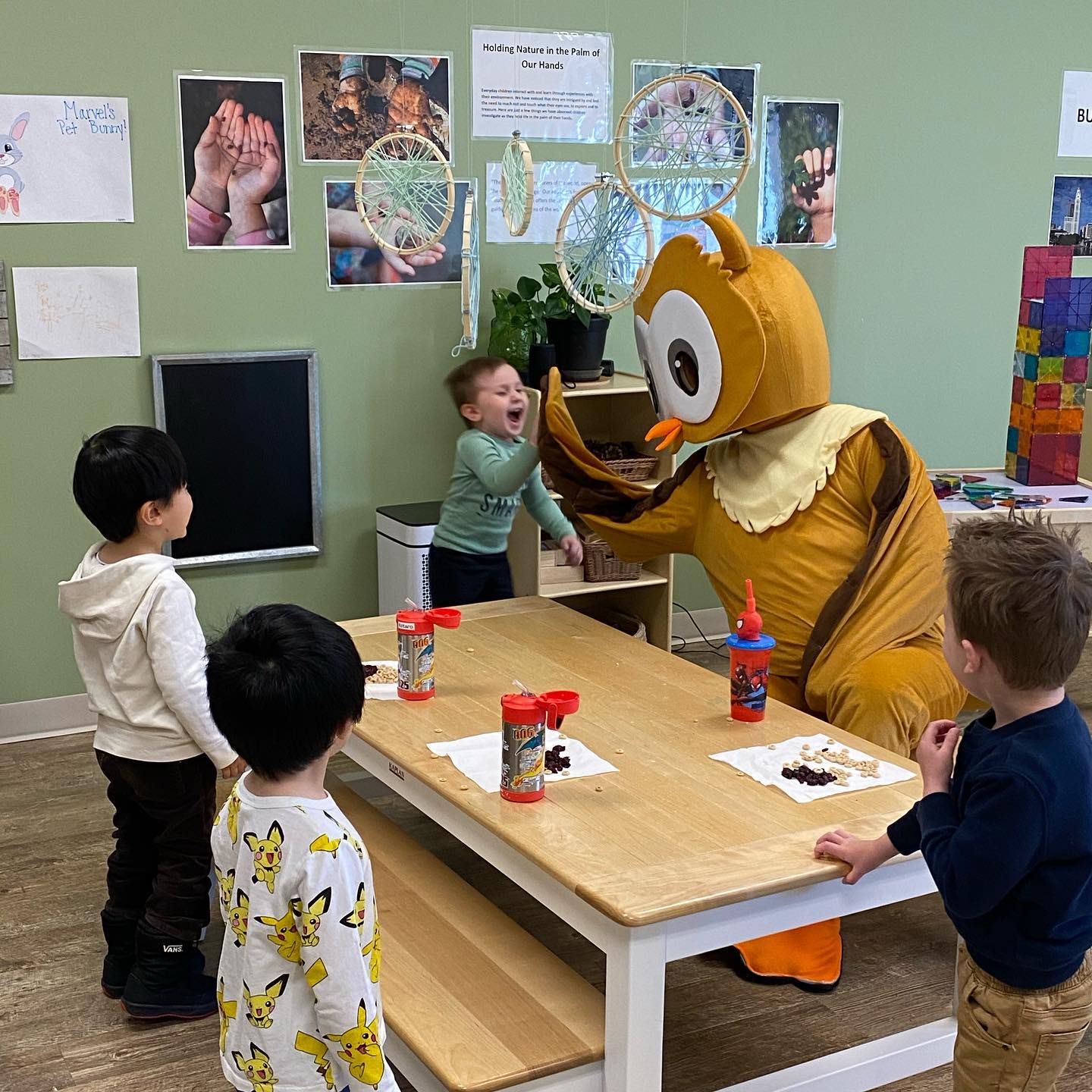
The classroom tells the story faster than the brochure. Neutral colors replace primary-color noise. Materials sit at child height. Wood, plants, objects from nature, mirrors, photographs, and half-finished investigations invite attention. The aesthetic is calm, but not empty. It is designed to make a pine cone look more interesting than a flashing plastic button.

Less time is the positioning
Most competitors can offer a version of child-led play, small groups, or Montessori materials. Ivybrook's sharper difference is the schedule. A concentrated session gives teachers a defined instructional arc and leaves children time for rest, family, play, or other care. It also tells the market exactly what Ivybrook is not. A nurse starting a 12-hour shift does not need a poetic three-hour morning. A family seeking an educational block, with a parent, grandparent, nanny, or flexible schedule covering the rest, may find it ideal.
That self-selection matters. Ivybrook competes with independent preschools, public pre-K, church programs, nannies, Montessori schools, and full-day brands such as Primrose, Goddard, Kiddie Academy, Celebree, and The Learning Experience. It will lose the hours comparison. It aims to win the intent comparison: What, exactly, will my child do while there? How well will the teacher know them? What kind of learner will come home?
The programs answer in stages. Toddlers work on sensory exploration, language, independence, and social-emotional habits. Two-year-olds add routine and practical problem-solving. Three-year-olds move into collaboration and early literacy and numeracy. Four- and five-year-olds prepare for kindergarten. Select campuses extend into private kindergarten; summer camps keep the half-day rhythm while swapping the academic-year sequence for themes, arts, movement, nature, and beginner engineering.
The business hiding behind the bookcase
For families, the transaction is tuition. For Ivybrook, the growth engine is franchising. Local owners secure a site, build the campus, hire teachers, enroll families, and run the school. The franchisor supplies the curriculum, brand, training, opening support, operational systems, marketing help, and continuing guidance. The founders' answer to scale changed from owning more Charlotte-area schools to teaching other owners how to reproduce the experience.
This is not a cheap experiment. Ivybrook's 2025 franchise disclosure document estimated $540,700 to $869,860 to open one campus. The initial franchise fee was $50,000, with other required pre-opening payments taking the amount paid to the franchisor or its affiliates to $82,500. Ongoing charges included a 7 percent royalty, a 1 percent brand-fund contribution, and a monthly technology fee. Current applicants are asked to show at least $250,000 in liquid capital and $1 million in net worth.
The same filing offers a useful reality check. Among 24 franchised schools open at least two years and included in the 2024 performance sample, average gross revenue was $858,259 and median gross revenue was $838,581. The range matters more than a glossy average, and prospective owners must still account for rent, labor, local tuition, licensing, debt, and their own operating ability. Ivybrook is a school business before it is a franchise story.
Its physical constraints can also create discipline. A campus is not an endlessly expandable app. Rooms have capacity. Teachers need coverage. A family chooses one local school, not an abstract national network. Growth comes from enrollment, retention, siblings, referrals, summer programs, and new campuses. Every unit must earn trust at drop-off, one parent at a time.
The honest trade: Ivybrook gives up the giant market of families who require full-day coverage. In return, it gets a more legible product, a customer who chose the format deliberately, and an operating day organized around focused sessions.
What Crux is buying
By August 2026, Ivybrook said it had 54 open locations, six in development, and another 40 sold across 22 states. The company had also appeared on Entrepreneur's Franchise 500 for five consecutive years, ranking No. 429 in 2026. Those numbers describe a network with momentum, but also a growing synchronization problem: every new campus must feel locally attentive and recognizably Ivybrook at once.
In April 2026, private equity firm Crux Capital announced a recapitalization. Jennifer and Drew retained a meaningful ownership stake and continued leading the company. Crux said the capital and operating support would go toward franchisee services, curriculum, technology, and expansion. This is the most interesting phase. Money can make training faster and systems clearer. It can also tempt a brand built on observation to start managing by dashboard.
The clues to Ivybrook's preferred culture are deliberately soft: family partnerships, owners embedded in their towns, teacher observation, and relationships across the network. At the 2026 owner conference in Colorado Springs, the theme was “Relationships: The Heart of Ivybrook.” A slogan proves little. The operating test is whether a teacher still has room to notice that one child has spent a week drawing bridges while headquarters is busy opening the next state.
The useful theft
The parts worth copying are not the Montessori shelves. First, define the customer by the constraint they welcome. Ivybrook's three-hour session filters demand more effectively than a paragraph about quality. Second, let domain expertise specify the product before growth expertise packages it. Jennifer designed what happened in the room; Drew designed how more rooms could happen.
Use one hard constraint to make the offer instantly legible.
Turn philosophy into visible behaviors, materials, and rituals.
Local trust does not transfer automatically with a national logo.
Your customer's basic scheduling need conflicts with the format.
Third, make the brand observable. “Individualized learning” is mush until it changes the teacher's notes, the objects on a shelf, the size of a group, and the topic of a project. Fourth, create a public ritual that expresses the product. Ivybrook's Young Authors Week has preschoolers dictate and illustrate their own books, then present the finished volumes. It is literacy practice, a confidence exercise, a parent moment, and local television material in one tidy package.
The model will not travel everywhere. It struggles where families primarily buy coverage, where premium tuition demand is thin, where licensing or real-estate costs break the unit math, or where trained teachers are scarce. It also depends on operators who enjoy community work. A passive investor who treats the school as a spreadsheet with finger paint is likely to miss the product.
Ivybrook's achievement is not that it invented child-centered education. It did something more commercially specific: it bundled a set of educational beliefs into a recognizable three-hour experience, found families whose schedules and values fit, and gave local owners a system for delivering it. Twenty years in, the half day still looks like a limitation. That is why it remains such a good explanation.