BREAKING Founded 1988 in Bethesda, MD* The Creative Curriculum runs in Head Start classrooms across all 50 states* GOLD: 38 objectives, millions of children observed* Acquired by KKR in August 2021* ~350 employees* Estimated ~$198M annual revenue* Founder Diane Dodge started with a mimeograph machine* BREAKING Founded 1988 in Bethesda, MD* The Creative Curriculum runs in Head Start classrooms across all 50 states* GOLD: 38 objectives, millions of children observed* Acquired by KKR in August 2021* ~350 employees* Estimated ~$198M annual revenue* Founder Diane Dodge started with a mimeograph machine*
Company Dossier  //  Edtech  //  Early Childhood

Teaching Strategies, LLC

Look closely at the back wall of nearly any American preschool classroom and you will find their fingerprint - a curriculum binder, a tablet running an observation app, a parent newsletter in two languages. The company prefers it that way.

FILE NO. 1988

Who they are, right now

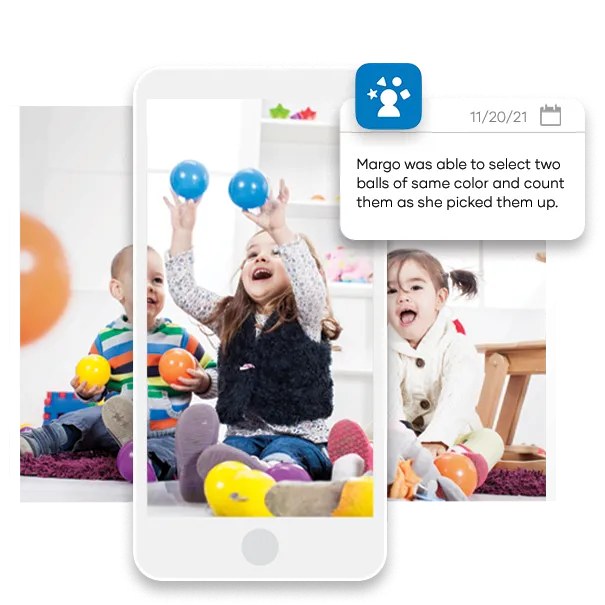
It is a Tuesday morning in a Pre-K classroom in suburban Ohio. A four-year-old named Mia stacks blocks. Her teacher snaps a photo, taps three buttons on a tablet, and assigns the photo to objective 11b: uses classification skills. Within hours, Mia's progress is plotted against widely-held expectations for her age. By the end of the quarter, her family will get a printable report. By the end of the year, her state will get aggregate data on what 100,000 four-year-olds are learning. None of that infrastructure has the words "Teaching Strategies" on it. But all of it is theirs.

The Bethesda, Maryland company is the closest thing American early childhood education has to an operating system. They write the curriculum. They built the assessment. They host the family app. They publish the teacher manuals, the coaching videos, and the printable lesson plans you find taped above the cubbies. They have done this, quietly and continuously, since 1988.

The most invisible software is the kind hiding behind a four-year-old's crayon drawing. - Pull quote, from this piece
A field shot, more or less. Above: the unremarkable Tuesday morning that turns into a longitudinal dataset.

The problem they saw

Early childhood education has always been the orphan child of the American education system. K-12 has standards, tests, federal money, and a century of bureaucratic infrastructure. Higher ed has rankings and tuition. Preschool, for most of its history, had crayons and good intentions.

The trouble is that what happens between birth and age five turns out to matter quite a lot - more, in many studies, than any later schooling. Researchers kept saying so. Policymakers kept funding programs. And teachers, paid less than dog walkers in some markets, kept doing the work largely without the tools, training, or data that older grades took for granted.

This is the gap Teaching Strategies has been working in for almost four decades. Not the glamorous edtech gap of college-prep apps and AI tutors. The other one. The one where a teacher is trying to figure out whether a two-year-old's vocabulary explosion is on track, and whether the family at home knows that pointing at street signs counts as instruction.

Preschool is the part of education where the stakes are highest and the dashboards are lowest. That is a market. - The implicit thesis of every Teaching Strategies product

The founder's bet

Diane Trister Dodge once ran a Head Start program in Mississippi serving 900 children. She had no curriculum she trusted, so she wrote one. She had no equipment more advanced than a mimeograph machine, so she used that. The first formal product of what would become Teaching Strategies, in 1988, was a filmstrip - yes, a filmstrip - titled Room Arrangement as a Teaching Strategy.

This is a charmingly literal origin: the company began by telling teachers how to push the furniture around. Forty years later it tells them how to push pedagogy around. The medium changed. The premise did not. The premise being: a classroom is an instrument; if you tune it carefully, children learn.

The bet underneath the company was always quietly contrarian. The reigning fashion in American education has trended steadily toward testing, scripting, and standardization. Teaching Strategies bet on the opposite - that observation, by a trained adult, of a child at play, would prove more accurate than any standardized test you could administer to a three-year-old. That bet has aged surprisingly well.

Tests measure children. Observations measure learning. Teaching Strategies decided that distinction was a business. - Editorial framing
Founder file: Diane Dodge, mimeograph era. Filmstrips not pictured.

The product, in three parts

What Teaching Strategies sells is technically a suite. Practically, it is three things stapled together so tightly that customers rarely buy one without the others.

The Creative Curriculum is the company's flagship - a play-based, research-grounded curriculum spanning infants through early elementary. It is the bound, color-tabbed binder you have seen on the shelf of every Pre-K teacher you know. It is also, increasingly, a digital platform with daily lesson plans, family take-homes, and embedded coaching prompts.

GOLD is the assessment system: 38 research-based objectives, color-coded developmental progressions, and a workflow built around teachers documenting what they see rather than testing what children know. A photo of a block tower. A voice memo of a conversation. A scribbled drawing of a sun. Each becomes evidence.

ReadyRosie is the family engagement layer - thousands of short videos in English and Spanish that turn ordinary parenting moments into informal instruction. Teaching Strategies acquired it because the company kept hearing that the highest leverage in early learning is not the four hours in class. It is the twenty hours at home.

Curriculum, assessment, family - the holy trinity nobody else managed to integrate without sounding like a vendor. - Field assessment
CURRICULUM
Birth - Grade 3
Full age range, single platform
OBJECTIVES
38
The GOLD framework, memorized by educators nationwide
LANGUAGES
EN + ES
Family resources in both, dual-language Pre-K supported
FOOTPRINT
All 50 states
Plus international Head Start and DoD programs

A 38-year run, in entries

1988
Diane Trister Dodge founds Teaching Strategies in Washington, D.C. First product: a filmstrip on classroom arrangement.
1990s
The Creative Curriculum becomes the de facto curriculum across Head Start grantees.
2010
GOLD launches as an observational, digital-first formative assessment system.
2018
Summit Partners acquires the business, accelerating the move to integrated digital platforms.
2019
ReadyRosie joins the platform, adding a family engagement video library in English and Spanish.
2021
KKR completes acquisition from Summit Partners. New chapter, same playbook.
Now
Curriculum, assessment, family, and coaching unified on a single integrated platform.

The proof

The customer list is the proof, and the customer list reads like a directory of American early childhood. State Pre-K programs in places like Georgia, Oklahoma, and New Jersey have used GOLD or The Creative Curriculum at scale. Federally funded Head Start grantees have made it a standard tool. Large private chains - the kind that operate hundreds of centers - run the same software underneath.

None of this is glamorous. State Pre-K administrators do not buy from companies they have never heard of, and they do not change vendors casually. What Teaching Strategies has, after 38 years, is something more valuable than buzz: the boring incumbency that comes from being correct, in public, repeatedly.

Where the platform lives

Approximate distribution of where Teaching Strategies products show up - illustrative
Head Start
92%
State Pre-K
78%
Private Child Care
55%
Public Elementary K-3
34%
Source: directional estimate based on publicly described state adoptions and Head Start usage patterns.
What the numbers say: the company's center of gravity is still publicly funded early learning. The private and elementary edges are where it grows.
They do not own the classroom. They own the rubric. Those are very different real estate. - An industry observer, paraphrased

The mission, plainly stated

Teaching Strategies says it exists to advance the early childhood profession - which is the kind of sentence companies put on careers pages and then ignore. In their case, it happens to describe the actual product roadmap. Most of what the company builds is either for the teacher (curriculum, coaching, professional development) or about the teacher (assessment data that demonstrates her work). The child shows up everywhere in the marketing, but the actual customer is the educator. That is an unusual configuration in edtech, where the default move is to disintermediate the teacher and sell directly to the parent. Teaching Strategies has, for nearly four decades, refused to do that.

Almost every other edtech company is trying to replace the teacher. This one is trying to make her better. - A subtle but durable strategic choice

Why this matters tomorrow

The interesting question is what happens to a 38-year-old curriculum company in an AI-saturated decade. The cynical answer is that observation-based assessment is the last frontier AI cannot easily eat - because it is anchored to a human teacher watching a human child. The optimistic answer is that AI is actually a gift here: it can help draft lesson plans, suggest documentation tags, translate family messages, and surface patterns in a way that frees the teacher to do the part only she can do.

Either way, the deeper bet remains. Whether a four-year-old learns to share, to count, to ask why, to wait for a turn - these things still happen one observation at a time. The infrastructure for noticing them is not nothing. It is, possibly, the most useful infrastructure in American education that nobody talks about.

Back in that Ohio classroom, Mia stacks one more block. The tower falls. Her teacher snaps another photo - this time tagged to objective 14a, thinks symbolically - because falling towers, it turns out, are evidence too. Somewhere in Bethesda, a server hums quietly. Somewhere in a state department of education, a quarterly report begins to populate itself. Mia, blissfully, does not care. That is rather the point.

The future of early learning will be measured the way it has always been done well - by a teacher, watching a child, taking notes. The notes just go further now. - Closing line

Links & further reading

Share this profile