She reads clinical trials the way she once read financial markets - looking for the gap between what a thing costs and what it is actually worth. Then she built a company around the difference.
Most people who run into the American pharmacy system come away confused. Catalina Gorla came away with a business plan. As co-founder and CEO of TruDataRx, she spends her days on a deceptively simple question: of two drugs that treat the same condition, which one actually works better - and is anybody paying attention to the answer before they pay the bill?
TruDataRx partners with self-insured employers and accountable care organizations, the entities that foot the real cost of prescriptions. It hands them objective clinical data and comparative-effectiveness analytics so they can stop overpaying for drugs that offer no advantage over cheaper alternatives. The company's stated mission is to bring transparency and savings to a market it describes as "fraught with hidden costs and confusion," by "empowering fiduciaries to take control of their spend with clinical data."
That phrasing matters. Gorla is not selling a coupon or a discount card. She is selling a point of view: that decisions about which drugs get paid for should be made by people who both understand the evidence and feel the financial consequences. In a system where those two things are usually held by different parties, that is closer to a provocation than a product spec.
She runs it from Norwich, Vermont - a town better known for its general store than its startups. The distance from Boston and New York seems to suit her. The work is national; the vantage point is deliberately outside the room where pharmacy deals usually get cut.
In 2025 she added another seat to the schedule, joining Katahdin Group's CEO Collective. The program puts founders in a room with peers who run their own companies, using a case-review process to give each other candid feedback on the decisions that keep them up at night. For someone who has spent her career arguing that better information leads to better choices, it is a fitting place to spend time. The same logic she applies to drug pricing - get the right people honest data and watch the decisions improve - turns out to apply to running a company too.
Gorla's core argument is structural, not partisan. In the U.S., the organization that decides which drugs get paid for is usually not the organization actually paying. When the decider profits from the sale and the payer just gets the invoice, you get exactly the prices you would expect.
Gorla did not start in healthcare. She started in finance. Out of Dartmouth College, where she graduated cum laude, she went to work as an economist at a large investment management firm, building analytical tools and reports on international financial markets. She also completed a financial leadership rotation program in the insurance world. The instinct she carried out of that period - find the mispriced thing, model it, explain it - never left.
Around the same time, she co-authored a blog on Forbes.com about entrepreneurship. Reading about building companies, it turns out, was a warm-up for building them.
The pivot came at Dartmouth's Center for Healthcare Delivery Science, where she served as program manager for innovations in translation and new initiatives. There she worked alongside researchers and business professionals to spin academic insight into sustainable entities that could close gaps in how care is delivered. It was, in effect, a laboratory for turning evidence into organizations.
That led directly to Informulary, where she was the founding chief operating officer. The company's premise: doctors and patients deserve clear, comparative information about prescription drugs before they choose one. If that sounds like a first draft of TruDataRx, it is. Informulary aimed the information at the exam room. TruDataRx would aim it at the checkbook.
In 2017 she co-founded TruDataRx and took the CEO seat. The throughline across every chapter is the same stubborn belief: better data, in the right hands, changes what people buy.
Her early resume reads like a tour of the places where money and information collide - investment management, insurance, academic research commercialization, business journalism. Each one taught a version of the same lesson. Markets misprice things when one side knows more than the other. Insurance is a bet on what you cannot fully see. Research only changes the world if someone translates it into something that can be bought and sold. Stacked together, those experiences point straight at the pharmacy counter, where confusion is not a bug but a business model.
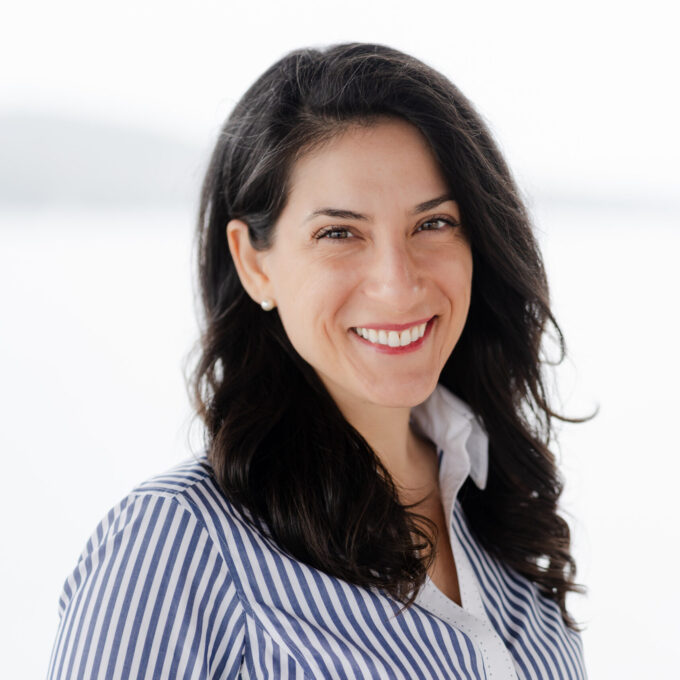
The standard pharmacy-benefits arrangement is a hall of mirrors. A pharmacy benefit manager sits between the drugmaker, the pharmacy, and the employer, negotiating prices, setting which drugs are covered, and collecting rebates along the way. The problem Gorla keeps naming is that the same intermediary deciding which drugs make the list also earns the bulk of its money when those drugs sell. The incentive is not to find the most effective medicine at the lowest cost. The incentive is volume.
TruDataRx is built to sit on the other side of that table. As CEO, Gorla works closely with the company's clinical team and its clients to deliver what she describes as meaningful savings driven by rigorous, evidence-based analytics. The clinical staff reads the comparative-effectiveness research. The development team turns it into analytical software. The client - usually a self-insured employer or an accountable care organization - gets a clear picture of where its pharmacy dollars are buying outcomes and where they are simply buying brand names.
The pitch to those clients is unusually blunt for the industry: take control of your spend. It assumes the buyer is an adult who, given the right evidence, will make a rational call. That assumption is also the company's bet. If employers stay passive, the hidden costs win. If they get informed, the math changes - and so does the market around them.
It is worth noting what TruDataRx is not. It is not a discount program, not a coupon network, not a pill in a cheaper bottle. The product is clarity. In a market that has spent decades profiting from opacity, selling clarity is a genuinely contrarian move - and a quietly aggressive one.
"We spend considerably more than other countries on healthcare yet have dramatically worse health outcomes."
"Given that 80% of PBMs' revenue comes from the sale of drugs, there is an inherent conflict of interest in this model."
"What seems to be working in places with a single payer model is that the payer is an informed payer."
At TEDxBeaconStreet, Gorla took on one of the loudest fights in American policy - how to lower drug prices - and quietly changed the question. The usual debate splits along a single axis: single payer or not. Gorla's answer was that the axis is wrong.
Countries that control drug costs, she argued, succeed less because of who signs the check and more because of what that signer knows. They use comparative-effectiveness data to reject drugs that offer no real advantage over what already exists. The lesson for the U.S. is not necessarily to nationalize the payer, but to inform it. Align the authority to decide with the responsibility to pay, give that party real clinical evidence, and the prices start to behave.
It is the same thesis she would later put to work commercially. The talk is the manifesto; TruDataRx is the implementation.
What makes the argument land is its refusal to pick a tribe. It does not ask whether you trust government or markets. It asks a smaller, harder question: does the person making the call have the evidence, and do they feel the cost? Get those two things lined up and the politics start to matter less than the data. That is a rare kind of position - one that annoys both sides of the usual fight and happens to be testable.
She traded international financial markets before she ever traded on clinical trials. The analytical muscle came first.
She has co-founded two healthcare companies built on the same idea: give people the drug information they actually need.
She wrote about entrepreneurship for Forbes.com years before she became a CEO herself.
Her company runs out of Norwich, Vermont - a deliberate distance from the usual health-tech hubs.
In 2025 she joined Katahdin Group's CEO Collective, trading notes with other founders on the hard parts of the job.