The American Airlines visitor wanted to see the office. Carrie and Curtis Zimmerman had spent time pursuing the account, but their prospective client still had a question about the agency’s address. Tallahassee? An airline could sell the world from plenty of places. Was this really one of them?
He came to look. His visit coincided with the employee Christmas party, and he ended up providing ten airline tickets for prizes. The agency got the contract. There was an agreeable complication: to inspect the people hoping to represent American Airlines, he had flown to Tallahassee on Delta.
The episode suits Carrie Zimmerman. It has competition, a practical obstacle and a joke supplied by the itinerary. It also puts the central choice of her business life in miniature. She and Curtis had chosen Tallahassee because they wanted to raise their children near family. Clients would have to learn to take the address seriously.
Long before an airline representative came to inspect her workplace, she had left that same city to pursue an ambition it could not yet accommodate. As Carrie Englert, she became a member of the 1976 U.S. Olympic gymnastics team. Her career would involve both leaving home and coming back. Each move had a purpose.
A long way from the Armory
Her first gymnastics setting was the Tallahassee Tumbling Tots, a parks and recreation program that practiced on the wooden floors of the Leon County Armory. It is a pleasingly modest name to put at the beginning of an Olympic biography. Nobody needs an imposing institution to discover that they like turning upside down.
Born in Tallahassee in 1957, Englert grew into an athlete whose training needed to go beyond the opportunities available locally. She moved to Oregon, where she trained under Dick and Linda Mulvihill at the National Academy of Artistic Gymnastics. Going away meant leaving the familiar people and routines that had surrounded the beginning of her career.
Her competition record shows the progress. In 1973, she won the all-around in the senior division at the AAU Junior Olympic Nationals. By 1976, she was the U.S. champion on balance beam and floor exercise. That summer, she competed in Montreal. The American women finished sixth in the Olympic team event.
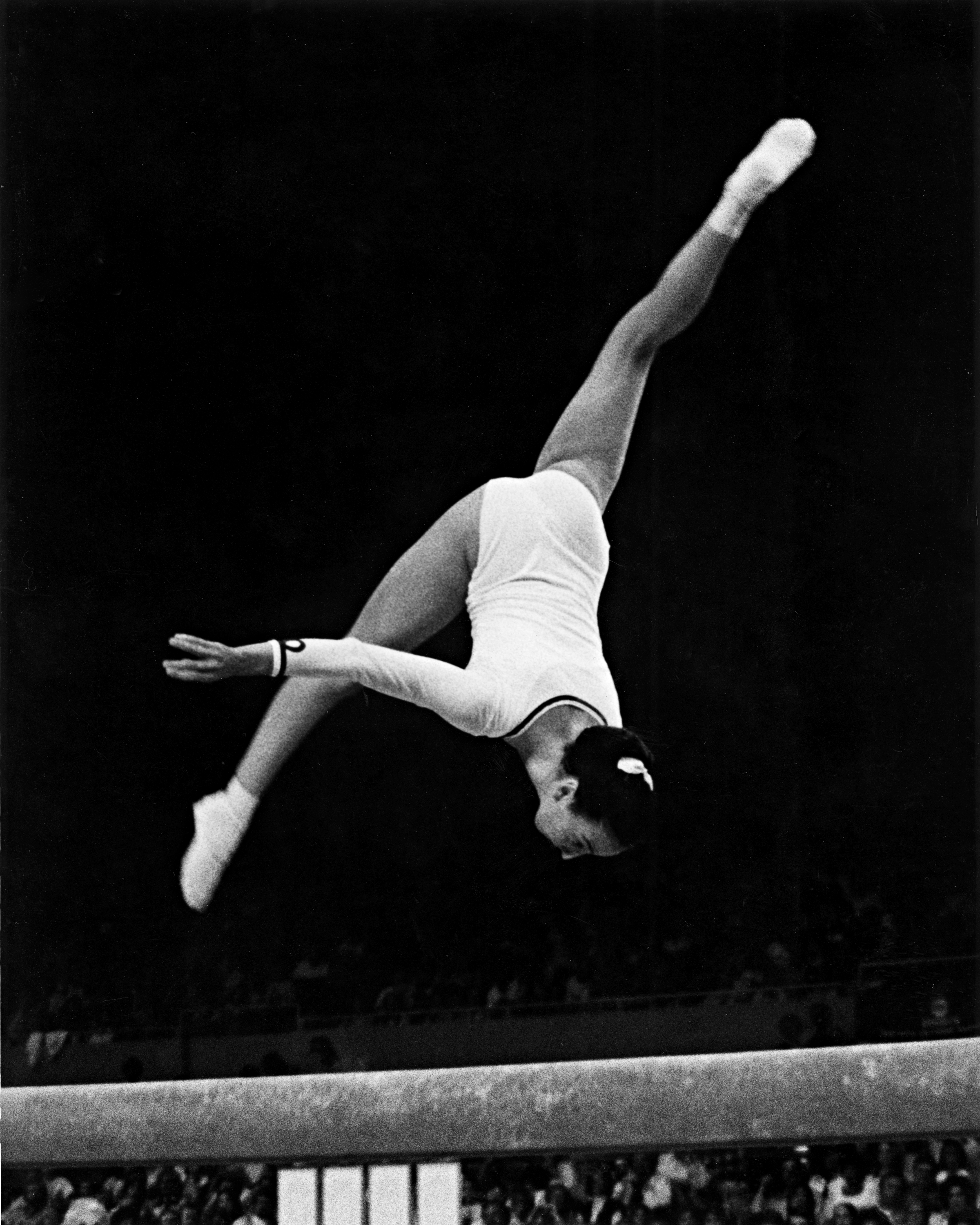
The results make the story more interesting than a loose description of Olympic glory. She had national titles and an Olympic team place; the Games were also a competition with a recorded finish. Achievements can be impressive without becoming medals they were never awarded. A career deserves the precision that an athlete’s scores once received.
Balance beam
Floor exercise
U.S. women’s team
The Olympian who stayed to teach
College brought another set of roles. At Clarion in 1977, she helped her team win the AIAW championship. That year she also captained the U.S. team at the World University Games in Sofia. Her athletic experience continued to find new settings after Montreal, including competitions that receive less attention than the Olympics but occupy real space in a sporting life.
She then transferred to the University of Georgia, where she studied public relations and journalism. She contributed to gymnastics as a student assistant coach under Elizabeth Long. She did not compete for the Gymdogs. Here was an athlete with international experience putting what she knew to work for other athletes.
Georgia’s program was still young. Its later run of ten NCAA championships under Suzanne Yoculan lay ahead. Zimmerman remembered the earlier meets in the physical education building, a setting a considerable distance from the grandeur that Olympic participation can suggest. Experience does not lose its usefulness when the room gets smaller.
This is an easily overlooked part of her story. Coaching asks someone to explain what they have learned, to observe another person doing it and to help that person improve. The former competitor had something to contribute without needing to be the person receiving the score. An Olympic biography was becoming a working education.
An address chosen for three sons
After Georgia came Atlanta and agency work. Carrie’s background was in public relations; Curtis worked on the advertising side. They had experience in complementary parts of the same business. They also had children, and the pace of their working lives prompted a reconsideration of where and how they wanted to raise them.
The move to Tallahassee followed. In 1987, they founded The Zimmerman Agency. The city offered proximity to Carrie’s family and the life they wanted for their sons. Choosing the location came with a commercial question: could an agency there win the sort of assignments associated with larger advertising centers?
The agency’s own history gives the milestones plainly. Curtis and Carrie founded it in 1987 after their Atlanta years. It became part of Omnicom in 2004. Between those dates lies the work of turning a decision about family into a durable business, with clients who bought the agency’s services rather than simply admiring its founders’ resolve.
- 1976Montreal: competing for the United States.
- 1977Clarion: a college team championship.
- 1987Tallahassee: an agency founded with Curtis.
- 2004The agency joins Omnicom.
- 2021Georgia recognizes her with an Arch Award.
- 2025A public interview describes life in retirement.
Hospitality and destination work became a substantial part of that business. Hotels, travel brands and destinations need people to imagine themselves somewhere else. There is a small irony in building that expertise from an address selected because its founders knew exactly where they wanted to be. Their own answer to the question of place was unusually settled.
The agency eventually worked with clients across countries. A December 2024 profile described a reach of 36 countries and a staff of 134 professionals. Those are figures from a particular moment, rather than a permanent scoreboard. They nevertheless give the family decision some scale: a return to a hometown could support work with an international audience.
Learning to take instruction
Gymnastics remained part of how Zimmerman explained her approach to work. Preparation mattered. So did the ability to respond to different demands. A gymnast moves among apparatus; an agency moves among clients, each with a different brief, audience and set of expectations. The comparison has practical uses when it stays close to those specific demands.
“Being coachable is everything about success.”Carrie Zimmerman
Her emphasis on coachability is particularly useful coming from a founder. Founders are usually expected to have convictions. Zimmerman also valued people who could accept direction and adjust. In client work, having an answer and being willing to revise it are both part of the job. Athletic training had given her a vocabulary for that combination.
The agency’s move into digital offers a less solemn example of learning. In 1995, a persistent Florida State University intern pitched the founders on interactive media. His PowerPoint presentation caught their attention. The technology itself was unfamiliar enough to become part of the story they later told about their introduction to this new field.
The agency added digital services. The episode is a welcome interruption to the idea that an experienced leader must foresee every change. Sometimes a younger person has something to show you. Sometimes the demonstration is almost as interesting as the proposal. A business still has to decide whether to make room for what it has just encountered.
A partnership with a family calendar
Carrie and Curtis married in July 1979 and raised three sons. Their partnership joined marriage, parenting and business ownership, which supplies ample opportunities for disagreement without any assistance from outside. In discussing it, Carrie was candid about argument as well as mutual respect. The arrangement endured without requiring her to describe it as effortless.
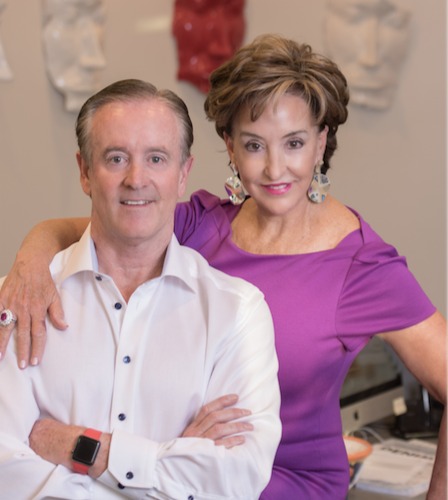
Their choices about travel were concrete. While the boys were young, they generally avoided going away together. Invitations to spend weekends at client hotels could be declined in favor of soccer, baseball and other activities with their children. Working with attractive destinations did not oblige them to accept every attractive invitation.
That detail explains more than a declaration about balancing work and family would. Someone had to attend the game. Someone had to decide that a weekend invitation could wait. The schedule made their priorities visible, one choice at a time. It was the same impulse that had brought them to Tallahassee, applied to the smaller decisions that followed.
In 2021, Georgia recognized Zimmerman as one of the inaugural Piedmont Bank Arch Award recipients, alongside Randall Godfrey, Brandi Hunter-Lewis and Will Witherspoon. The award honored former Bulldogs’ business success and contributions. For Zimmerman, it brought several portions of her life together: the athlete, the Georgia student and the agency co-founder.
A different kind of Olympic marathon
By April 2025, her public introduction had changed to co-founder and former CEO. In a conversation with Dave Fiore, retirement included travel, Florida State sports and being a grandmother. The geography stayed familiar. Tallahassee remained part of the story after it had served as childhood home, business address and the place where she raised her sons.
She also continued to attend the Olympics. At the 2024 Paris Games, she and Curtis had tickets to 35 events. She described the itinerary as a marathon of viewing. An athlete’s return as a spectator has its own pleasures: the competition belongs to someone else, while the calendar can still make a respectable claim on your stamina.
In June 2026, she appeared on The Shift Conversations, returning to the subject of life beyond sport. One observation from that conversation allows some breathing room around a biography full of achievement: “You don’t always have to be uber successful either.” Coming from an Olympian and former CEO, the permission has a certain weight.
Her story has more than one measure of a good result. There were national championships, a business built with Curtis, clients reached across borders and time reserved for her children. There are now grandchildren and trips. She left Tallahassee when training required it. She returned when family called for it. The place stayed the same; what she could do from it kept changing.
Keep following the story
The Zimmerman Agency · Carrie on LinkedIn · Carrie on Instagram