A summer camp has its own weather. There is the forecast adults make - schedules, registration lists, staff assignments - and the one children create the moment they arrive. Carli Kyles works in the lively distance between the two. At Go Girls! in Oakland, the day may bend toward theater, music, expressive art, a media project, or the communal invention known as “The Big Play.” The program ends with family potlucks. Ice pops are involved. Serious ideas often travel better when they are sticky.
Kyles is the founder of Amplify and executive director of Go Girls!, a set of camps and after-school programs for girls and gender-expansive young people. The public job description is simple enough. The actual work runs from curriculum and organizational stewardship to the profoundly uncinematic business of reminding a parent where to be. Her own summary of one useful tactic is admirably modest: “Sometimes a quick reminder text is all it takes.”
That sentence offers a good entrance into her career. Kyles is drawn to large questions - equity, voice, agency, the proper place of technology - but she keeps finding answers in repeatable acts. Write the reflection. Send the message. Make the scene. Try the difficult line again. Build a system sturdy enough that the people inside it are free to improvise.
Before OaklandThe letter before the stage
In 2008, when Kyles was a visiting assistant professor in urban education at the University of Houston-Downtown, she and Lori Olafson published a study of 15 teacher candidates placed in an urban, culturally diverse elementary school. The candidates wrote reflective response letters and cultural autobiographies. They examined their beliefs, their past experiences, and the assumptions they carried into a classroom.
The conclusion did not promise instant transformation. Opportunities to examine beliefs were useful, but isolated exercises were not enough. Meaningful change required multiple chances over time to uncover those beliefs and talk about them. Candidates whose own schooling and lives had been culturally varied tended to bring more favorable attitudes toward diversity than those whose experience had been monocultural.
It is easy to treat an academic paper as an artifact from a previous professional life. In Kyles’s case, it looks more like an early version of the same design problem. How do people become conscious of the ideas steering them? How do they practice a different response? What kind of environment allows candor without turning a mistake into a permanent identity?
A belief does not change because it has been named once. It needs another scene, another choice, another rehearsal.The through-line in Kyles’s work
Go Girls!’s Culture Code supplies those rehearsals in language a child can carry. Its five parts are not marble nouns. They are instructions. Say Yes. Give & Take. Make Mistakes. Feel My Feelings. Take Center Stage. Each asks for judgment, not blind compliance. “Say Yes,” for example, sits beside permission to say no for safety. Feeling something and acting calmly are allowed to coexist. A mistake is evidence of learning, not a verdict.
Five practices, all written as motion
StewardshipHow a local producer became an owner
The program Kyles leads has a history beyond her company. In the summer of 2019, Amplify was selected by Spotlight: Girls to produce Go Girls! programming in the San Francisco and Greater East Bay area. It was a practical handoff with a philosophical fit. Amplify focused on programs meant to cultivate creativity, connection, and resilience. Go Girls! already had a recognizable language and a community of returning families.
Four years later, the arrangement became a deeper form of stewardship. Amplify completed the acquisition of the Go Girls! trademark and intellectual property in 2023. A federal trademark filing from that year bears Kyles’s signature as owner. The transaction matters less as corporate drama than as an answer to a local question: who is responsible for carrying this body of work forward?
Continuity is not automatic. It is assembled out of decisions that rarely appear in a camp photograph. Go Girls! kept the registration platform families already knew. Stored camper profiles spared returning households from beginning again. Kyles used month-to-month and year-to-year comparisons to forecast revenue and review performance. Text alerts rescued important updates from overflowing inboxes. Audience segments made it possible to send age-specific information.
These details may seem far from courage and empathy. They are, in fact, their infrastructure. A missed form can keep a child from the room. A muddled forecast can shrink what a program can offer. A staff member buried in repetitive administration has less attention for the child deciding whether to speak. The back office is where lofty intentions either acquire legs or remain attractively seated.
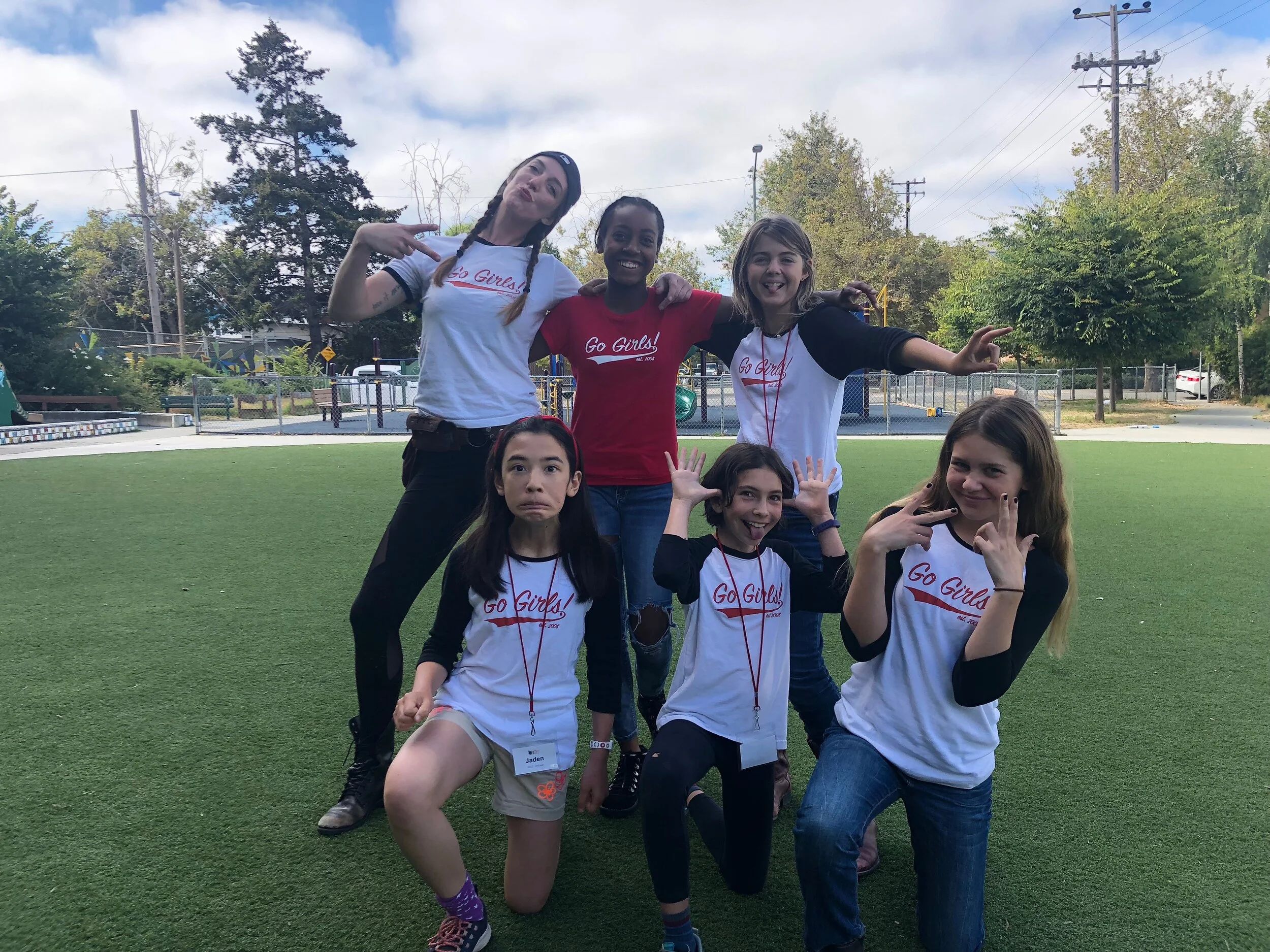
From 2021 through 2024, the program consistently served more than 180 participants each year. The number is notable precisely because it is not offered as a moonshot. It describes sustained local work: sessions that happen again, families that return, staff who can compare one season with another, and rituals recognizable enough to become memory.
The Oakland methodA civic life built close to the room
Kyles’s Oakland connections sit near the work rather than above it. She has been an active parent leader, volunteer, and advocate in the Mills Children’s School community for more than a decade. Aurora School describes her expertise as spanning teacher education, educational innovation, and systems thinking. Patten University has listed her among advisers reviewing business and management curricula and outcomes.
Together, those roles suggest a particular scale of leadership. There is the founder making ownership decisions, the researcher asking how beliefs move, the adviser reading institutional structures, and the parent who has spent years in a school community. Each position offers a different view of the same machinery. Policy lands in a classroom. A platform lands on a family’s phone. Curriculum lands in the charged second before a young person decides whether to raise a hand.
Appears as an M.Ed. at the University of Nevada, Las Vegas on work connecting Vygotsky, Freire, and language.
Co-authors a peer-reviewed study of reflection, diversity, and preservice teachers’ beliefs.
Amplify begins producing Go Girls! programs across the San Francisco and Greater East Bay area.
Amplify acquires the Go Girls! trademark and intellectual property.
CARLI brings the same agency-first thinking to family resource navigation.
What comes nextThe tool that must know its place
Kyles’s newest public project moves onto fashionable ground with an unfashionable caution. CARLI, short for Community Access Resource and Learning Intelligence, is a family concierge AI platform piloted with Oakland families and schools. Its stated territory includes attendance, resources, and access to opportunity. Its governing idea is narrower and more demanding: “AI should amplify human capacity and relationship, never replace it.”
The development process puts youth advisers in the room. They identify problems. They help decide what the tool should and should not do. They consider AI as an aid to judgment and agency rather than a substitute for either. Kyles is bringing that approach to a public conversation with the East Oakland Boxing Association, where youth council members are positioned not as decorative futurists but as people with standing to set boundaries.
There is a satisfying loop here. The researcher who asked teachers to examine the beliefs shaping their practice now asks a technical system, and the adults building it, to submit to human purposes. The camp director who knows a text message can remove friction also knows efficiency is not the final objective. The owner of a program about taking center stage is arranging for young people to influence the product before someone else writes all their lines.
“AI should amplify human capacity and relationship, never replace it.”Carli Kyles
Kyles’s career does not offer a single grand reveal. It offers recurrence. Reflection matters more when it happens again. Courage becomes available through rehearsal. Community programs endure through sound operations. Technology earns its place by returning time and judgment to people. Even a stage is useful because of what happens after it is shared.
At the end of a Go Girls! session, families gather and the work becomes visible in performance. But the truer ending may be quieter: a young person leaves with another verb at her disposal. She can say yes. She can say no. She can make a mistake without becoming one. She can feel the feeling, find the line, and decide when to step forward. The microphone is there. The next voice belongs to her.