Payroll is easy to ignore when it lands on time. When it does not, it acquires the dramatic range of a kitchen fire. A tax notice arrives. An employee's benefits question ricochets between vendors. A founder spends Thursday night learning a phrase such as “experience modification rate,” which was not the dream described in the first business plan. Carey Cook built his second career in this territory: the unglamorous, high-consequence machinery that keeps a small company employing people without becoming consumed by the act.
The setting was Nampa, Idaho, and the company was High Road PEO. Launched in 2021, it bundled payroll, benefits, workers' compensation and human-resources guidance for smaller employers. Cook served as chief executive and co-founder. The proposition fit neatly on a napkin: let business owners return to the work that made them owners, while a specialist team handles the administrative load that growth leaves on the doorstep.
What makes the story less neat, and more interesting, is what Cook did before the startup. He spent 28 years at Northwest Nazarene University. He arrived in 1993 as director of campus life, stepped into senior student-development leadership around the turn of the century, and remained through 2021. He coached women's tennis. He spent seven seasons as an assistant coach with women's basketball. He completed a doctorate in education from the University of Idaho while holding a demanding campus job. The career pivot from student life to payroll looks like a sharp turn only if one ignores the people in both pictures.
The institution was the classroom
Cook earned his bachelor's degree from Point Loma Nazarene University in 1988, a master's-level education degree from Albertson College of Idaho in 1992, and his doctorate in 2002. At NNU, his portfolio put him close to the untidy border between policy and life. Campus housing, student activities, conduct, safety, community and athletics do not run on sentiment alone. They require rules, schedules and people prepared for the exception that walks in five minutes before closing.
An early mentor supplied the model. Cook later said Ken Hills gave him his first NNU opportunity and helped him learn “what it meant to care for the well-being of students.” The phrasing is worth lingering over. Care is an intention; well-being inside an institution is also an operating result. Someone must design the system, notice where it fails and answer when an individual does not fit the standard form.
“Ken gave me my first opportunity at NNU and was a mentor helping me learn what it meant to care for the well-being of students.”Carey Cook on Ken Hills
Cook's campus years included the normal evidence of executive life: facilities, budgets, public statements and decisions that affect people who may never know who made them. In 2018, he spoke about upgrades to NNU's athletic landscape, including a new turf soccer field. In the strange spring of 2020, when campuses emptied and some students could not safely or practically go home, he described the food and housing support that remained available. Leadership had become the work of keeping a reduced campus humane under pressure.
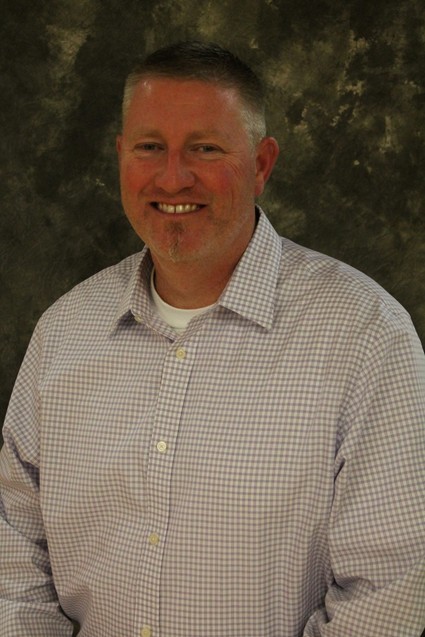
A second act in sensible shoes
High Road began after four people compared notes over dinner in November 2020. The company opened the following June. Its chosen category, the professional employer organization, is a mouthful that solves a recognizable problem. In a PEO relationship, a provider takes on specified employer responsibilities alongside the client. The owner still runs the business. The PEO processes payroll and taxes, helps administer benefits and workers' compensation, and brings HR expertise to moments when a search result is a poor substitute for judgment.
Cook's move was entrepreneurial, but it was not a rebellion against institutions. It was a wager that institutions can be made easier to live inside. High Road's client was the owner who had outgrown improvisation but could not sensibly hire a payroll specialist, benefits coordinator, compliance officer and HR manager. One company portal might replace several logins. One accountable team might replace a collection of vendors who each understand one slice of the problem.
The company called its integrated offer HR360. The four-part bundle covered payroll, benefits, workers' compensation and HR guidance. The software mattered because employees and owners needed a clean place for records, requests and approvals. Cook also drew a bright line around what software could not do. In a 2026 conversation for Helpside's It's Personnel, he argued that many solutions remain tools: the customer still performs the heavy lifting and carries the risk.
That distinction reveals High Road's actual product. It sold transferred attention. When Cook asks an owner what they would do with 25 percent more time, he turns an HR purchase into a question about ambition. More time might mean a sales call, a new location, dinner before the children go to bed, or simply one afternoon without a government form. The answer changes by owner. The value of asking does not.
“If you could get back 25% of your time… what would you do with it?”Carey Cook, It's Personnel, 2026
The local promise meets scale
By October 2025, High Road had reached the next uncomfortable question: how does a small, high-touch provider add specialist depth without sanding off the quality that made clients choose it? The answer was to join Helpside, a longer-established PEO from Utah. The public announcement described a merger and promised more resources, broader solutions and continued investment in Idaho. The High Road site now carries the phrase “powered by Helpside,” while service links increasingly lead into the larger company's system.
Cook described the combination in the language of strengths rather than escape. Clients, he said, would gain a wider range of resources alongside a continuing commitment to service. This is the test hidden inside nearly every service-company transaction. Expertise benefits from scale. Trust resists handoffs. A larger back office can absorb complexity, but only if the front door still opens for the customer who has a peculiar problem and no patience for a queue.
Cook had already spent much of his career living with that tension. A university is a system of policies and a collection of singular people. An HR provider is, too. The former campus executive did not arrive in business with the usual founder mythology of having no respect for old structures. He arrived knowing exactly why structures exist, and how quickly they become absurd when no human being accepts responsibility for the result.
Features become memorable when a buyer can picture what returns to the calendar.
A portal organizes work; a responsible person helps the customer sleep.
A good career pivot can change industries while preserving the problem worth solving.
More capability matters only when remembered context survives the handoff.
The paperwork is personal
There is a modest joke tucked inside Cook's career. He left a university, a place famous for forms, committees and handbooks, to start a company devoted to handling forms, regulations and employee handbooks. Reinvention does not always require fleeing one's native habitat. Sometimes it means taking the part everyone complains about and making it the craft.
The better connection is less comic. Student development and human resources both deal with the distance between an organization's stated values and an individual's Tuesday afternoon. Benefits sound abstract until someone needs to enroll. Payroll is a process until a rent payment depends on it. Community is a brochure word until a student cannot go home. Cook's public career has repeatedly placed him where those abstractions acquire names.
His route also offers a useful correction to the cult of the precocious founder. High Road arrived after Cook had held one institutional affiliation for nearly three decades. The years did not disqualify him from beginning; they gave him a stockpile of patterns. He knew that people want a clear answer, that systems fail at their seams, and that calm competence is more persuasive after a problem than a cheerful dashboard before it.
The next chapter belongs partly to the merger. High Road must retain the intimacy of a Nampa firm while drawing on Helpside's wider bench. Cook's own path suggests the standard he will use. A good institution should make care operational. A good service should return time. And a high road, inconveniently, is proved in the taking rather than the naming.