There is a peculiar etiquette to bank cards. Banks choose the colors. Banks put their names in the corner. The customer carries the advertisement and, if all goes well, pays for lunch with it. CARD.com reversed the arrangement. What if the small plastic rectangle belonged, visually, to the person holding it? For one customer the answer was Star Trek. For another, Care Bears. For a football fan, it might be a favorite player.
The idea sounds like merchandise until you notice the machinery attached. CARD.com offers reloadable prepaid cards and a mobile banking account. Its current Premium Bank Account is a checking account established by Pathward, N.A., with a Visa debit card issued by that bank. Customers can receive direct deposit, use a virtual card, pay bills, load cash, capture checks by phone and withdraw at participating MoneyPass ATMs. The card art is the invitation; the account is what the customer actually lives with.
- CARD.com made licensed card designs a way to win customers in a crowded prepaid market.
- Its Premium account now combines mobile banking tools with a customer-chosen Visa card.
- The standard $9.95 monthly fee is waived with qualifying direct deposit; other fees and eligibility rules still matter.
The Kmart question
Founder Ben Katz had worked on online partnerships at prepaid-card company Green Dot. In a 2013 interview, he remembered the difficulty of persuading someone to order a Kmart-branded card. The problem was not that people hated choosing. It was that the choice had been made for them. Katz had also founded Coveroo, which sold phone cases bearing sports teams and other familiar marks. He knew that people would put an affinity on an object they carried every day. A payment card offered the same surface, with more trips out of the wallet.
Katz and co-founder Ron Lin built CARD.com around that observation. The company lists 2011 as its founding year; contemporary coverage places the prepaid launch in 2012. The early pitch was a branchless way to manage a paycheck, paired with an unusually wide shelf of Visa card designs. By late 2013, reporting counted more than 2,000 designs. CARD.com's current LinkedIn page advertises 12,000. Those figures describe a catalog at different moments, not 12,000 separate banking products.
“What if you offered people awesome brands? Brands they love?”Ben Katz, recalling the idea behind CARD.com in 2013
A catalog mattered because a single celebrity was a brittle bet. In 2014, the Los Angeles Business Journal reported that celebrity-led prepaid cards had struggled. CARD.com had licensing arrangements with more than 100 brands and personalities, so it could offer a Garfield card to one person and an Elvis card to the next. The financial tool did not have to become a fan club for everyone. It had to find the fan for each design.
The picture is a distribution system
CARD.com's licensing page speaks to rights holders as much as to cardholders. It pitches the card as daily brand exposure and says partners can earn continuing royalties while their licensed cards remain active. That makes the design more than decoration. It gives a brand a reason to bring its audience to a financial product, and gives CARD.com a way to reach people through interests more specific than “needs a debit card.” The public terms do not disclose how royalties or payment revenue are divided.
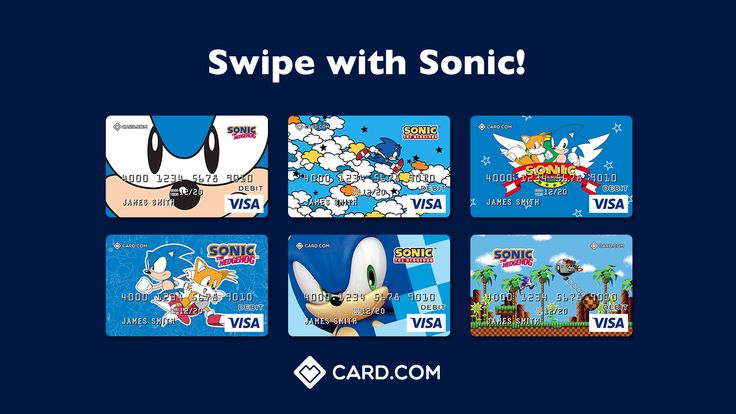
The roster has been broad and occasionally improbable: Sesame Street, Thomas Kinkade, Star Trek, Sonic the Hedgehog, and the NFL Players Association. In 2018, CARD.com announced more than 200 player-themed Visa prepaid card designs through NFL Players Inc. A fan could choose an individual player, while the company could market a common account infrastructure under many different faces. That is the clever part: one operating model, many personal front doors.
There was capital behind the experiment. A $3 million Series A in 2013, led by QED Investors, was earmarked for growth and mobile features. In 2015, CARD.com announced a $9 million growth capital facility from Columbia Pacific Advisors and Fenway Summer Ventures. In that release it said customers had deposited more than $450 million in total since launch. A cumulative deposit figure is evidence of use, though it says nothing by itself about profit, current deposits or how many accounts stayed active.
After the fan signs up
Today's product looks less like a novelty prepaid card and more like the set of tools people expect from mobile banking. The Premium account advertises early access to eligible direct deposits, a virtual Visa debit card for immediate use, Apple Pay and Google Pay, alerts, check capture, bill pay, optional savings, and cash loading at retail locations. CARD.com says more than 1.3 million customers have trusted it. That is the company's own cumulative-sounding claim; it does not publish an active-account count alongside it.
A licensed image gives someone a reason to notice an otherwise familiar card.
Direct deposit makes the account useful and can waive its monthly maintenance fee.
Payments, cash access, bill pay and mobile tools determine whether it remains useful.
That second step changes the arithmetic. The current standard monthly maintenance fee is $9.95, waived with qualifying direct deposit under the applicable account terms. MoneyPass withdrawals are advertised as surcharge-free at participating machines; out-of-network use can cost more. Cash loads may involve third-party fees. Optional overdraft protection has eligibility rules and can charge $15 after the stated buffer and grace conditions. The card may be playful, but the fee schedule is written in the usual sober prose of financial services.
For someone who receives a qualifying paycheck each month and wants cash and app-based tools, the waiver and network access can make the account practical. Someone with irregular deposits, frequent out-of-network withdrawals or a need to load cash often should calculate the full cost before choosing a design. That is also the lesson for anyone tempted to copy CARD.com's idea: an attractive surface can lower the cost of getting attention, but only a reliable, well-priced service can hold the account.
A small canvas, a larger market
CARD.com occupies an interesting place between traditional checking, digital banking apps and prepaid specialists such as Green Dot and Netspend. Its expertise is an odd combination: licensed consumer art, card-program operations, mobile experience and the bank partnerships that make the account possible. In 2014 it announced an IDology partnership to improve identity verification at signup. That work is less photogenic than Sonic, but a payments company cannot make the card useful without it.
The company has also been widening its ambition. A December 2024 announcement described a collaboration with Visa to introduce Visa Direct cross-border payments for consumer and business white-label customers. The announcement spoke of future access; it did not provide adoption numbers. It still fits the arc of the business. CARD.com started by asking what people wanted to see on their card. It now has to answer the harder question of where that card, account and money can go.
The debit card remains a tiny billboard, only now the advertiser is sometimes the customer. CARD.com understood that a financial product can enter through taste, nostalgia or loyalty. Its lasting claim will be measured in less colorful things: a deposit that arrives when expected, a fee the customer understood, and a card that works when it reaches the counter.