The paper was the giveaway. Stacey Hronowski was writing software for a Bay Area cannabis business when she looked at the work happening beyond the screen. Growers were copying barcodes onto paper, then returning to their computers to enter the same information into Metrc, the state tracking system. A perfectly modern industry had somehow produced a very old office ritual: write it down so you can type it again.
Hronowski and Artem Pasyechnyk built Canix around that friction in 2019. The first useful promise was simple: scan a plant or package, make the required compliance record, and spare someone another round of transcription. The company joined Y Combinator that summer. By 2020 it had won TechCrunch Disrupt Startup Battlefield, a prize that made an unglamorous task look unusually interesting.
- What it sells: subscription ERP software for licensed cannabis cultivators, manufacturers and distributors.
- Why it exists: compliance records, inventory and business records should agree without repeated entry.
- What changed: Canix expanded from tracking into cost accounting, production, wholesale ordering and payments.
- The test: a Michigan customer says monthly inventory reconciliation fell from five to seven business days to half a day.
The first failure was a handoff
The barcode episode matters because the barcode was not the whole problem. The failure was the handoff between physical work and the database. Every extra copy created another chance for a wrong digit, a missing tag, or an inventory figure that finance could not trust. In cannabis, that mismatch is especially expensive: operators must track plants and packages under state rules while also running an ordinary, rather demanding business.
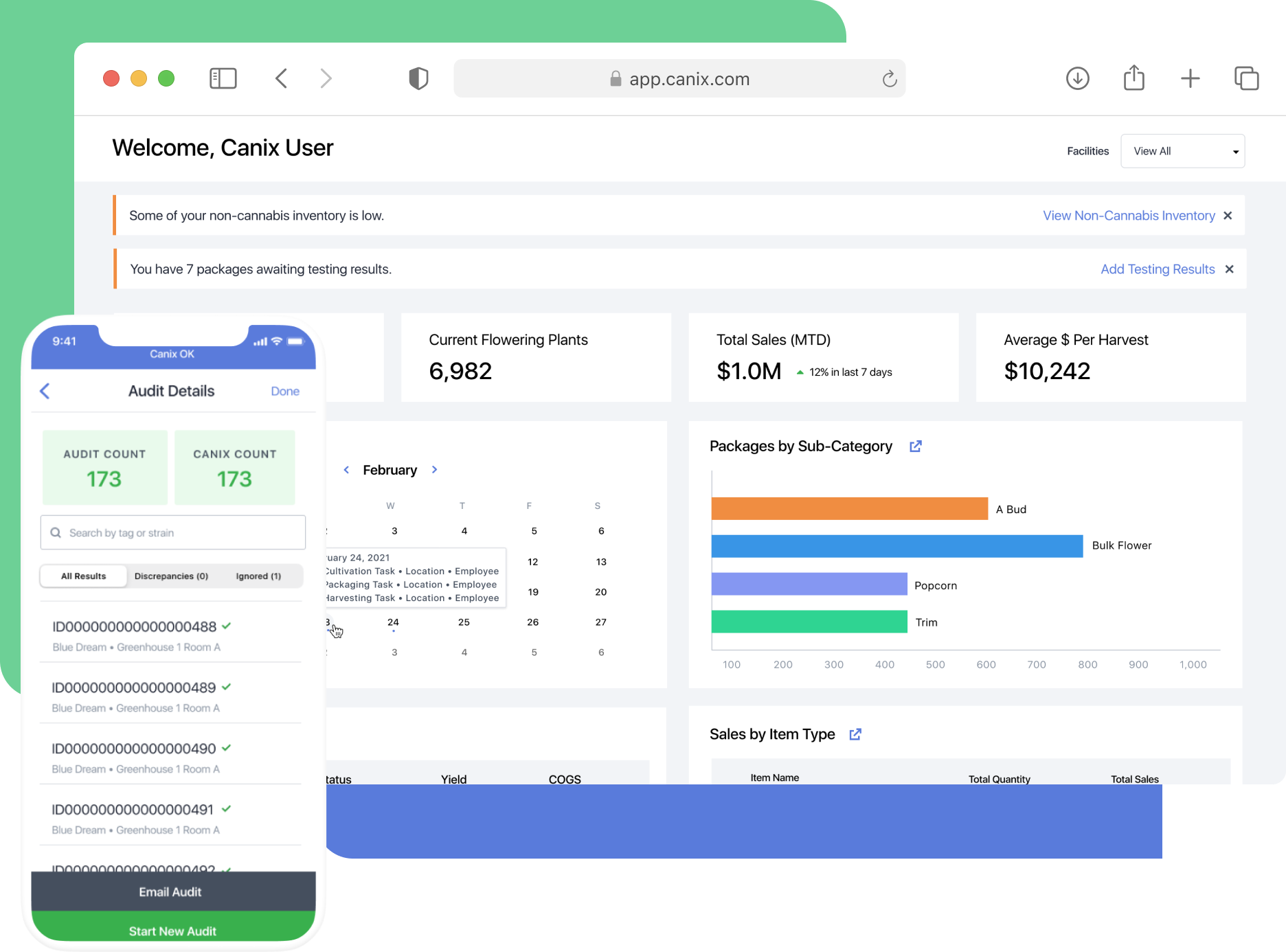
Canix uses phone scanning, RFID hardware and scale integrations to pull work into its own system and send required information to Metrc or BioTrack. Its offline-enabled mobile app can capture compliance data when a connection is unavailable and sync it later. The company also connects to accounting, lab, wholesale and delivery tools. The idea is not that every tool must belong to Canix. It is that the same harvest should not have several competing biographies.
This is what the term seed-to-sale is trying to describe. A cultivator needs to know where a plant went. A manufacturer needs to know which ingredient and which labor went into a batch. A distributor needs to know which packages can actually fill an order. A finance team wants the cost of goods sold. Canix puts these questions in one operating record, then offers reporting to make the answers visible.
The gram has a biography
A finished gram may have passed through a plant batch, a harvest, packaging, testing, manufacturing and sale. Canix tracks cannabis material, non-cannabis ingredients and labor through these steps. Its costing documentation gets pleasingly specific: when a package is split, costs can pass proportionally to the new package; a bill of materials can add ingredients as production happens. That detail is more revealing than a grand claim about analytics. A margin report is useful only if its underlying costs followed the physical product.
That also explains why Canix's competitors are more than other ERP vendors. Distru, BioTrack and MJ Platform sell overlapping cannabis tools. A patchwork of Metrc, spreadsheets, accounting software and wholesale platforms is another alternative. Canix argues that scanning, state reporting, production, costing and orders work better together. Its open API and integrations acknowledge that operators will still have other systems. The practical question for a buyer is whether Canix reduces handoffs in the workflows that consume the most hours.
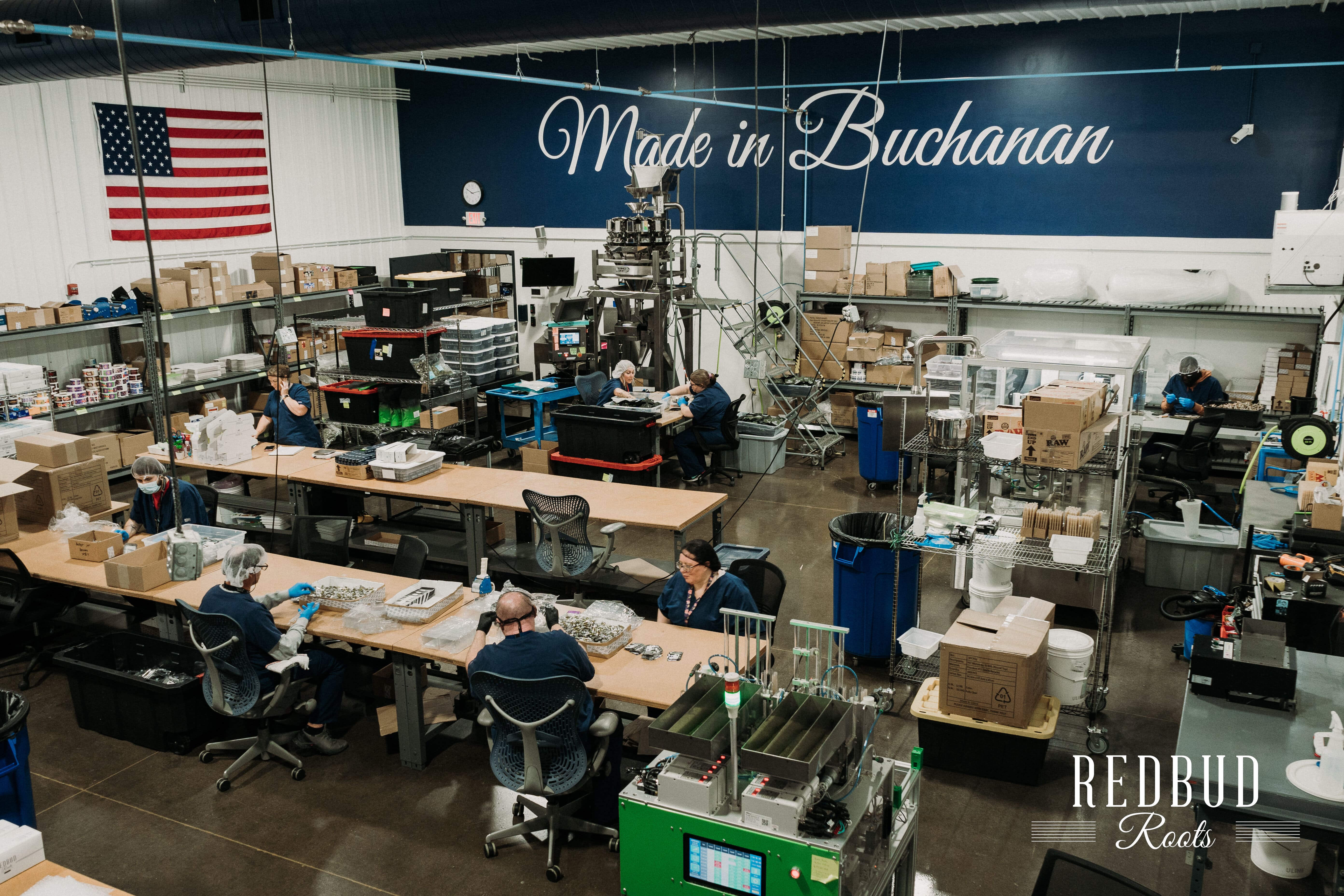
The Michigan cultivator Redbud Roots offers a useful test. Canix says Redbud's monthly inventory reconciliation used to take five to seven business days and now takes half a day. The customer attributes the change to keeping cannabis and non-cannabis inventory, production consumption and costs in one place. Canix also reports a saving of more than 200 hours a month. Those are customer case-study figures, not an independent trial, but they identify the bottleneck: reconciling records after the work has already happened.
Another case, the MKX brand operated by Berry Green Management, describes a different point of friction. It says order processing dropped from three or four days to one after moving to Canix. The company reported a 47% rise in quarterly order volume and a 53% rise in quarterly revenue in its first year on the platform. Software did not create consumer demand by itself; the case argues that quicker fulfillment helped the operator handle demand already arriving. That is a more believable story than a dashboard magically creating sales.
From the ledger to the buyer
Canix's path since its $10 million Series A in 2022 has followed the data outward. It added custom reporting, better Metrc syncing, manufacturing controls and scanning across more screens. In 2025 it launched Canix Marketplace, a wholesale storefront in which buyers see live inventory and place orders that become Canix sales orders. It also introduced ACH invoice payments through Nuvei, with a published 1.25% processing fee. An internal stock record can now lead to a buyer's order and a payment record without starting again in another spreadsheet.
The company's public FAQ does not list a flat subscription price. It says the charge depends on the state, licensing structure and facility size, and that a facility subscription includes unlimited user seats. That makes this a considered business purchase, not an app someone casually installs for a weekend. Before signing, an operator should map one real transaction from tag scan to invoice, ask how historical inventory will import, and check which local compliance and accounting connections are live. The copyable lesson for any software team is to price against a costly workflow, then show the saved steps in the customer's own language.
Canix now advertises use at more than 1,000 facilities across 30 states. Its older March 2023 account described 250-plus plant-touching operators in 23 states and six countries. Those figures use different units, so they are best read as dated markers of reach. The company serves operations from single-service licensees to multi-state groups; the work becomes more valuable when many rooms, packages and sales teams must agree on the same inventory.
The software has to reach the floor
In January 2026, Canix announced it was acquiring Trym, a cultivation platform known for mobile work, crop steering and task execution. The phrasing matters: an acquisition announcement is a plan for integration, not proof that every combined feature is already in a customer's hands. But the direction is clear. The original product captured a barcode. The next version wants to capture more of what growers actually do around that barcode: tasks, environmental signals and decisions made in the grow room.
A 2026 beta takes the record in another direction. Canix's MCP Server lets permitted users ask natural-language questions across sales orders, inventory and purchasing. Its own documentation is unusually candid about the condition for good answers: the underlying records must be complete. Missing cost entries cannot produce a trustworthy margin, and an unrecorded purchase order cannot appear in procurement analysis. The assistant can ask elegantly; the warehouse still has to count honestly.
That is the quiet tension in Canix's story. Software can remove duplicate work, but it cannot observe a plant that nobody scans, or infer a labor cost nobody logs. The system is strongest when operators have repetitive, regulated workflows and the discipline to capture data at the moment work happens. For a tiny operation with little production complexity, the setup may outweigh the benefit. For a large one, that old sheet of copied barcodes is a reminder of where the cost begins.