Imagine a student asking a perfectly ordinary question: can I take this class? Admissions knows what she intended to study. The registrar knows what she has completed. The finance office knows whether her account permits registration. Each office may be right. The student still needs a single answer. This is an illustrative scene, but the administrative puzzle is the one Campus Management spent decades turning into software.
- CampusNexus linked student records, constituent relationships and institutional operations.
- Microsoft supplied much of the enterprise and cloud foundation.
- Acquisitions added admissions tools and the people who understood them.
- The company joined Anthology in 2020; Anthology’s SIS and ERP business passed to Ellucian at the end of 2025.
One person, several institutional identities
A university is unusually good at turning one person into several categories. You enter as a prospect, become an applicant, acquire a student number and eventually join the alumni database. The categories have legitimate purposes. Trouble arrives at the border crossings. A conversation can disappear between departments even when the underlying record survives.
Campus Management sold the machinery for those crossings. Its student information system handled academic administration. Its constituent relationship management software handled outreach and engagement. Its finance, HR and payroll tools handled the institution that employed the people doing the teaching. The buyer was the college; the daily users included recruiters, administrators, advisers and faculty. Students encountered the consequences through registration, services and communication.
That places the company in the enterprise layer of education technology. A learning management system organizes teaching and coursework. A student information system organizes the official administrative life of a student. Those systems can exchange data, but they have different jobs. Campus Management’s expertise lay in institutional rules, workflows and records - the parts of a college that rarely make the prospectus.
The timetable was the tell
David Meek founded Campus Management in 1988. Its original student information system served proprietary colleges, a starting point described in his later professional biography. That origin helps explain the company’s interest in academic models beyond a conventional university calendar. A student system is also a set of assumptions about how education happens.
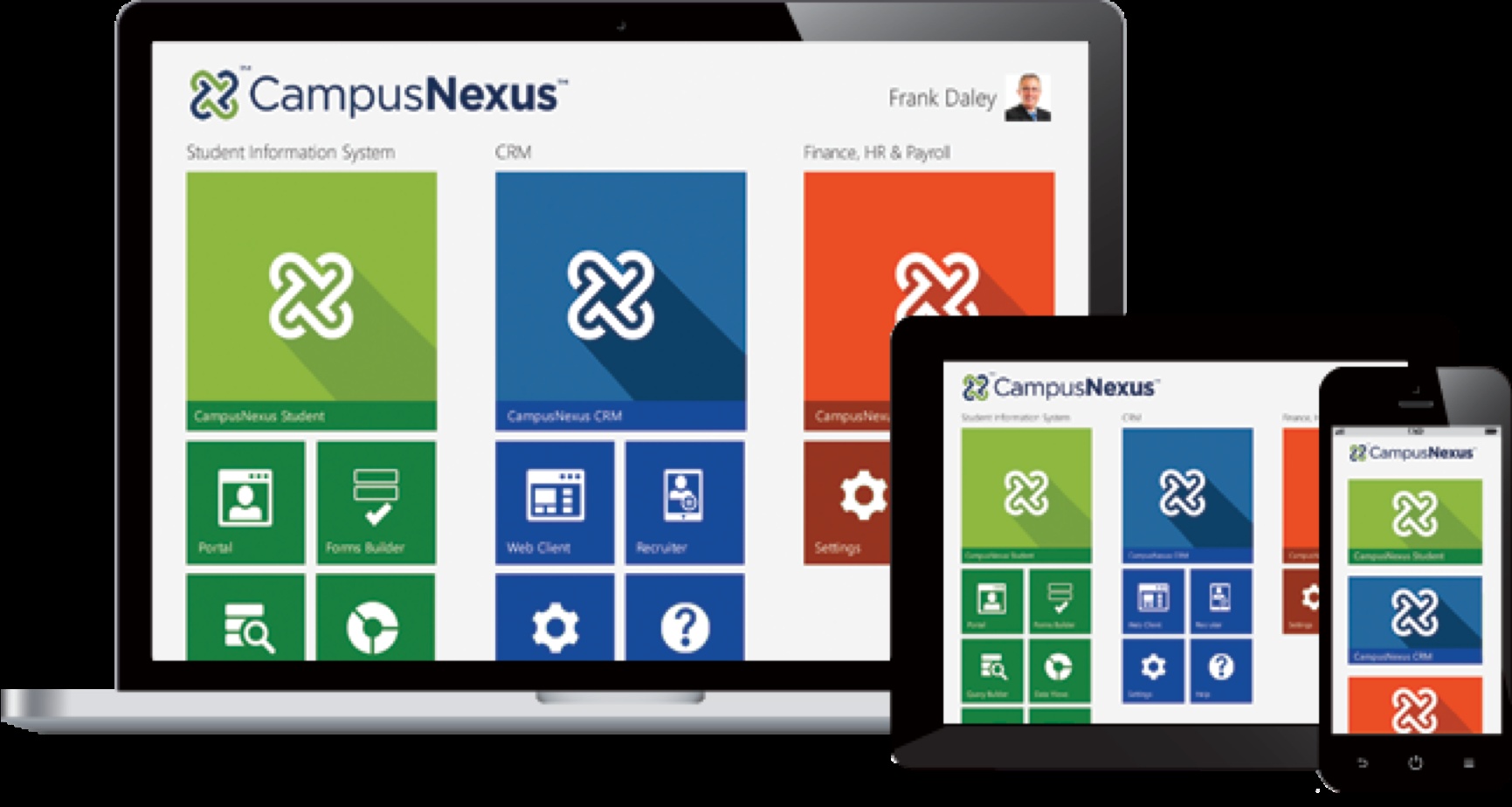
By September 2014, the company was introducing CampusNexus Student and CRM, drawing on its earlier CampusVue and Talisma applications. The announcement emphasized flexible terms, financial aid and different models of educational delivery. It also described web services for exchanging data with learning systems, payment processors and other campus tools.
The important detail was the ability to adapt institutional business logic through workflows and forms. A college could have its own procedures without treating every procedural difference as an invitation to rewrite the product. CampusNexus was trying to make local variation manageable. In higher education, standardization has to negotiate with a remarkable number of exceptions.
Microsoft underneath, campus knowledge on top
The finance side followed a particularly revealing route. CampusNexus Finance, HR & Payroll, announced in September 2014, used Microsoft Dynamics AX. Campus Management added higher education requirements: student accounts, federal work-study payroll, faculty workload, scholarships and grants. Institutions could deploy it in the cloud or on premises, and it could work with an existing student information system.
This was a division of expertise. Microsoft brought general enterprise technology; Campus Management translated it into a college’s working vocabulary. The result was broader than an admissions application, with financial and workforce administration sitting alongside student operations. That breadth was its market proposition, though breadth alone cannot establish whether a particular institution should buy it.
In 2017, Campus Management announced CampusNexus Cloud on Azure. More than 200 client campuses were already using its earlier CampusNet Cloud offering. The Azure launch extended an existing hosting business rather than inventing one overnight. Its stated purpose was to reduce the hardware, operating-system and database duties institutions carried themselves.
CampusNexus Engage extended the Microsoft relationship into Dynamics 365 and Azure. Microsoft described it in 2018 as a collaboration using the Higher Education Accelerator. AccelerEd selected the CampusNexus suite on behalf of the University of Maryland University College, now known as the University of Maryland Global Campus. In 2019, Gonzaga selected Engage to support a fuller view of constituents from recruitment through alumni engagement. These were selections and intentions, rather than proof that every promised outcome had arrived.
CRM → relationships · SIS → academic records · ERP → institutional operations
Buying the admissions department’s vocabulary
The company also expanded by acquisition. It acquired Talisma and its higher education business in 2008. In 2010, it brought the former Donor2 fundraising software under the Talisma name, linking advancement and CRM in its portfolio. Recruitment and fundraising may sit at opposite ends of campus life, but both depend on remembering a relationship.
The September 2017 Hobsons transaction added Radius, AppReview, ApplyYourself, Connect and Retain. More than 700 colleges and universities used those product lines. Approximately 100 specialists transferred with them. The people matter: buying application software also means inheriting knowledge of how admissions offices collect information, read files and make decisions.
Hobsons explained that it wanted to concentrate on Naviance, Intersect and Starfish. Campus Management wanted to extend its engagement portfolio. The same transaction could therefore narrow one company’s focus and widen another’s. Its strategic logic was unusually easy to see without decorating it with a tale of sudden revelation.
There were other ways to buy the underlying capabilities. Ellucian’s Banner and Colleague occupied the SIS and ERP market; Workday Student addressed student administration; Technolutions Slate addressed admissions and constituent relationships. Campus Management’s distinctive offer combined its campus software lineage with Microsoft infrastructure and a widening portfolio. Buyers still had to compare functional fit, integrations and the work required to operate the system.
The price of getting departments to agree
A July 2020 Forrester study commissioned by Microsoft modeled CampusNexus Engage using four early-stage university interviews. Its composite institution faced about $1.8 million in three-year risk-adjusted present-value costs: roughly $1.1 million of internal effort and $700,000 of licenses and services. Deployment assumed nine months and eight full-time-equivalent resources. These were modeled economics, not a price list or audited results.
$1.1m
Internal effort
$700k
Licenses + services
Rounded figures. Microsoft-commissioned Forrester composite model, July 2020. Projections, not realized savings.
The earlier failure was often a failure of coordination. Interviewees described disconnected tools, spreadsheets and delayed intervention. An unnamed public-university executive director put it plainly:
“We were reactive rather than proactive.”Public-university executive director, interviewed by Forrester, 2020
The practical reading is that licenses are only part of the investment. Projected productivity gains depend on people changing the work. An institution that keeps every old process and cannot put freed time to use should examine those assumptions especially closely.
The company name changed. The records stayed.
By January 2020, Veritas described Campus Management as serving more than 1,100 colleges and universities in over 30 countries. It announced an agreement to acquire Campus Management and Edcentric from Leeds Equity, with Leeds continuing as an investor. In July, Campus Management, Campus Labs and iModules combined as Anthology.
The fit was recognizable. Campus Management brought administrative and relationship software. Campus Labs brought tools for campus activities and institutional effectiveness. iModules brought alumni engagement. Anthology presented a broader student-lifecycle portfolio. But a combined portfolio and a working integration are different milestones; each still needs its own delivery.
- 1988Campus Management begins
- 2014CampusNexus launches
- 2020Three companies form Anthology
- 2025Ellucian’s SIS/ERP purchase closes December 31
- 2026Ellucian announces continued system support
Anthology and affiliates filed Chapter 11 petitions in September 2025. The restructuring included sales of business segments. Ellucian’s acquisition of Anthology’s SIS and ERP business closed on December 31, 2025, bringing more than 260 customers into its community. Ellucian said it would continue delivering and maintaining the existing systems.
That 260-plus figure describes the acquired SIS and ERP customer group. It is not directly comparable with Campus Management’s earlier total institution count, which covered a broader portfolio. Nor does Anthology’s bankruptcy prove that the student software failed technically. The verified events concern the corporate structure and ownership of the business.
For an institution, the distinction is practical. A company can change names and owners while its software remains embedded in daily operations. Product continuity, support and migration arrangements become part of the purchase’s long life. The records have obligations that outlast the branding.
Start with a handoff, not a demo
The surviving documentation makes the problem wonderfully concrete. Connector links CampusNexus CRM and Anthology Student in both directions. Changes generate queued messages; services transform them into the destination system’s format. When processing fails, an administrator can inspect the error queue, correct and resubmit a transaction, or discard it.
Here is a useful exercise drawn from that mechanism: follow one student from first inquiry to enrollment. Identify which office owns each field, which event moves it, and who handles an exception. Then repeat the exercise for a withdrawal or a changed course plan. The drawing may be less handsome than the demo. It will tell you more.
Riverside Community College District’s Project Nexus materials describe Anthology Student replacing Colleague, with flexible terms, financial-aid automation and centralized academic records. They also identify Anthology Reach as the former CampusNexus Engage. The old product names still explain the new system’s ancestry.
Campus Management’s enduring subject was the institutional handoff. Its tools could help colleges connect records and relationships, provided departments supplied the ownership and follow-through. A student experiences the institution as one place. The considerable work of campus software is to make that expectation less unreasonable.
Explore the product lineage
Visit the legacy website, Student documentation, workflow and integration samples, and Ellucian’s acquisition update.
Find the historical company profiles on LinkedIn, X and Facebook. Watch the CampusNexus Engage animated explainer or the 2017 CampusInsight opening video.