The first customer paid more than $47 for something she could have read for nothing. At a California beta site, a student bought a printed textbook and a study-guide package from Flat World Knowledge. Jeff Shelstad and his co-founder, Eric Frank, high-fived. They sent her a shirt and a few small gifts. A shopping cart had supplied the kind of reassurance that a business plan could only promise.
It was a modest transaction with a large job to do. The company offered its textbook online free of charge. Students could pay for other formats and useful extras. Someone had just chosen to do exactly that. To two publishers trying to change the economics of their profession, the purchase suggested that generosity and revenue might occupy the same balance sheet.
Years later, Shelstad would revisit the experiment with considerably less celebration. He wrote about products that worked, an editor that fell short, and money that arrived in quantities he came to question. The first customer remains a useful place to begin. Her order proved that a student would pay. How many would pay, for what, and for how long were more difficult questions.
Before the free book, a familiar industry
Shelstad came to the problem from inside publishing. He had worked in editorial and senior management at McGraw-Hill and Pearson, including Prentice Hall. His undergraduate education was at the University of Minnesota's Carlson School of Management, where he graduated in 1987. He completed an executive MBA at Duke in 2004. He was familiar with the work of finding authors and turning expertise into course materials.
He also remained a Minnesotan in his sporting allegiances, describing himself as a Golden Gopher and Vikings supporter even when the football gave him reasons to reconsider. Loyalty, in that account, required a sense of humor. His professional attachment was just as durable: higher education publishing was a field he cared about enough to question its rules.
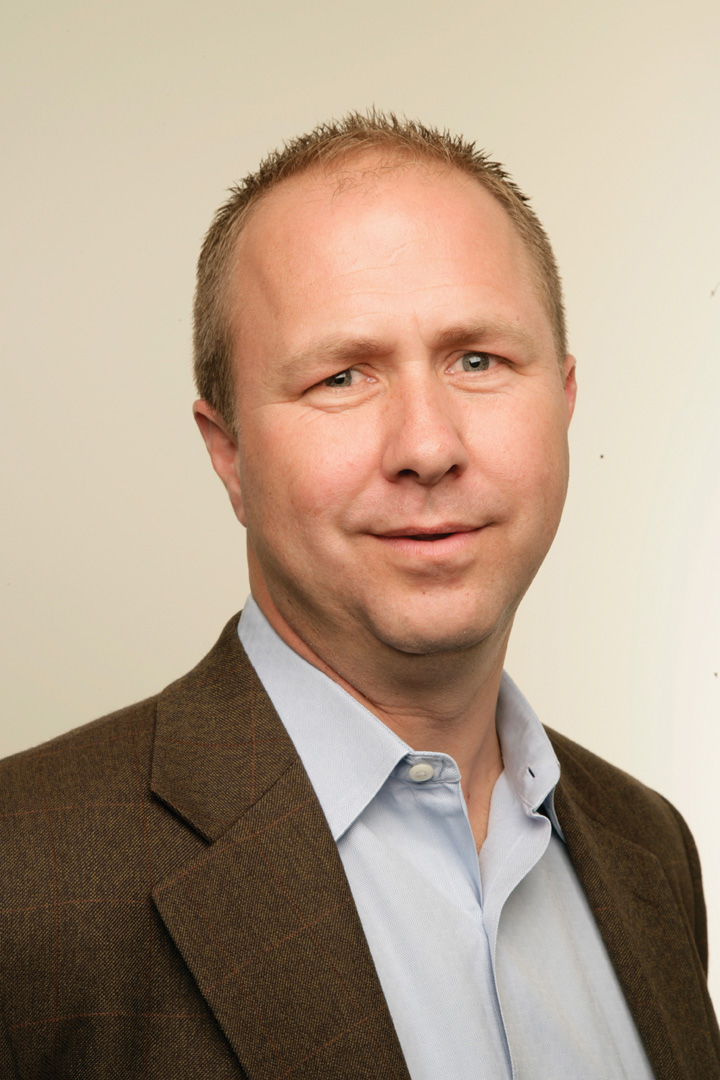
The frustrations were practical. A professor chose the text, but a student paid for it. The course might need some chapters and have little use for others. New editions brought another decision about whether to switch. Digital distribution offered an opening to reconsider these arrangements. Keeping the editorial work while changing the terms of access was a plausible ambition for people who knew how books were made.
In January 2007, Shelstad and Frank left Pearson. They had a conviction about changing the industry before they had a fundable plan. Their own contributions were supposed to buy a year: modest draws, legal help, office space, travel. They would use that time to test ideas, find authors, and persuade other people to support the venture.
A book that would take instructions
Another connection gave the venture its direction. In Shelstad's account, meetings with open-education advocate David Wiley in Utah during 2007 helped form the original Flat World idea. Wiley urged them to build a sustainable business around openly licensed content. He became the company's chief openness officer, an unusually literal expansion of the initials COO.
The ambition included professionally developed books, authors with standing in their subjects, classroom testing, and the supporting materials instructors needed. Those details mattered because replacing an assigned textbook is work. A collection of promising fragments can leave a teacher with another preparation job. A complete book, instructor materials, and a recognizable author made adoption easier to contemplate.
“make the book fit the course”Jeff Shelstad, recalling the founders' pitch
The editing platform was meant to carry that idea into practice. In his later account, Shelstad described a professor at Houston Community College who revised a psychology text extensively for her students and shared the resulting version back into the catalog. The attraction was easy to grasp: a book could acquire a local voice without requiring a publisher to commission the entire work again.
He wanted the software to pass what he called the “Jeff's mom” test. His mother in Red Wing, Minnesota, was computer literate, but kept passwords on Post-it notes. That was his test of usability. A tool intended to give professors more control would have to fit into ordinary working habits. Permission to edit would achieve little if exercising it became a second occupation.
Adoption was only half the transaction
In 2009, the proposition drew attention beyond the startup. At Boston College, professor John Gallaugher's work on an online information-systems textbook illustrated another advantage: a technology course could use material that changed as its subject changed. A book about a moving industry did not have to remain frozen until the next conventional edition.
That December, Duke's scholarly-communications librarian Kevin Smith described a conversation with Shelstad and welcomed the possibility of textbooks that faculty could customize. The distinction between free access and permission to adapt was finding an audience. The company was asking educators to think about the textbook as something they could work on, as well as something they could assign.
Institutional licensing offered another route. By 2011, Flat World had agreements at Virginia State University and Baruch College. Rather than leaving every student's purchase to a separate transaction, an institution could arrange access to a package of digital materials. Shelstad discussed these licenses at the Tools of Change conference as part of the company's efforts to expand.
The individual purchasing model, meanwhile, faced a problem. Early customers often chose paid versions. By December 2011, the share paying had dropped to roughly a quarter. Students increasingly used the free online books; secondhand print copies also gave them another inexpensive option. More readers did not automatically produce more money per reader. A successful act of distribution could still leave the publisher short.
A beta-site student chose a printed book and study guide while the online textbook was free. One transaction demonstrated demand. It could not settle the economics.
In November 2012, the company announced that free access would end on January 1, 2013, with a $19.95 offering taking its place. Shelstad described the continuing purpose as affordability and access. The change was consequential because free had become such a visible part of the company's identity. A low price could preserve a student's savings while altering the bargain that had attracted early supporters.
When the money outran the plan
Capital supplied another complication. In his retrospective on fundraising, Shelstad described a Series A plan for $4 million that became a $10 million raise. The larger sum brought expectations for larger results. He wondered whether the company had decisions good enough to justify spending at that scale. A budget can acquire extra zeros faster than a product acquires extra customers.
His earlier fundraising story had been more personal. Entrepreneurship professor Jeffry Timmons became an advisor and investor after Shelstad approached him. Timmons helped open doors and urged the founders to keep prospective investors informed. Shelstad recalled an early backer advancing $100,000 when the founders had run out of money. Trust arrived ahead of the final paperwork.
The contrast is instructive without requiring a villain. An early investor could support two people and an idea; a later round had to support a growing organization with forecasts, spending, and expectations. Those obligations changed the circumstances in which decisions were made. Shelstad's account keeps returning to the pace of growth and the discipline that the original, smaller budget might have imposed.
In August 2016, he published five decisions he would change. He believed the company had emphasized selling too heavily, expanded beyond its business-and-economics base too quickly, mishandled parts of its hiring, raised too much, and worked with investors whose market knowledge was incomplete. These were his judgments after the event. They deserve to be read as a founder's reckoning, with all the perspective and partiality that entails.
The publisher who kept going back to campus
His account of the pivot also acknowledged responsibility. He had been CEO. He thought he should have explained the market better and made a stronger case for patience. The departure did not end his career in education: he later held leadership roles at Capella University and Reflection Sciences. The underlying work continued to bring content, curriculum, and technology into the same conversation.
A smaller scene from June 2016 gives that continuity a human scale. Invited to speak to Jackson College colleagues at a conference in Petoskey, Michigan, he walked around the quiet North Central Michigan College campus before his talk. He estimated that he had visited more than 500 campuses in his career. The familiar hallways still made him feel at home.
After the presentation, the room was rearranged for a discussion. Shelstad stayed to talk with academic leaders about open resources and the obstacles to adopting them. He left with renewed hope for the original idea. There is something fitting about a textbook publisher finding encouragement in a room where the furniture could be moved to suit the conversation.
Today, UnboundEd lists him as lead for higher education OER at Kendall Hunt Publishing Company and as a board member. His public profile also records mentoring and judging for Minnesota Cup and advising the University of Minnesota's Venture Center. Those roles place him alongside educators and people still deciding what kind of organization to build.
The original question remains recognizable: how can a publisher produce useful work, pay for it, and give teachers room to teach? Shelstad has offered both an experiment and an unusually frank account of its limits. The first paying student made the business feel possible. His later writing makes the harder decisions available for someone else to study.