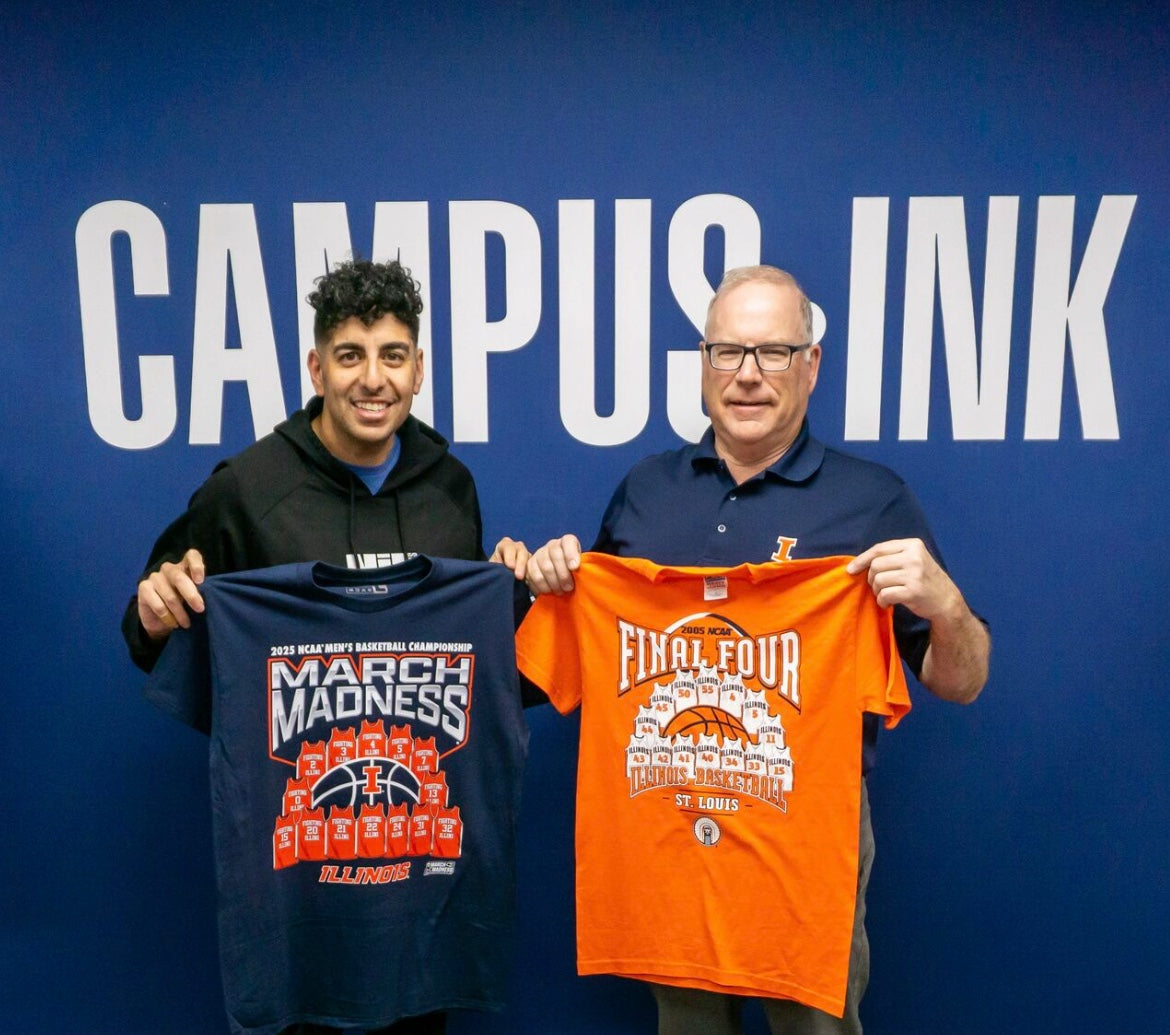
The useful detail in Campus Ink’s 2026 Illinois basketball rush is a handwritten sign. After the team reached the Final Four, customers arrived at the Urbana print shop looking for its revived “Jersey Madness” shirt. Co-founder Jedd Swisher made a drive-through sign on posterboard. A business selling through a national online platform was suddenly directing local traffic.
Chief executive Steven Farag told Sports Business Journal that roughly 9,000 shirts sold in the first 24 hours. The design joined Illinois imagery, player numbers and championship marks. Making it required several kinds of permission. Meeting the demand required something more familiar: enough orange shirts and people who knew how to print them.
- Campus Ink handles design, licensed merchandise, printing and fulfillment.
- Its NIL Store pays participating athletes when fans buy their merchandise.
- Printing after purchase lets it serve athletes whose demand would be hard to forecast.
A store for the player on the bench
Imagine deciding which college athletes deserve shelf space. A retailer placing orders months ahead has to guess who will play, who will stay and who will become interesting. An injury or transfer can make yesterday’s sensible purchase tomorrow’s clearance rack. The obvious response is to stock the famous names.
The NIL Store changes the timing. Its print-on-demand approach waits for an order before producing the item. A less famous athlete can have a digital merchandise offering without a pile of finished shirts waiting for buyers. That makes room for smaller audiences. A family, a hometown or a particular corner of a fan base can matter.
“Inventory is the biggest killer for retailers.”
Steven Farag, speaking to Shopify
Campus Ink brings together design, production, fulfillment and the online storefront. The athlete supplies permission to use their identity and a connection with fans. Jerseys, tees, hoodies and special releases give those fans something to buy. A portion of the transaction goes back to the athlete. Having a store, of course, does not guarantee having customers.
Demand arrives before the finished garment.
The distinction matters when thinking about what to copy. A catalog can be generous because a digital listing does not commit the company to printing every design in every size. The operation still needs materials, equipment and labor. It has moved one expensive decision closer to the customer’s decision, where there is less guessing involved. That is a useful principle for a business selling to many small groups.
The fraternity was the first classroom
Farag began selling fraternity merchandise at Illinois in 2012. The company’s printing roots reach back to 1947; the modern Campus Ink business took shape in 2015. Those dates describe different beginnings. The older operation supplied production knowledge. The newer one brought an interest in teaching students to sell.
That work continues in its Student Design and Sales Program. Students design apparel for Greek and campus organizations and follow an order through the process. They learn customer relationships, time management and sales alongside design. It is a practical education: a customer eventually expects an actual garment.
The Greek business remains substantial in scope, with licensed collections, chapter ordering, fundraising merchandise and managed stores. Its relevance to athlete merchandise is easy to see. Both involve communities with their own symbols and tastes. Someone who understands that community can be more useful than a distant marketer with a large advertising budget.
The athlete becomes the shopkeeper’s ally
In a 2022 explanation of its Indiana partnership, Campus Ink described its thinking plainly: athletes themselves could market a licensed college brand. It could spend on conventional advertising, or let the people fans already followed help sell merchandise and share the proceeds. The customer relationship became part of the product.
For athletes, the attraction is delegation. Campus Ink’s NIL page describes a division of labor in which its team creates merchandise and athletes promote it to fans. The platform advertises free setup and onboarding. An athlete does not have to learn print production between practice and class.
The financial details deserve a closer look. Western Michigan’s August 2026 launch with Campus Ink and Rally House specified that participating athletes receive 15% of sales of their individual merchandise. That is a concrete program example, rather than a promise about every item. School rights, athlete rights and product arrangements can differ.
A specific deal, not a universal rate. Western Michigan’s announced athlete share of individual merchandise sales, August 2026.
Athlete’s Thread offers another route to licensed athlete apparel. UC Davis lists both providers, with published earnings information for each. The useful comparison goes beyond the storefront: which permissions are included, how earnings are calculated, what the merchandise looks like and who answers when an order needs attention.
Permission is part of the machinery
Printing only after a sale reduces finished-stock exposure. It leaves plenty of work. A shirt combining an athlete, a university and a championship can require rights from several parties. Campus Ink’s championship business depends on getting those approvals together while fans still want the souvenir.
Money helped the operation expand. Mark Cuban invested in 2022, followed by a $2 million round announced that November. In January 2026, Campus Ink announced a further $3 million round led by RiverPark Ventures. Zach Edey, previously an athlete earning through its merchandise, became an investor.
There was an amusing stumble before Cuban’s involvement: Farag’s first email described the business without asking him to invest. The eventual relationship brought capital and credibility. The copyable part is the preparation behind that email: a working business gave the conversation something concrete to discuss.
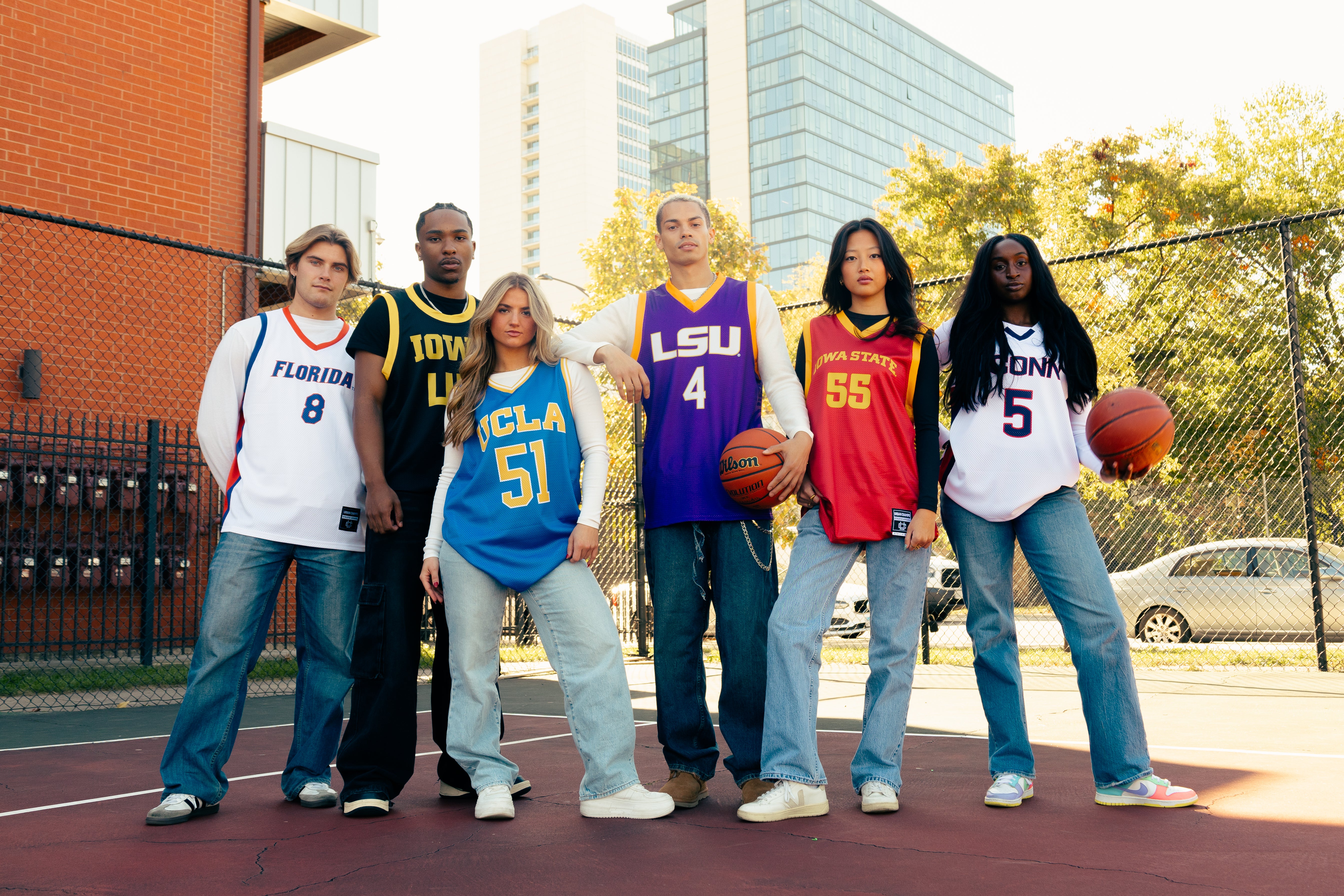
The company occupies an interesting place between a local decorator and a sports retailer. A campus organization can approach it for custom work; a fan can arrive looking for one player’s jersey. The shared expertise is managing the route from an idea to an approved garment. Keeping production and fulfillment in-house gives the company direct responsibility for that route, including the unglamorous work after checkout.
From campus demand to the sports calendar
The next expansion concerns where merchandise gets seen. Campus Ink announced its ESPN apparel license in July 2026 and launched an ESPN The Magazine collection in August. In October, it announced designer sessions for Big Ten basketball media days with Rally House, with products becoming shoppable as licensing approvals arrived.
The lesson has limits. This approach needs fans willing to buy, rights holders willing to approve and production that can keep pace. Waiting for demand cannot manufacture demand. What Campus Ink offers is a useful way to respond when it arrives: a digital store, a cleared design and a printing operation ready for the moment someone wants the shirt.