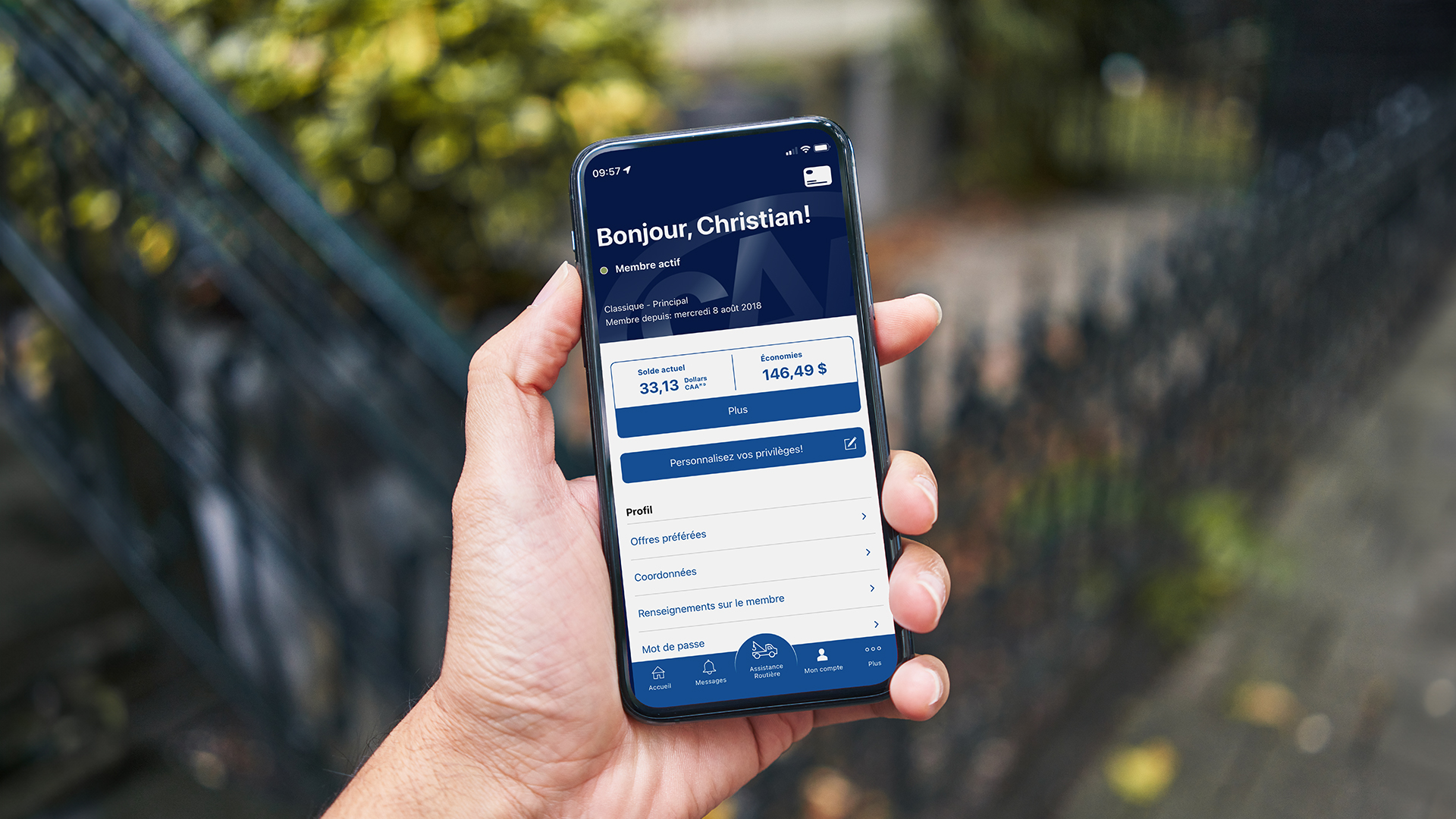
The tow truck is the dramatic part. It arrives beneath a washed-out winter sky, hazard lights blinking, while a stranded driver quietly revises every bad thing they have ever said about annual fees. But the truck is only the front door to CAA-Québec. Behind it sits a peculiar consumer conglomerate organized as a not-for-profit: travel agents, insurance distributors, driving instructors, vehicle inspectors, home-service referrals, a rewards currency, a shop, an app and a small army of practical advice.
CAA-Québec reports nearly 1.4 million members, more than 1,100 employees, 725 roadside patrollers and 27 offices and facilities. More than one in four Quebec households has a member. Scale like that changes the product. A tow is no longer merely a tow. It is a trust deposit made during a minor crisis, available for withdrawal the next time someone needs to choose a garage, plan a cruise or untangle an insurance question.
The product is organized anxiety
Cars fail without appointments. Trips unravel across time zones. Insurance is purchased before anyone knows whether it was a good decision. Contractors are difficult to judge until they are standing in the kitchen. These are not daily purchases, but they are emotionally expensive ones. CAA-Québec places the same badge across all four categories - mobility, travel, insurance and the home - then promises help from someone who already knows the member.
The clever sentence in its roadside handbook is: “It’s you we protect, not your car.” Coverage follows the person. A member can call while driving their own car or sitting in somebody else’s. That shifts the mental model from warranty to personal safety net. The same membership can include a battery boost, flat-tire change, fuel delivery, lockout help, towing or even bicycle assistance, depending on the tier and conditions.
“It’s you we protect, not your car.”CAA-Québec roadside-services guide
Around that urgent utility, the organization has stacked slower decisions. Its mobility arm offers inspection centres, recommended garages, used-car estimates, registration services, conciliation and electric-vehicle advice. Its travel business sells cruises, packages and planning. Insurance entities distribute auto, home, travel, life, health, dental, accident and pet coverage through underwriting partners. Home services supply advice, referrals and a recommended-business network. Driving schools train beginners and corporate fleets. Rabais Dollars CAA gives the card a reason to leave the glove box.
Who carries the card
The obvious customer is a Quebec driver who would rather prepay for rescue than negotiate with an unfamiliar tow operator from the shoulder of Autoroute 20. But membership is broader than ownership. A primary member must be a Quebec resident and at least 16; qualifying household members can join from age 14. Because assistance follows the person, the useful audience includes passengers, renters and families sharing vehicles. CAA Go widens the door again for cyclists and people who mainly want the advice, rewards and safe-ride benefit.
Not every customer must be a member. CAA-Québec says its recommended garages, authorized inspection centres and registration locations serve the public, while its insurance products are available beyond the membership base. Members receive the extra layer: preferred prices, rewards, enriched guarantees or access to advice and assistance. This is a useful two-speed design. The public-facing service creates discovery; the card makes the relationship more valuable and easier to renew.
There is also a quieter customer: the partner. A garage, retailer, fuel network or home-service business gets access to a large provincial audience under a familiar recommendation system. CAA-Québec gets more places where the membership proves its value without owning every wrench, store or service van. The arrangement only works if vetting is credible. Recommended garages are assessed on customer satisfaction, service quality, staff competence, facilities, equipment and environmental practices. The badge is distribution for the partner and a reputational liability for CAA-Québec.
What it costs - and what the limits reveal
The current price ladder is an unusually clean map of reassurance. CAA Go costs CA$49.99 a year and is meant for people who do not need full roadside coverage. Classique is CA$99.99, Plus CA$175.99 and Premier CA$244.99. Plus, chosen by more than half of members according to CAA-Québec, expands included towing to 160 kilometres. Premier reaches as far as 320 kilometres and adds richer travel and home benefits.
Annual membership ladder / CAD
The part to read before the snowstorm: the main roadside tiers generally allow four calls per membership year. During the first 48 hours after joining, service is limited to Quebec and carries a CA$60 administrative fee. Towing during the first seven days after upgrading to longer-distance options is capped at 30 kilometres. This is not decorative fine print. It prevents a membership pool from becoming an emergency purchase made only after the breakdown.
Those guardrails answer the hardest business-model question: how can a modest annual fee fund a service whose cost arrives unpredictably? CAA-Québec pools risk across a large base, packages different service levels, limits use and earns additional revenue around the membership relationship. Partner discounts make renewal feel cheaper. CAA Dollars can be applied to membership and eligible services. Insurance, travel, retail and education create transactions without requiring every member to need a tow.
What failed first, and what changed
The sharpest recent rupture was travel. When COVID-19 closed borders, CAA-Québec said it repatriated nearly 2,000 travellers while moving much of its work online. Travel returned, but the episode exposed how quickly a dependable business line could freeze. The response was not to abandon travel. It was to treat the pandemic as an operating lesson and keep the relationship active through assistance and advice.
Print went next. In 2020, Magazine CAA-Québec claimed nearly 1.95 million readers in a Vividata study, making it Canada’s most-read magazine at the time. Four years later, the organization ended print production. Rising costs, changed reading habits and environmental goals had altered the bargain. The advice survived online, while a rebuilt website, connected member area and mobile app became the new shelf space. The audience was valuable; the bundle of paper was not sacred.
The automobile itself is changing, too. CAA Go offers bicycle assistance to people who may not want conventional roadside coverage. Electric-vehicle guidance now includes charger sales, installer recommendations, garage certification and public test drives. In 2024, CAA-Québec put a locally built Lion5 electric tow truck with an XpaK platform into field testing. Its published specifications promised up to 310 kilometres of range, about 80 percent lower energy cost and 60 percent lower maintenance cost than a comparable fossil-fuel vehicle. Those were test assumptions, not a victory lap. Quebec winters and real recovery work would decide what held up.
An automobile club begins serving a tiny, novel population of drivers.
The CAA-Québec Foundation formalizes road-safety research and education.
The first CAA-Québec driving school opens in Pointe-Claire.
Marie-Soleil Tremblay becomes the first woman to lead the organization.
CAA Go, a digital overhaul and an electric tow truck point beyond the old auto-club frame.
The moat is density, not novelty
None of these services is unique on its own. Automakers include roadside plans. Credit cards bundle towing and travel coverage. Insurers, travel agencies, garages and contractor marketplaces all compete for the adjacent spend. CAA-Québec’s advantage is accumulated credibility and provincial density. A recognizable badge appears on the truck, the garage door, the insurance quote and the travel desk. The Canadian CAA federation and American AAA network extend that usefulness beyond Quebec.
The not-for-profit structure adds a useful signal. CAA-Québec presents its experts as neutral and uses the weight of its membership in public positions on road safety, gasoline prices, electrification and transportation policy. That does not make every recommendation automatically better. It does make the organization easier to understand as an advocate that also sells services, rather than a single-product vendor looking for the next conversion.
The playbook worth stealing
Own an urgent job
Start with a moment when reliability is remembered. A rescue creates more trust than another welcome email.
Expand by anxiety
Move into adjacent decisions where customers lack confidence, not merely categories with attractive margins.
Make limits visible
Service caps, waiting periods and clear tiers protect the pool and let customers choose how much reassurance to buy.
Let savings renew
A partner network and usable rewards turn a yearly fee into an ongoing scoreboard of value.
The conditions are unforgiving. This model needs enough geographic density to dispatch help quickly and negotiate meaningful discounts. Partner quality must survive contact with a stressed customer. The anchor service must be painful enough that people value preparedness, but infrequent enough to pool economically. And the brand must resist the temptation to recommend everything. One bad tow or dubious garage referral can contaminate trust across insurance, travel and home services at once.
That is the paradox inside CAA-Québec. Breadth makes the membership useful, while each new category creates another way to disappoint. The organization’s 120-year record is less a story of endless expansion than one of maintaining permission. The member keeps asking the same question in different clothes: will somebody competent answer? If the answer remains yes, the tow truck can carry far more than a car.