At minus 20 Celsius, a car battery stops being a box under the hood and becomes a small referendum on every decision that brought you to a frozen parking lot. This is CAA Club Group's favourite moment - not because it enjoys your misery, but because it has spent more than a century making itself useful precisely when ordinary plans collapse. The familiar oval card buys a rescue. The less familiar company behind it also sells insurance, books vacations, negotiates fuel discounts, runs a specialty insurer and tells governments which roads are making people furious.
That combination matters. Plenty of businesses can tow a car. Plenty can quote an auto policy. CAA's trick is to connect the emergency, the annual subscription and the everyday perk into one long relationship. In 2026, CAA Club Group said it served 2.8 million members across South Central Ontario and Manitoba. In the first quarter alone, it assisted more than 435,000 of them, arriving in under 36 minutes on average. A survey answered by more than 369,000 members produced a Net Promoter Score of 85. Large samples rarely blush like that.
The rescue before the rescue
The operational problem is cruelly simple: demand appears wherever weather and machinery decide to misbehave. A cold snap kills batteries. Heat creates its own failure patterns. Snow changes both call volume and travel time. Construction and traffic move the bottlenecks. A conventional dispatcher can react quickly, but reaction begins after the member is already stranded.
CAA changed dispatch systems in 2017 and built a predictive layer on top. The current version, Geo-Temporal Gen 2, combines historical service patterns with live member activity, traffic, construction and detailed weather conditions. It predicts the type, place and time of likely breakdowns, then displays those expectations as shifting heat maps. Controllers can position rescuers near tomorrow's problems before they become today's queue.
This was not a cosmetic app refresh. The first thing that failed was the idea of a static forecast. A day-ahead estimate could not keep up with conditions that moved by the quarter-hour. Gen 2 became a live engine that learns from each interaction and lets teams filter urgent cases and inspect operational zones. The Weather Company's conditions feed gave the model the granularity its operators wanted, from ambient temperature and wind to humidity, precipitation and dew point.
“If we see minus-20 degrees Celsius in the forecast, then it's highly likely that our volumes are going to increase.”Lena Yam, roadside product and innovation
The payoff is measurable. CAA and The Weather Company report a 20 to 26 percent improvement in rescuer arrival waits in select regions. The project's IDC award summary puts the result at up to 25 percent faster response and says the club reached top-tier national rankings in member wait time. The software remains backstage. The member experiences it as fewer minutes next to a dead car.
The card is a tiny operating system
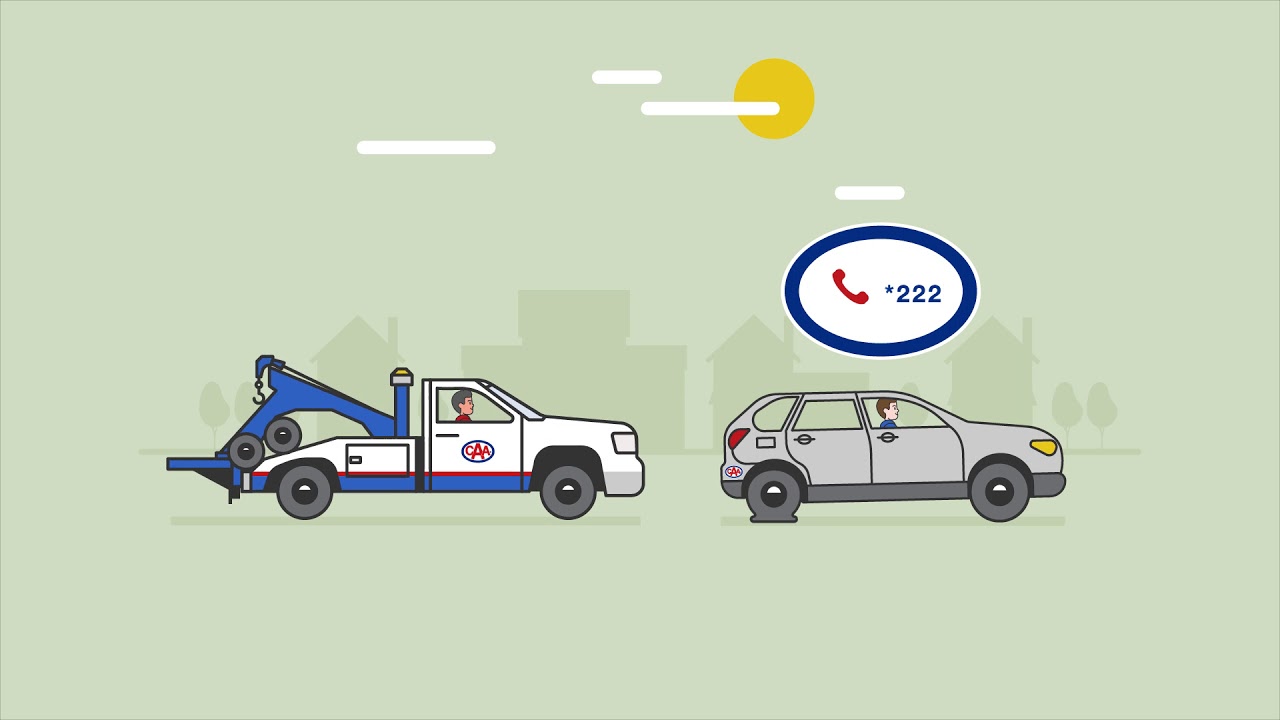
Roadside assistance is only the front door. Current South Central Ontario pricing begins at C$30 a year for Everyday, a benefits membership without car roadside service. Basic costs C$80 and includes short-distance coverage. Plus is C$124 and stretches a tow as far as 200 kilometres per call. Premier is C$154, with five service calls and the broadest travel-interruption benefits. RV options cost extra. The membership follows the person, not one registered vehicle - a quiet but important distinction if you borrow a car or ride with someone else.
The annual peace-of-mind ladder
The modern bundle reaches well beyond towing. Members can use fuel and retail discounts, earn CAA Dollars, plan trips, buy travel accessories, request help from the mobile app and track the arriving vehicle. A Shell arrangement currently takes three cents off a litre of fuel and offers selected store and car-wash savings. Maple adds virtual clinician consultations, with the number determined by tier. CyberconIQ supplies personalized cybersecurity education. The stranger the bundle sounds, the clearer the strategy becomes: give the card something useful to do when the car starts perfectly.
Insurance is where the scale becomes visible. CAA Club Group includes CAA Insurance Company, Orion Travel Insurance, specialty carrier Echelon Insurance and advisory operations. Its 2024 audited summary separated C$307.3 million in revenue from customer contracts from C$2.35 billion in insurance contract revenue. The group earned C$47.5 million that year after losing C$47.3 million in 2023. Roadside service may be the story people tell at dinner. Insurance is the much larger number in the accounts.
A tow, boost or lockout earns trust when the customer is unusually attentive.
Fuel, dining and travel savings create frequency between rare roadside calls.
Auto, property, travel and specialty insurance fit the same household journey.
More services make annual membership easier to justify and harder to replace.
A club that argues with potholes
The business sits in a peculiar market position. It competes with Canadian Tire and credit-card roadside plans for breakdown coverage, with digital agencies for travel bookings and with national carriers for insurance. Yet CAA is member-owned and not-for-profit at the club level, and it carries the habits of an advocacy organization. That history began in 1903 when 27 motorists gathered at Queen's Park. Their cause was wonderfully modest: prove Ontario could safely raise the speed limit from eight miles per hour to ten.
The ambitions grew. Auto clubs erected road signs, pushed for a Trans-Canada Highway, installed emergency call boxes and promoted seat belts. School Safety Patrol began in 1937 and now operates at roughly 800 Ontario schools. Worst Roads, launched in 2002, turns public nominations into infrastructure pressure. Years of advocacy helped get tow trucks included in Ontario's Slow Down, Move Over law in 2015. In 2026, the campaign explicitly asked pedestrians, cyclists and transit riders to judge the whole road, not merely the strip under a car's tires.
That public role is not decorative. It keeps the organization associated with mobility even as alternatives change. A customer might receive roadside assistance through a premium credit card. An electric vehicle may need different interventions than a combustion car. Online platforms can price a hotel instantly. CAA's defence is to be the institution that understands the trip around those products - safety, interruption, insurance, discounts and the physical network required when the screen cannot solve the problem.
Its customers are correspondingly broader than “people with unreliable cars.” Commuters buy short-distance cover. Road-trippers pay for longer tows. Motorcyclists, cyclists and RV owners can select coverage suited to their vehicle. Families use travel advisers and insurance. Lower-mileage drivers can consider MyPace, which charges according to distance driven instead of assuming every car spends the same amount of time on the road. Corporate programs turn the individual card into an employee benefit. Even the C$30 Everyday tier makes strategic sense: it lets a person enter through discounts, travel tools and Bike Assist without paying for conventional car rescue. CAA can meet a member before the first tow and remain after the last one.
That breadth also creates the risk of confusion. A bank can explain a credit card in one sentence; an automaker can bundle rescue with a warranty. CAA has to make four membership tiers, vehicle rules, insurance discounts and partner conditions feel like one understandable promise. The best answer is the oldest one: the membership is attached to a person, and the organization helps that person stay safe, mobile and protected. Everything else must earn its place beneath that sentence.
What builders can copy
The useful lesson is not “start an auto club.” It is to anchor a subscription in one service whose value becomes obvious at an emotional moment. Then add frequent, inexpensive reasons to return. CAA's emergency rescue is vivid but infrequent; rewards and fuel savings are ordinary but repeatable. Travel and insurance are natural extensions because the customer has already declared a need to stay mobile and protected.
The second lesson is operational: prediction is most valuable when capacity is movable and lateness is painful. CAA could combine its own service history with external signals, convert the output into a visual dispatch tool and act on it by repositioning a fleet. The model did not stop at “expect more calls.” It suggested where, when and what kind. Teams could copy the sequence - find the external variable that reliably precedes demand, combine it with internal history, then give a human operator a decision they can make now.
Where the playbook breaks
This model needs trust, an expensive or frightening core problem, meaningful adjacent services and enough operating density to make prediction actionable. It weakens in sparse territories where moving a rescuer saves little time, in categories where customers switch casually, or when the perks are unrelated coupons rather than extensions of the original promise. Without the hard service network, a broad bundle becomes clutter.
CAA's century is a study in changing instruments without changing the job. The club once installed wooden road signs and charged C$5 extra for emergency service. It later sold insurance, put tracking in an app and taught a model to watch the weather. The same question keeps the machinery coherent: what would make the member safer, more mobile or less exposed when a journey goes sideways?
That is why the predictive map is such a fitting product. It is invisible, slightly obsessive and useful at exactly the wrong moment. The member sees a truck arriving. Behind it sits a club, an insurer, a travel desk, a rewards network and 123 years of learning where trouble tends to wait.