The hospital’s problem lived between appointments. Patients had paper reports to keep track of, phone calls to make, and separate video links to find. A booking system could reserve a slot. It could not, by itself, keep the rest of the experience together. In a case published in July 2026, BRIL Consultancy Services describes building an app for a multi-specialty hospital group to close those gaps.
That is a useful introduction to BRIL, a Gurugram technology consultancy whose service menu ranges from artificial intelligence to workforce staffing. The company’s recurring concern is the relationship between a new system and the organization expected to use it. Where does the information go? Who acts on it? Who handles the exception?
These questions have less stage appeal than a chatbot demonstration. They also reveal the work BRIL wants to sell. Its proposition combines advisory, software engineering, integration, and ongoing operational support. The app gives that otherwise broad description something concrete to stand on: a patient trying to get through an ordinary sequence of tasks without becoming the hospital’s unofficial systems integrator.
The patient should not have to connect the dots
According to BRIL’s account, the hospital group’s disconnected arrangements extended beyond paperwork. Rescheduling and follow-up still involved calls. Insurance updates arrived through calls and SMS. Teleconsultations used separate video links. Referrals were difficult to track, while educational material sat apart from the patient’s actual experience.
BRIL says it built an Android and iOS app connected through APIs to the hospital’s management, medical-records, and customer-relationship systems. Its five main components covered medical records; appointments and teleconsultation; messages organized around stages of care; referral and loyalty tracking; and educational content and workshops.
The practical detail is in the connections. Consultation notes and prescriptions feed back into the medical record. Appointment changes happen inside the app. Communications differ according to whether someone is preparing for a procedure, waiting on an insurance claim, or recovering after discharge. The company also describes identity and consent arrangements for record access.
BRIL reports fewer missed appointments, less administrative coordination, and better visibility into referrals and repeat visits. Those are the company’s qualitative results. The account is most useful as a description of delivery: several existing systems were brought into a patient-facing experience organized around successive needs.
- 01RecordsReports and visit history
- 02AppointmentsBooking and teleconsultation
- 03Care messagesUpdates at the relevant moment
- 04ReferralsFamily and account-level tracking
- 05EducationContent and workshop access
The lesson is fairly portable. Before writing a feature list, trace the sequence a user must complete. Identify the information needed at each step and the systems holding it. In this case, the fragmented patient journey supplied the reason for integration. That makes the design logic easier to inspect than a promise to “transform healthcare.”
A young company with an older family connection
BRIL’s LinkedIn profile gives 2025 as its founding year. Indian corporate-directory records date the incorporation of BRIL Consultancy Services Private Limited to November 26 that year. Its own origin story reaches further back through a relationship: BRIL identifies Shieldmore Services Private Limited as a sister company and points to more than eight years of group operating experience.
Keeping those clocks separate matters. The sister-company connection is BRIL’s explanation for the operating knowledge behind a recently established consultancy. It gives the firm a story about experience across organizations and sectors without requiring the reader to mistake group history for BRIL’s own age.
The leadership page is equally revealing about the intended mix of work. Kuldeep Singh is listed as chief executive officer; Pradip Singh Tomar as chief technology officer; and Akhil Mittal as principal strategist. Arpita Rath holds the marketing and operations remit, Sanjeev Singh leads technical delivery and programs, and Divij Singh handles corporate legal work.

Mittal’s published remit concerns helping traditional digital enterprises move toward organizations built around AI. Read alongside the other leadership roles, that suggests a company positioning itself to discuss business direction and carry the resulting work into engineering and delivery. The division of responsibilities fits its stated preference for explicit ownership.
Seven service lines, with consulting running through them
BRIL lists seven service families: AI and intelligent systems; data and analytics; application development; cloud and DevOps; automation and digital operations; product, user experience, and digital growth; and workforce and staffing solutions. Consulting sits alongside that menu and can be commissioned separately or remain involved during delivery.
The intended customer is an organization with a technology problem that crosses boundaries. A product team may need application engineering and user research. A technology leader may need help connecting an AI initiative to data, cloud infrastructure, and operational responsibilities. An existing delivery team may need additional specialists. These are buying situations suggested by the published services, rather than a claim about the composition of BRIL’s customer base.
The company’s AI offer includes applied models and scoring, decision support, intelligent automation, integration, and advisory. It describes work such as defining inputs and thresholds, validating outputs against real cases, checking unusual cases, and preparing monitoring and handover. Those details place the service closer to implementation inside an enterprise than to selling access to a general-purpose AI tool.
Its market position is broad. Buyers can consider transformation advisers, development firms, systems integrators, specialist AI or cloud providers, and staffing agencies as alternatives for different parts of the work. BRIL’s stated distinction is continuity across those parts: the decisions made during consulting should remain connected to architecture, delivery, and operation.
That is a proposition a buyer can test. A proposal should show where one service ends, where the next begins, and who handles an issue spanning both. The breadth of a menu becomes useful when it simplifies those responsibilities. It creates little advantage if the client still has to reconcile every handoff.
Before the model, name the decision
BRIL’s published AI delivery sequence begins with decision context, followed by data and operational readiness. Solution design comes third. Integration and validation follow, then deployment with oversight, then continuing improvement. The ordering carries the argument: choosing a model should follow an understanding of what the organization needs to decide and what information it can reliably use.
On its responsible-AI pages, BRIL spells out controls that make this philosophy more specific. Decisions should have owners. Outputs should be reviewable. Access should reflect the user’s responsibilities. People should be able to intervene when a result is uncertain or consequential. Changes to models, prompts, and data should pass through an appropriate review process.
Its operational guidance also includes monitoring, fallback behavior, and recovery paths. These are conditions for the intended approach to work. Someone must maintain the system, respond when behavior shifts, and approve changes. If a client cannot assign those responsibilities or provide usable data, the company’s own delivery sequence points toward readiness work before wider deployment.
“Automation does not fix a process. It commits to one.”
BRIL Consultancy Services, on automation and controls
That line from BRIL’s public commentary captures its most useful warning. Faster execution can preserve a bad handoff just as efficiently as a good one. A team can borrow the reasoning immediately: document where work waits, which approvals matter, and what happens when two systems disagree. The exercise can change the specification before development begins.
The staffing line is part of the business
BRIL’s commercial offer includes more than advisory and engineering engagements. Its workforce business spans staff augmentation, temporary and contract staffing, permanent recruitment, managed workforce programs, and workforce and facility services. It offers individual specialists, multi-role talent pods, and project teams, with arrangements including corp-to-corp, fixed-term contracts, and contract-to-hire.
That range connects the consultancy to two budgets: work a client wants delivered, and capability a client wants added to its own organization. BRIL says it can operate within existing staffing-vendor arrangements and vendor-management systems. Its stated process covers defining a requirement, sourcing, screening, onboarding, deployment, and continuing coordination.
For a buyer comparing costs, the useful starting point is the engagement boundary. A specialist joining an existing team and a supplier responsible for an integrated application create different obligations. The comparison should account for internal management time, system access, testing, deployment, and continuing support as well as the initial fee. This is a purchasing implication of the service models, rather than a BRIL price quotation.
The hospital case makes that distinction tangible. Connecting an app to existing records creates continuing relationships with those systems. A sensible scope would identify who maintains each interface and handles a changed dependency. That is where BRIL’s talk of operational continuity should become a concrete responsibility in the engagement.
What survives the conference lights
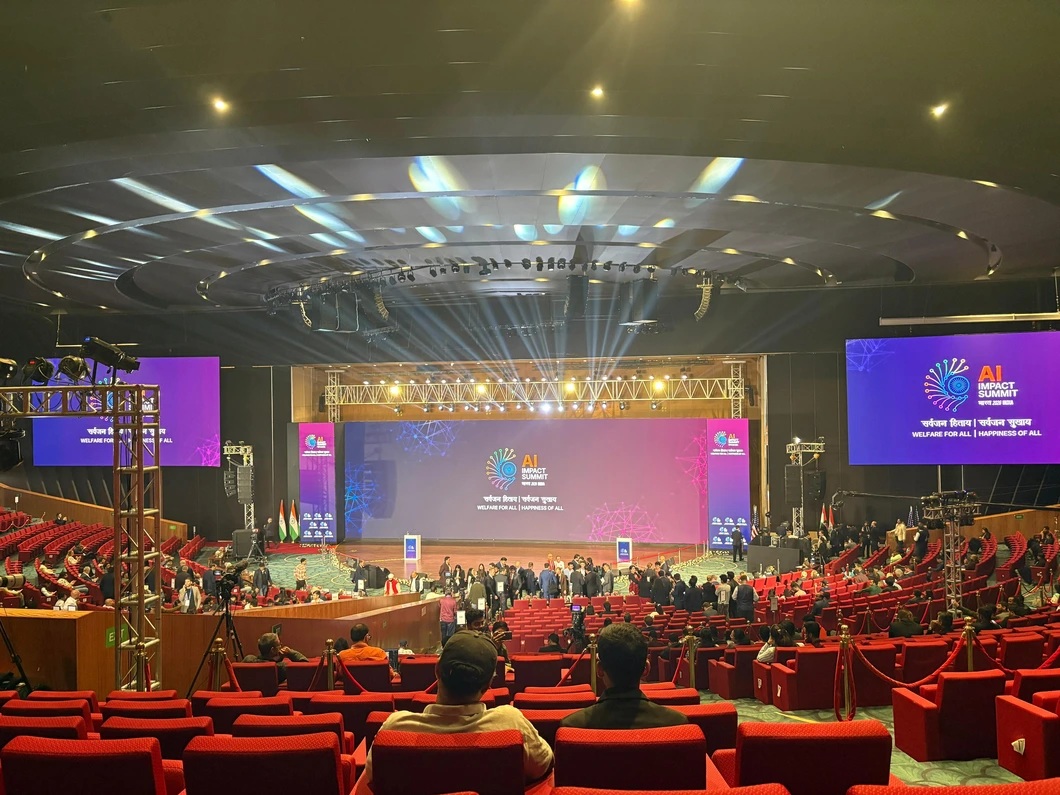
BRIL’s website documents participation at India AI Impact Summit and describes conversations about practical execution. Its publishing has continued through a July hospital-app case and an August article on agentic AI in enterprise operations. Together, these give its public presence two registers: the industry’s large ambitions and the detailed work needed inside an organization.
The second is the more useful way to evaluate this company. Start with a workflow, ask for the proposed connections, and identify the people responsible for keeping them useful. BRIL’s most legible idea is that a technology project should leave those relationships clearer. For a patient looking for a report or an employee waiting on a decision, that is a result worth asking a supplier to demonstrate.
Explore BRIL’s work
Services, people, and the company’s own writing.
Company website ↗Leadership & company background ↗Services ↗The hospital-app account ↗BRIL on agentic AI ↗Think: BRIL’s perspectives ↗