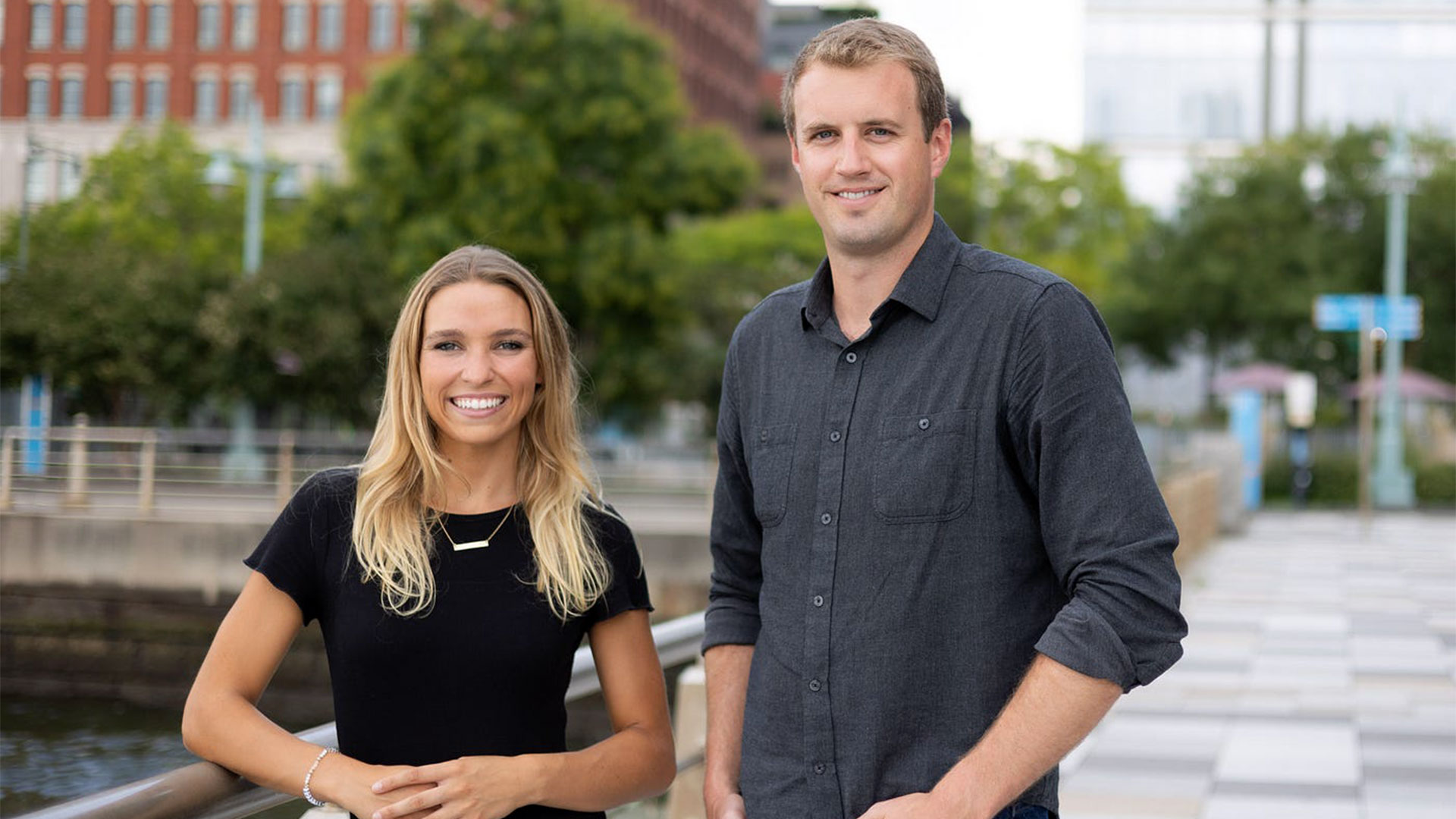
Brian McMahon’s early fashion business involved an improbable amount of public transport. He and his co-founder, Julia O’Mara, took more than 4,000 subway rides to hand-deliver rentals around New York. A stranger wanted something from another stranger’s closet. Between those two wardrobes stood the founders, their app, and the train. The chief executive’s duties included getting the clothes there.
Pickle had begun with a more sedentary proposition. Its first users posted polls about possible purchases and asked other people what they should choose. In the comments, people recommended things they already owned. There was another transaction waiting inside the conversation: someone had a desirable piece; someone else had an occasion for it. By May 2022, McMahon and O’Mara had turned their polling product into a rental marketplace.
That change gives McMahon’s story its shape. A business can emerge from an idea, then become interesting when its users complicate it. Following them requires a certain tolerance for having your original work reassigned. McMahon had already experienced something similar in a football uniform.
A different kind of position change
At Atholton High School in Columbia, Maryland, McMahon played quarterback. His senior season included 1,289 passing yards and 772 rushing yards. He captained the football team, and also captained the basketball team. There was more than one way to get him involved in a game.
He joined Maryland’s football program in 2012 as a preferred walk-on, switched to tight end, and served as a backup quarterback for the final four games of that first season. The season had supplied him with more than one job. A position is an assignment; circumstances can produce a new one before the year is out.

His interests were already extending beyond the field. With teammate P.J. Gallo, he sketched business plans and talked about Under Armour founder Kevin Plank, another Maryland alumnus. Entrepreneurship was something to discuss in dorms and apartments, long before there was an operating company to attach to the conversation.
McMahon spent three seasons with the program, from 2012 through 2014, before focusing on life after football. He studied business information systems, with a business analytics minor. That combination supplied a different set of problems: how information moves, how people decide, and how a business can use technology to make a choice easier.
Two data people go shopping
His professional route ran through data science strategy consulting at Booz Allen Hamilton and then Blackstone. At Blackstone, he worked across data and product projects, including investor relations, business development, real estate and asset management. He met O’Mara there. Their shared interest in data and purchasing decisions became the basis for a company.
The fashion angle came with an admission that is rather endearing in a future fashion founder. In an April 2022 interview, McMahon described having trouble keeping up with trends and deciding what to buy. The product addressed a difficulty he recognized personally. Being uncertain about an outfit was enough to begin with; an immaculate wardrobe was apparently optional.
The early app gave users groups called Circles, organized around shared tastes or social connections. Pickle Jars were shareable shopping carts. Friends could discuss possibilities, and a poll could bring a wider community into the decision. Even the name carried the premise: pick a product, escape the predicament of choosing what to wear.
He had no mobile-development experience before working on Pickle. Learning became part of making it. In his later account, the software and his education in writing software began together. This was a fairly direct way to discover whether he could build an app: acquire the skill while the app needed building.
The distance between two wardrobes
In the rental version, the interesting problem moved off the screen. Choosing an item was the beginning of an exchange that had to work in the physical world. A dress needed to be available, get to its borrower, and return to its owner. The founders’ delivery work put them inside that process, where a customer could explain a problem without filling out a form.
O’Mara has described those early deliveries as a way to understand the service before investing in a larger logistics operation. The approach was demanding and specific. A marketplace has two sides, but it also has a doorstep. Arriving there puts a human face on a user account and a practical deadline on a product decision.
“Get in front of a customer and talk to them.”
Brian McMahon
McMahon’s advice sounds uncomplicated because it is. Acting on it at thousands of handoffs is the harder part. A founder can discuss convenience in the abstract indefinitely. Delivering an item creates an immediate test: did the service fit into somebody’s actual day? The answer can be less flattering than a presentation, and more useful.
By late 2023, he was describing three routes for the clothes: direct handoffs, door-to-door couriers and shipping. Different distances called for different arrangements. Local supply mattered because a nearby garment could solve a last-minute problem. A national selection is attractive; an available item close enough to reach you has another kind of value.
He also described a small turning point for lenders: list a few items, receive a rental, then begin listing more. The first transaction gives the idea substance. A dress that spent most of its time waiting on a hanger can suddenly justify a little administration. Its social life may become better organized than its owner’s.
Capital, with company attached
The outside investment arrived after the founders had spent time proving the rental model. An $8 million seed round was announced in October 2023, co-led by Craft Ventures and FirstMark, with Burst Capital participating. In his announcement, McMahon tied the money to practical improvements: finding the right products, expanding selection, clarifying delivery and giving lenders better closet-management tools.
The details are revealing. Search and pickup information rarely receive the attention given to a new company’s origin story. Yet they determine whether a person who has heard the story can actually use the product. McMahon’s list suggests a founder occupied with the less quotable parts of making a marketplace repeatable.
$20 million combined across these rounds. Company financing, not personal wealth.
A $12 million Series A followed in March 2025. FirstMark and Craft again co-led, joined by Burst and FJ Labs. The company’s announcement identified plans to improve technology, grow the team and reach more communities. The money bought room to do work that two people and a transit map could only carry so far.
McMahon has emphasized the experience around the table as well as the capital. His investors included people connected to businesses such as StubHub and Yelp. The appeal is understandable: marketplaces involve repeated questions about trust, selection and participation. Advice becomes more useful when the person offering it has previously watched one side of an exchange wait for the other.
A front door for an app
In December 2023, McMahon announced a West Village store opening. Pickle’s online community would have a place where people could encounter the service in person. For a company based on other people’s wardrobes, a shop offered something a screen could struggle to provide: a physical introduction to the idea.
A rental marketplace asks for a slightly different habit. People already borrow from friends. Doing it through a platform extends the circle to people they have yet to meet. A tangible place can make the unfamiliar process easier to grasp, even when the eventual transaction happens in the app.
His thinking about physical spaces has continued to follow local participation. In a later public post, he described meeting demand where a community already exists, with inventory drawn from local closets. That approach gives the storefront a particular job. It helps people see how their own belongings and occasions might fit into the exchange.
The social element survived the original product’s departure. Fashion still travels through other people’s opinions. Someone wears an outfit, someone else asks about it, and a conversation begins. Pickle changed what could happen after the compliment. Instead of only discovering where to buy a piece, a person could discover another way to get access to it.
The camera in the closet
McMahon’s larger ambitions make more sense through a small object. In a March 2026 interview, the founders said a Canon PowerShot G7 X Mark II camera had been Pickle’s second-most-popular rental item the previous year. A camera sits comfortably beside clothes in a vacation plan, even if it belongs in another retail department.
He has discussed extending the marketplace into more categories and eventually beyond the United States. Those remain plans to distinguish from present availability. The immediate work he described for 2026 was improving speed, personalization and the exchange itself. A broader marketplace still has to get each individual transaction right.
Today, Pickle’s website advertises more than 500,000 items and 40,000 closets nationwide. Those company-reported figures describe a much wider selection than the founders could have carried themselves. They also multiply the original challenge: helping two people, with different schedules and expectations, complete an exchange they will want to repeat.
McMahon’s career has moved through changing positions, data projects, a shopping app and a delivery route. The continuity is a willingness to work on the problem in front of him, even when it changes the job. The first Pickle asked what people should buy. Its users supplied a useful complication: perhaps somebody already had it. He helped build a way to ask for the loan.