By February 16, 2013, Brandon Martinez had watched nine days of YouTube traffic catch up with the previous eighteen months of his company's existence. The reason was “Harlem Shake,” a track by Baauer that had become the soundtrack to a global outbreak of very short, very silly videos. Martinez and his colleagues at INDMUSIC had a job to do while everybody else was dancing: help the people who owned the music get paid.
The company had four people. Its client Mad Decent had released the song. Across YouTube, strangers were supplying the choreography, costumes and distribution. The internet had assembled an enormous promotional campaign without waiting for a meeting invite. INDMUSIC's advantage was that it understood what happened behind the play button.
A few months later, Martinez offered a less technical explanation at an industry presentation: “We monetized the Harlem Shake meme on YouTube, so for those of you who watched, thank you for your money.” There are founders who require several slides to explain their business. That afternoon, he managed with a thank-you note.
A career built behind the play button
INDMUSIC began in 2011. Martinez was its co-founder and CEO, alongside co-founder Jon Baltz. It became the starting point for the business later known as Distro Nation. The original proposition was practical: independent music creators had audiences on YouTube, and those audiences could produce revenue. Someone had to handle the machinery.
Martinez came to that problem through talent representation. At Abrams Artists Agency, he had worked with the emerging class of people making careers online. He formed the agency's digital media department in 2008, helping creators make deals with businesses including BET Digital, Sony Online Entertainment and BBC Worldwide. A new medium was developing its own talent market, contracts and intermediaries. He had a desk in the middle of it.
The agency work supplied a useful education in translation. A creator had an idea; a company needed a proposal it could buy. Martinez's next business would translate again, this time between independent musicians and a video platform whose commercial possibilities exceeded the simple act of uploading a clip.
His own formal qualification was a BA in English from George Mason University. The subsequent job titles suggest how far that could travel: digital media agent, startup CEO, music executive. The connecting skill was making creative work function inside a business arrangement without requiring the person making it to become an expert in every arrangement.
The dance needed an administrator
Before the meme arrived, INDMUSIC already had a relationship with Mad Decent. That timing mattered. The company could respond to the sudden spread of Baauer's recording because the commercial relationship preceded the rush. A viral moment creates a deadline that nobody has agreed to in advance.
Using YouTube's Content ID system, the operation could identify uses of the recording and monetize eligible uploads. Advertisements could appear around videos made by other people. Purchase links could help turn a passing encounter with the song into a sale. The audience supplied an extraordinary amount of activity; the administrative work made that activity commercially legible.
Consider the difference between watching a popular video and managing the rights in it. The viewer hears a song. A rights administrator has to know which recording it is, who controls it and how a platform should treat it. A costume is optional. Accurate information is considerably less negotiable.
- 01A fan uploads a video
- 02The recording is identified
- 03Eligible uses carry advertising
- 04Revenue is administered for the rights holder
A simplified view of the work behind the meme.
Martinez kept returning to that information problem after the dancing subsided. In 2014, he explained the importance of metadata: the artist, title and identifying details that travel with a recording. The more complete the information, the better the system could work for its owner. An unglamorous instruction, certainly. Also the sort that determines whether attention becomes something a musician can use.
He was dealing with a young industry still negotiating its obligations. In 2013, discussing online music royalties, he argued that networks needed rules and guidelines rather than a convenient excuse about how new everything was. His work occupied the awkward space where enthusiasm for a platform met responsibility for the material on it.
After the joke, another working day
A meme can make a company visible. It cannot do the next year's work. INDMUSIC pursued relationships beyond the sudden fame of “Harlem Shake,” including a 2013 partnership with Bonnaroo on an eight-part documentary series called “Soopergroop.”
The premise had some of the pleasure of an unlikely dinner party. Battle rapper Soul Khan, duo Black Violin, electro-funk duo Knower and YouTuber Jeni Suk came together around the festival. The musicians met shortly before the event. Cameras followed rehearsals, backstage activity and performances, and the episodes arrived together on Bonnaroo's YouTube channel.
Martinez wanted artists together whose combination an audience would not expect. That gave INDMUSIC something to build and distribute, alongside its work administering existing recordings. It also brought his earlier experience with creators back into view. Online music needed operations, but there still had to be something worth watching.
The business was reaching beyond its home market, too. In 2015, INDMUSIC announced a licensing relationship with Entertainment Direct Asia to bring music content to China. The announcement described 1,900 channel partners and more than 300 million monthly views. Those figures belonged to the network, rather than to Martinez personally, and point to how much the operation had expanded from its early Brooklyn team.
“Reach out to people because you enjoy their content - and say why.”
Brandon Martinez, 2015
His advice to people trying to build an online audience was more personable than the scale of those numbers might suggest. Connect because you actually like someone's work. Explain the appeal. Collaboration starts with paying attention, a small courtesy that remains available even to people with no audience at all.
Live Nation acquired INDMUSIC in 2016. Martinez became vice president of Live Nation Video Network, the operation's new corporate home. He remained there through 2019. The founder had become an executive inside a much larger entertainment company, still working on the relationship between videos, audiences and income.
The next collection came in pairs
His next venture moved into sneakers. SNKRHUD, founded with Stefan Tauber, gave collectors a way to photograph and catalogue their shoes. Martinez's second business participated in Snapchat's Yellow accelerator in 2019. Once again, he was working with people whose affection for a creative object generated activity that existing platforms did not entirely organize.
In October 2021, SNKRHUD introduced Sneaker Rater with support from ESPN and SneakerCenter around an Adidas release inspired by the original SportsCenter set. Users could rate shoes across six categories: silhouette, materials, colorway, concept, packaging and comfort. Taste acquired a little more vocabulary than a row of approving emoji.
The detail makes the project interesting. A person may admire a shoe's colors and dislike its materials. Another may care about the idea behind it more than the box. Giving those preferences separate names makes a conversation possible. It also gives a catalogue something more useful to contain than a verdict.
SNKRHUD extended into digital collectibles, and Martinez developed Flowscore, a ranking and rarity tool for communities using the Flow blockchain. The experiments brought a different set of technical questions to a familiar subject: how people identify, organize and participate in something they care about.
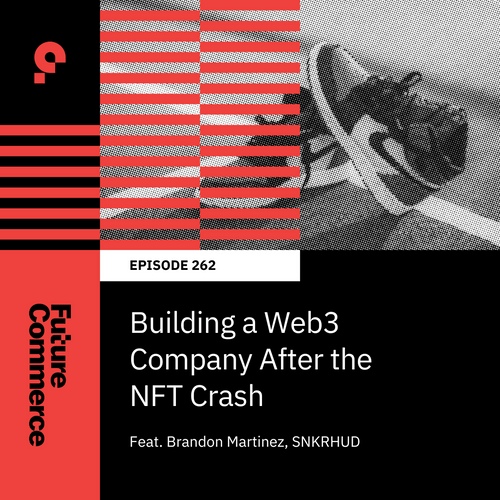
By July 2022, that work had an uncomfortable backdrop: a falling NFT market. Appearing on Future Commerce, Martinez talked about the uncertain atmosphere around NFT NYC and the effort to build through it. His ambition was to bring sneaker enthusiasts into the technology through an interest they already understood. The vocabulary might be unfamiliar; the attachment to a pair of shoes was already there.
Asked to introduce himself, he chose a notably modest sentence: “I'm an entrepreneur. Just trying to figure it out like everybody else.” It is an appealing introduction from someone discussing a sector that had acquired a formidable collection of confident predictions.
There is a court at the end of this story
By 2026, Martinez's public work included another gathering place: pickleball. RacquetX listed him as founder of Baseline Partners. The company's proposition is to connect brands with pickleball communities through relationships with facilities and sponsorship programs.
Its pitch emphasizes a good fit with the community and lasting relationships. The products include courtside branding, events, digital integration and combinations of those services. Facilities provide a setting in which people already return to do something they enjoy. A sponsor needs a reason to belong in that setting. Martinez is back at the business of introducing the two.
The move has a personal route. He has described working with Eric Ho, his first pickleball coach, on a Bed-Stuy location for NYC Pickleball, and later representing Gotham Pickleball with him. A relationship that began on court had become a working partnership. That is a rather more concrete account of networking than exchanging business cards beneath a conference banner.
His career now spans the management of music rights, sneaker collecting and the commercial life around recreational courts. The recurring question is how to support the activity people are already choosing. A fan makes a video. A collector photographs a shoe. Players book another game. Each act carries its own enthusiasm before a business enters the picture.
Martinez has repeatedly chosen to work close to that enthusiasm, then attend to the arrangements around it. “Harlem Shake” supplied the noisy introduction. The longer story concerns the patient work of giving people's participation somewhere useful to go. Even the internet's shortest dance can leave a surprisingly long paper trail.