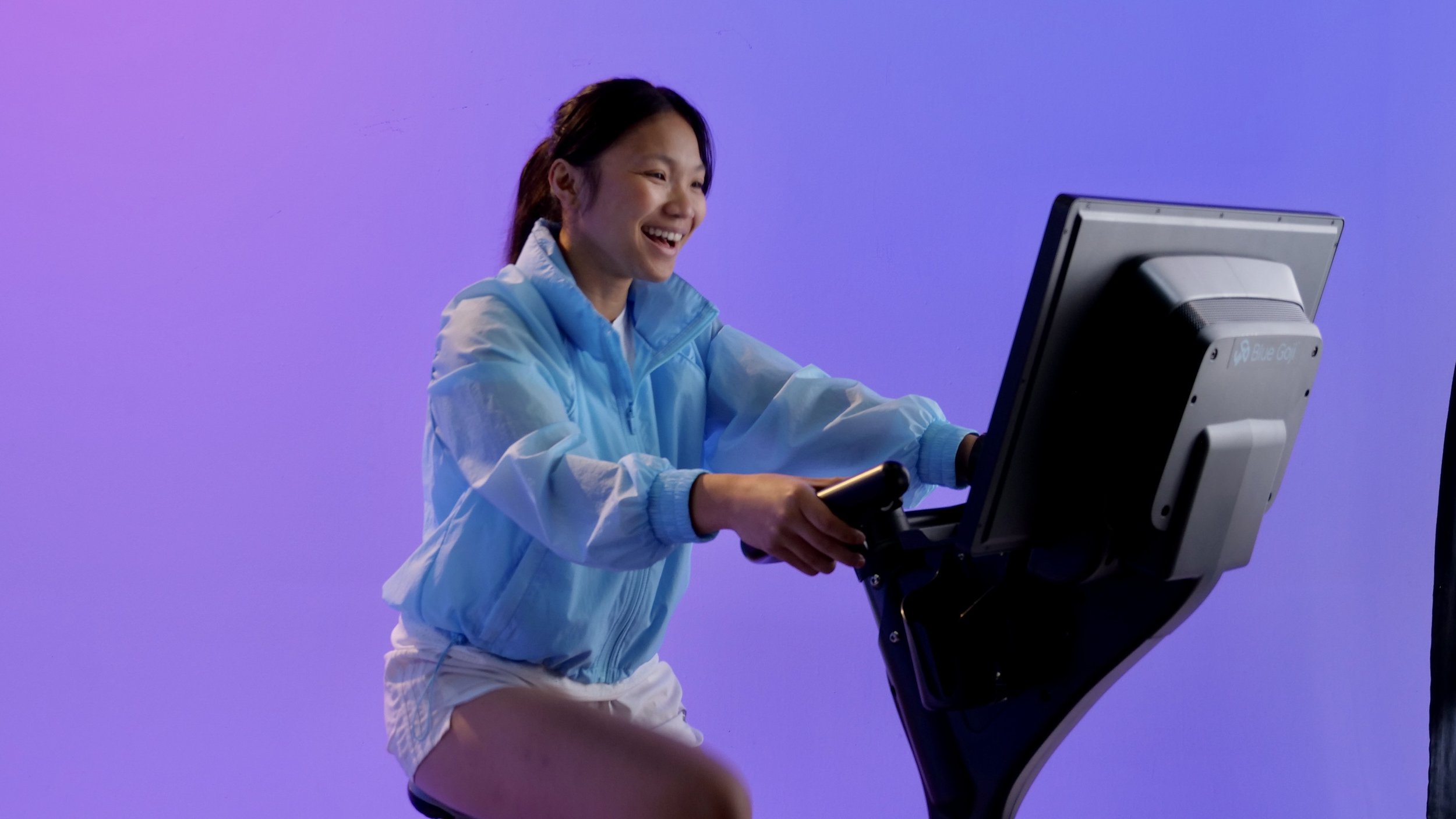
At Lakewood YMCA, a car wash found a way to sponsor exercise without washing a single bicycle. For the 2026 Rally for the Y campaign, Classy Chassis pledged 30 cents for every mile members rode on Blue Goji bikes. Pedal farther, raise more. The machine stayed put; the money went somewhere useful. Blue Goji’s account says Lakewood raised nearly $63,000 in 2025 with 30 corporate-level sponsors.
That arrangement reveals something about this Austin company. Its product has pedals, but its proposition concerns attention: what makes someone climb aboard, and what makes them return? A game offers one answer. A rival offers another. A local cause supplies a third.
- Guitar Hero veterans brought games to ordinary cardio equipment.
- Buying Expresso and CyberCycle put Blue Goji inside the bikes.
- Community challenges add a purpose beyond the workout score.
The $99 answer to the clothes-rack problem
Blue Goji was founded in 2011 by Coleman Fung, the founder of OpenLink, and Kai and Charles Huang, the RedOctane co-founders behind Guitar Hero. Their earlier business had made people eager to pick up a plastic guitar. Exercise equipment presented a less glamorous challenge: persuading people to use a machine they already owned.
The first commercially launched Goji Play kit, in December 2013, cost $99. It paired wireless controllers with an activity tracker and an iOS app. Controllers strapped onto cardio equipment; a phone or tablet supplied the screen. Moving your body affected the game. Twelve games were available at launch.
It was a modestly priced experiment in changing the experience rather than replacing the apparatus. The target included people whose home equipment was gathering dust and gym members who had stopped attending. The insight was sensible: buying an exercise machine and wanting to exercise are two separate transactions.
“We believe fitness should be fun, not a chore.”
Blue Goji’s stated philosophy

A game you steer with your workout
In April 2022, Blue Goji acquired the assets and intellectual property of Interactive Fitness Holdings, bringing Expresso and CyberCycle into its business. The deal changed the scale of its involvement. An accessory company could modify a workout; an equipment-and-software company could design more of the experience.
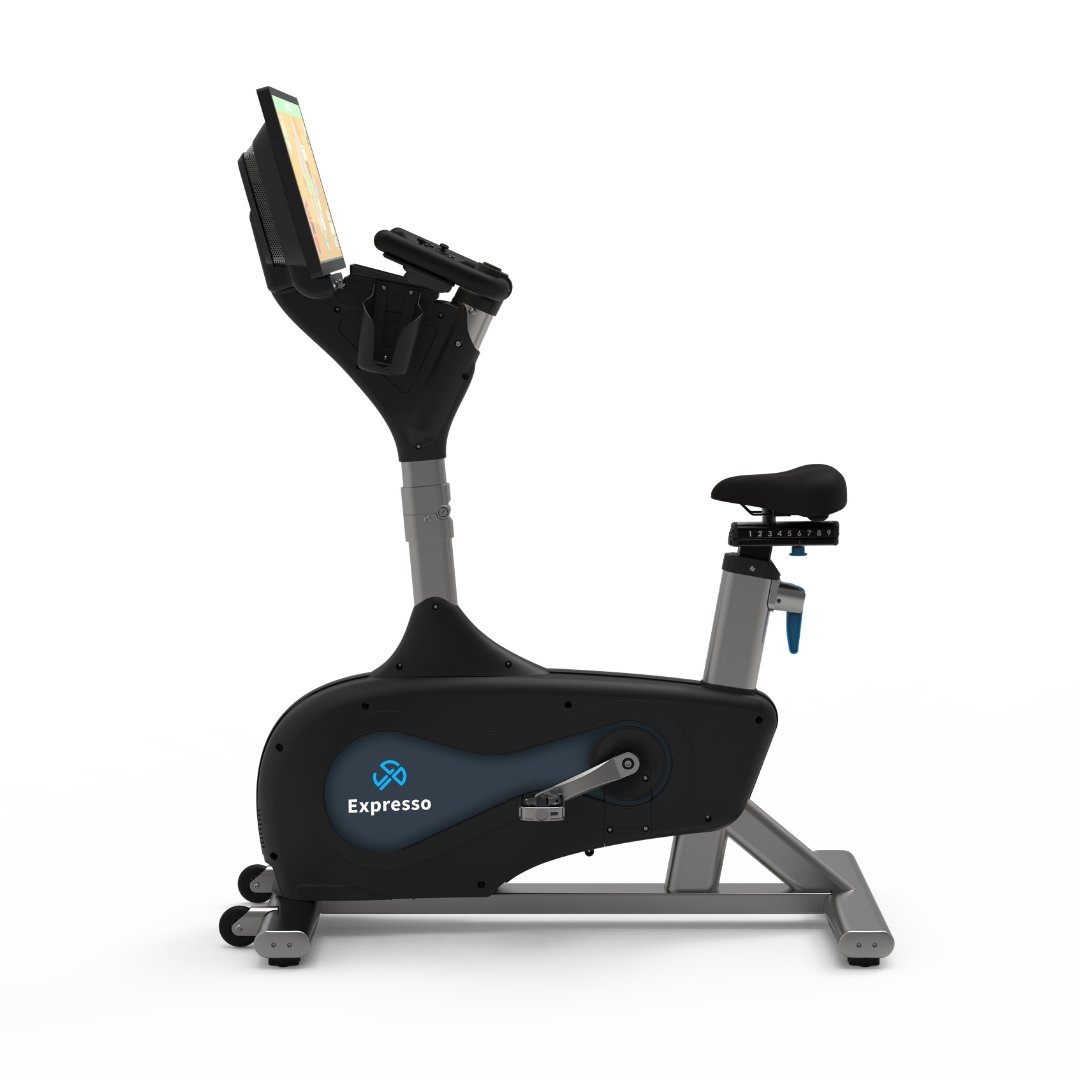
Today’s Expresso GO-U2 upright has a 24-inch HD touchscreen and 30 gears. Handlebars steer the action, while magnetic resistance adjusts to the virtual road’s grade. Players respond to what happens onscreen as they pedal. The distinction is participation: a television entertains the rider; these games ask the rider to do something.
GojiPlay’s catalog ranges from virtual roads and fantasy chases to arcade battles and Solitaire. Multiplayer, leaderboards, challenges, and rewards give facilities several ways to organize participation. The app and rider portal carry workout history and standings beyond the bike.
Movement, interaction, and rivalry occupy the same session.
The customers span gyms, YMCAs, colleges, senior-living communities, and home users. Recumbent Expresso models offer lumbar support; CyberCycle adds features such as enlarged pedals and seats. Different riders need different invitations. A comfortable chair and a familiar card game may invite someone who finds a racing leaderboard thoroughly unappealing.
Within connected fitness, Peloton supplies instructor-led workouts and Zwift supplies virtual cycling and racing. Blue Goji’s particular mix is commercial equipment, steering controls, a varied game library, and facility-run programs. Its expertise sits where game design meets the physical constraints of an exercise machine.
The number that needs its footnotes
Blue Goji calls its approach “Embodied Health,” bringing physical, cognitive, mental, and social activity together. Dual-task training provides the working idea: perform a movement task and a cognitive task at the same time. Here, cycling supplies the movement; interactive play supplies decisions and reactions.
A 2012 randomized study gives the idea some substance. Researchers compared conventional stationary cycling with cycling enhanced by virtual tours and competitors over three months. Seventy-nine older adults were randomized, and 63 completed the study. Executive-function results favored cybercycling, even though exercise effort and fitness were comparable between groups.
Older adults randomized → participants who completed the three-month trial.
2012 cybercycling study · A specific protocol, not a verdict on every game.The reported 23% relative reduction in progression to mild cognitive impairment is often repeated. It is a relative figure from that trial, which predates Blue Goji’s acquisition. It does not establish that every current game prevents dementia. Blue Goji itself says its product scores are not indicative of cognitive health or predictive of medical conditions.
When the pedals outlive the platform
The business combines hardware sales with recurring subscriptions for connected software services. Buyers must consider equipment, content access, and support together. In 2018, an Infinity VR treadmill estimate was $15,000 excluding a headset; that historical figure belongs to a different product and moment. Current bike sales pages direct purchasers to request quotes.
The sharper cost lesson arrived on January 1, 2026. Blue Goji ended eLive server connectivity and ongoing support for older S-Series and HD-Series bikes, citing software compatibility. Limited standalone functions remain. The durable machine had outlasted its connected platform. Go-Series bikes remain supported, though they are no longer manufactured.
Thirty cents a mile, and a reason to return
In July 2026, Blue Goji described a unified rider portal and broader challenge options. Its GojiCare page still labels the cognitive-training program beta, with YMCA pilots and an expected 2026 release. CyberCross, a lateral-movement platform, is seeking initial test-site partners. These are experiments at different stages, rather than one finished promise.
The practical lesson is available without buying a bike: give a useful activity a recurring social occasion. Recruit teams, offer different levels of difficulty, and tie participation to a goal people recognize. For a facility, the technology needs programming and supported connections; for a rider, the challenge needs to be manageable.
Lakewood’s sponsored miles make that logic wonderfully tangible. Thirty cents gives a pedal stroke a destination. Blue Goji’s most interesting proposition may be the invitation to return, with someone else waiting on the leaderboard.
Blue Goji · Explore the games · Company blog · LinkedIn · X · Instagram · Facebook