The coffee came before the presentation. In Blair Waugh Brady’s telling, there was no presentation at all. Kate Santore introduced her to Rebecca Hannan, and Brady and Hannan met for coffee. No slides, no pitch. What followed was an assignment to help a Coca-Cola team rethink annual brand planning for North America. A conversation became a working relationship.
Brady was sufficiently pleased to say so publicly, brushing aside the etiquette of the LinkedIn humblebrag. Hannan, she wrote, had understood that a company of Coca-Cola’s scale could work differently with an agency like WITH. That first assignment led to further opportunities. The anecdote has all the ingredients of a tidy business parable, except that its most useful detail is thoroughly ordinary: two people took the time to talk.
For Brady, co-founder and CEO of the Atlanta strategy and creative firm, that ordinary detail belongs near the center of the business. A brief can describe an assignment. Getting to know the person carrying it can reveal why it matters, which decisions are difficult and what the assignment must accomplish inside the company.
The name was a business proposition
Brady and Jamie Sims founded their firm in 2012. By 2014, when it was called WITH/Sims, she was its partner and vice president of client services. Her description of the company already revolved around bringing other people into the work: opening its network to clients and assembling talent around the needs of each project.
She had a dry answer when asked what she liked about Atlanta: “The pollen. I’m kidding.” Music, sports and the local agency community were more persuasive attractions. Her business ambitions were considerably more literal. She wanted to double revenue and win three industry awards that year. Those were goals, rather than a retrospective victory lap.
The specificity is appealing. An entrepreneur can believe in relationships and still want the numbers to improve. Brady’s early account puts both in the same frame. The name WITH served as a compact description of how the partners intended to operate, while the revenue target supplied a rather less poetic test of whether it worked.
with Jamie Sims
and majority owner
on The Brand Forum
An owner gets to choose
In early 2018, Brady assumed majority ownership and became CEO. WITH became a certified woman-owned enterprise. The transition gave the firm’s argument about collaboration an additional dimension: who owns an agency helps determine who gets to shape its culture, make its decisions and participate in its opportunities.
The client roster included AT&T, Georgia Power, EarthLink and the Fox Theatre, with work extending to PG&E in California. Brady described a deliberately small agency serving substantial organizations. Size creates practical choices in a service business. The person selling the relationship may also be responsible for protecting the conditions that make the work possible.
In April 2014, she also appeared on a Georgia government social-media program, presenting on finding the right platform. It is an early example of her work crossing from client service into explanation: helping an audience understand how a communications choice connects to the people it is trying to reach.
Her involvement in Atlanta reaches beyond client accounts. Her public professional profile lists advisory work with the Metro Atlanta Chamber and board service with re:imagine/ATL. In 2019, she moderated an Atlanta Ad Club conversation with Wendy Clark, then global CEO of DDB Worldwide, about resilience. The firm hosted the event. Connecting people was becoming a public activity as well as a commercial one.
The invoice has a blind spot
By February 2022, Brady was making an explicit argument against using hourly rates to measure strategic creative work. Her objection was easy to understand: experience can make someone faster at solving a problem, while a time-based invoice can make that faster solution look less valuable. The clock is excellent at measuring elapsed time. It has rather narrower qualifications as an art critic.
She proposed pricing around the value created for the client. Her examples included helping executives through internal politics, mentoring people within client organizations, removing obstacles and building agreement among stakeholders. These activities can determine whether a strategy ever becomes a campaign, yet they fit awkwardly into a neat list of deliverables.
The position came with a concession. Explaining such value is harder, and the invoice can become less straightforward. She also allowed that some services would continue to be sold by the hour. Her argument asks an agency leader to do the difficult work of explaining the relationship’s value rather than expecting the timesheet to explain it.
A logo learns to lean
That same year, WITH applied its own brand process to itself. Its March 2022 identity announcement described connected letterforms that lean toward one another, with rounded corners and deliberately varied spacing. The design expressed the firm’s interest in the imperfect, human business of working together.
Brady said the company needed an identity that matched its maturing work. Across its first decade, WITH had developed a Brand Unification Process connecting business strategy and brand strategy. Its projects ranged from visual identities to brand architecture, campaigns and activation. Sims continued as co-founder and chief strategy officer.
There is a pleasing obligation attached to running a branding firm: eventually, someone asks what your own brand means. WITH’s answer lived in its name, its interconnected letters and a promise to listen, understand and handle trust carefully. Design made the proposition visible. Client relationships would have to keep making it credible.
The guest who invited herself
When Brady learned about Christy Hiler’s Own It movement, she contacted Hiler and asked to be on the podcast. The invitation was self-issued. She wanted to talk about female agency ownership and make the possibility visible to other women. Waiting to be discovered would have been a curious method for making that point.
Her account of the appearance emphasized sharing work as well as sharing stories. She wanted female owners to collaborate and create more opportunity together. She also credited Sims, her team and her husband, Art Brady, for their roles in her journey. The picture she offered of ownership included a substantial supporting cast.
This makes her advocacy more concrete than an instruction to be confident. A woman considering ownership can benefit from seeing another woman explain the decisions and relationships involved. An existing owner can send work to a peer. A corporate marketer can decide which agencies get access to an assignment. Each action gives the larger ambition somewhere practical to go.
“Collaborating > competing.”
Blair Brady, on female agency ownership
Mick Jagger enters the meeting
Brady’s interest in music occasionally follows her into business writing. After seeing the Rolling Stones in Atlanta for the first time, she wrote about dancing throughout the concert. The next morning, coffee in hand, she began thinking about the band’s ability to keep an audience engaged over decades.
Her marketing lessons concerned earning trust repeatedly, reading an audience and giving people an experience they want to return to. The connection makes sense within her account of agency work. A relationship needs renewal; familiarity alone cannot carry it. Even a band with a catalog full of recognizable songs still has to play the show.
Her stated ambition was to become the creative partner and adviser clients called first, and to build relationships that lasted. That is a revealing way to describe growth. A call made before a formal assignment exists can mean that a client trusts someone’s judgment enough to help define the problem. Brady’s preferred position sits close to that conversation.
Giving leadership a voice
In June 2026, Brady joined Jeremy Bloom and Josh Palau on The Brand Forum to discuss the work of leadership that rarely appears in a job description. Her argument included a challenge to the familiar listening tour: incoming leaders should explain how they intend to lead before asking everyone else to contribute.
Listening remains part of the job. So does giving people direction and explaining expectations. In the same conversation, she discussed the need to balance near-term performance with longer-term brand building, and to give teams protection and clarity while they work. The common concern is what allows people to accomplish something together.
She also treated AI adoption as an organizational problem involving people, capabilities and ways of working. The question extends beyond which technology a company buys. People have to understand how their work changes and how the organization expects them to use it. It is familiar territory for someone whose agency career has kept returning to the relationship around the assignment.
One decision before the next
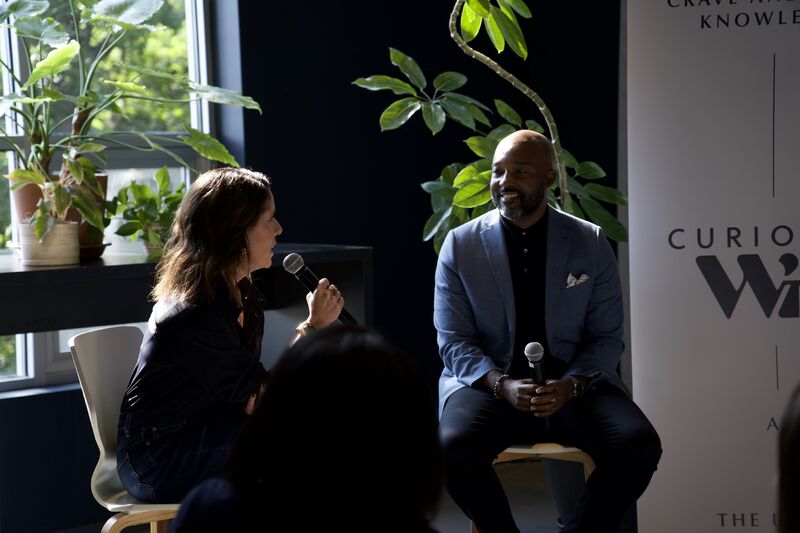
A recent conversation with TJ Abrams at Curious WITH supplied another example of her advisory approach. Addressing marketers who were unsure whether difficulty in a role meant growth or a reason to leave, Brady separated the questions. First decide whether the situation needs to change. Then consider what comes next.
The order matters. Trying to choose a destination while still deciding whether to depart makes two decisions compete for the same attention. Her advice slows the sequence enough to examine the situation. It gives the person making the choice a way to begin without demanding an immediate answer to everything.
Across Brady’s work, the repeated interest is in what happens before people can do the visible part of their jobs. Someone needs an introduction, an explanation, a decision or permission to challenge an assumption. Those moments rarely make a handsome portfolio image. They can still shape the work that follows. The coffee without the slides is a small example, and an unusually good place to start.
Keep the conversation going
Explore her work and ideas.