The problem was an inventory transfer. Nelson & Co., an Indiana supplier of uniforms and equipment for first responders, had already spent more than a year struggling with its Odoo implementation. A system intended to simplify the business had become another thing to wrestle with. Transfers would not clear. Then Bista Solutions arrived. Its account of the engagement says the stubborn issue was resolved within six days.
Six days is a modest measure for a company selling digital transformation. It is also a rather good one. An uncleared transfer is specific. Somebody needs stock to move, somebody needs the records to reflect it, and somebody has a customer waiting. A beautiful dashboard cannot negotiate with a missing uniform.
- Bista implements and adapts ERP software, especially Odoo and NetSuite.
- Its customers need finance, inventory, manufacturing, commerce, and service operations to connect.
- Its practical selling point is industry knowledge plus custom development and continuing support.
- The customer stories reward attention to the small workflow that holds everything else up.
The transfer that would not clear
Nelson & Co. had moved through paper processes, disconnected software, and a Shopify website before encountering an ineffective Odoo rollout. The company did not abandon the platform. Contacts who had used Odoo successfully introduced it to Bista. That distinction matters: the decision changed the implementation partner, while keeping faith with the software.
Bista’s case study lists 19 Odoo users at Nelson. This is a business with enough operational complexity to need a connected system, without an army of people to nurse it. The rescue began with a blocked task and became an ongoing relationship. For a buyer comparing consultants, the episode suggests a useful interview question: show us how you diagnose something that already ought to work.
Two friends and the work between departments
Faisal Basar and Shahid Bandarkar, long-time friends, started Bista in June 2007, according to Odoo’s account of the company. Their stated ambition was to bridge people and technology. The phrase becomes more interesting when you consider where that bridge lands: the purchasing desk, the warehouse, the finance team, and the person taking an order.
Enterprise resource planning, or ERP, brings those functions into a shared business system. Bista supplies the consulting and engineering required to fit that system to a particular operation. It is an implementation business with software expertise: understanding requirements, configuring modules, moving data, building extensions, and teaching people how to use the result.
Its market spans manufacturing, distribution, healthcare, retail, and services. The variety sounds broad until you notice the recurring problem. These companies have goods, money, documents, and commitments moving through several departments. Trouble often appears where one department’s record must become another department’s instruction.
Order02
Stock03
Dispatch04
Accounts
A connected ERP lets the same transaction travel through the business. Bista configures the rules and connections along the way.
Three acts for a stationery business
Pointer USA, a stationery and office-supply business expanding in North America, needed a foundation for wholesale, consumer, ecommerce, and Amazon sales. Its previous infrastructure offered limited visibility into orders and inventory. Packaging and fulfillment differed by channel, while financial reporting required manual workarounds.
Odoo’s 2026 customer story describes Bista’s rollout in three phases. The core ERP took three to four months. B2B and B2C storefronts followed over two to three months. Amazon marketplace integrations then took a few weeks. The work connected business modules with Amazon Seller Central, FedEx, USPS, and Avalara AvaTax.
“They listened to us.”Rigoberto Moreno, CEO of Pointer USA, in Odoo’s customer story
The sequence is the lesson. Establish the operational foundation, add the shops, then connect the marketplace machinery. A storefront can promise anything; fulfillment must keep the promise. Pointer’s phased approach makes the dependencies visible before the customer arrives.
A quarter of the software bill
Evitalin presents a different buying argument. The men’s healthcare business used Salesforce for CRM, but struggled to extend its setup across finance, inventory, human resources, and call-center operations. Licensing and customization costs accompanied the departmental gaps. It chose Odoo after evaluating a more integrated arrangement.
Bista migrated data, adapted healthcare workflows, connected shipping and communications systems, and built portals. Its published customer account says Evitalin subsequently spent approximately one-quarter of what it had paid for its previous software. That is a reported reduction in software spending, rather than a calculation of the entire project’s return.
The economics deserve careful reading. A buyer has to account for consulting, migration, custom work, training, and continuing support as well as the subscription. Evitalin’s experience makes consolidation worth examining. It does not make another company’s budget disappear. The sensible thing to copy is the comparison across departments: what do all the systems cost, and how much work is required to move information between them?
The surprisingly revealing cardboard box
At Framing Tech, a manufacturer of modular aluminum framing components, the awkward detail was packaging. Products arrived in different dimensions. Workers made manual decisions about boxes and loading arrangements, sometimes through trial and error. Separate packaging software added another step.
Bista connected the 3DBinPacking API to Odoo 18’s delivery and packaging modules. Item dimensions and weights could drive box selection and loading configurations within the order workflow. The integration also provided a 3D packing view and allowed rules for padding, weight limits, and packaging preferences.
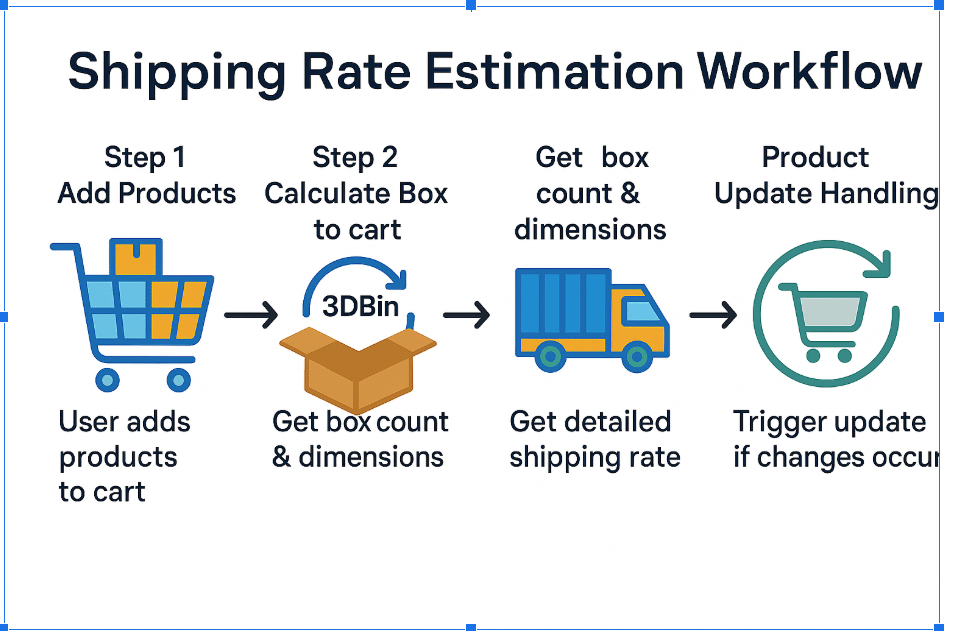
The company’s case study reports 30% lower shipping costs and a 20% improvement in packaging efficiency. The charm of this example is its scale. An ERP project can sound impossibly abstract until somebody explains that the box was too large. Here, the software work has a physical consequence: the contents, their arrangement, and the parcel that leaves the building.
The people who stay after launch
Bista also markets NetSuite consulting, implementation, customization, migration, and support. Its broader portfolio includes Shopify services, business analytics, and managed Odoo support. The commercial relationship can therefore continue long after an initial deployment. Business processes change; integrations and custom modules require attention.
Its careers page describes work that includes gathering requirements, evaluating standard Odoo modules, coordinating offshore development, testing, training departments, and responding to production issues. That is useful evidence of the expertise being sold. The job includes deciding whether an existing module will solve a problem before commissioning another piece of code.
Buyers can instead use Odoo’s own implementation services, another partner, or an internal team. Bista’s case rests on experience with complicated workflows and a delivery organization spanning North America and offshore teams. Customization earns its keep when the business needs it and can maintain it. A small operation with straightforward requirements may be better served by a simpler deployment.

Recognition gives the buyer another point of comparison. Inc. placed Bista at No. 773 on its 2016 Inc. 5000 list. Bista announced Odoo’s Best Partner North America award for 2025. Awards help explain why a prospect might take the meeting; a working process gives that prospect a reason to stay.
AI meets the filing cabinet
The newer offerings follow the same operational logic. Bista Doc AI extracts structured information from documents and sends it into business systems. Its Odoo assistants are organized around roles such as purchasing, inventory, manufacturing, and accounting. Bista describes assistants that require explicit approval for actions, alongside agents intended for pre-approved background tasks.
A separate Evitalin case study gives the idea a concrete setting: faxed prescription PDFs, previously transcribed manually into Odoo. Bista describes an encrypted, access-controlled workflow that extracts information and creates prescription records. It reports a 90% reduction in manual data entry requirements. That is an operational claim about this deployment, not proof that every document is safe to process without review.
The practical starting point remains wonderfully ordinary. Draw the present process. Find the repeated handoff. Decide what needs to be shared, what needs a human decision, and what can be automated. Ask a prospective partner to demonstrate the difficult transaction with your own conditions. Bista’s most revealing work begins where the sales presentation ends: an order, a record, a box, and somebody trying to get through the day.